STON.fi's Andrey Fedorov on Connecting TON to the World, Wallet Fragmentation, and Why AI Agents Are the Next Step in Cross-Chain Execution
Key Takeaways
- •STON.fi launched cross-chain swaps this summer and will begin its "One Swap. Across Chains" campaign on September 15, using an airline-style miles metaphor to simplify onboarding.
- •TRON was among the first chains connected because it holds enormous stablecoin liquidity while offering far fewer cross-chain solutions than EVM networks.
- •The Omniston architecture treats resolver competition as intent fulfillment and HTLC escrows as the cryptographic mechanism that secures settlement, rather than two separate models.
- •Fedorov identified wallet-level fragmentation, where identically named assets exist as distinct tokens across chains, as the largest remaining barrier to cross-chain adoption.
- •Over the next two to three years, STON.fi aims for Omniston to become a B2B execution layer connecting TON, TRON, and other EVM and non-EVM chains, including for AI agents.
As blockchain networks multiply and liquidity fragments across an ever-growing list of chains, the question of how users move between ecosystems has hardened into one of the defining infrastructure problems in crypto. Cross-chain execution—once the preserve of technically adept users wrestling with bridges and multi-wallet setups—is now the focus of a widening group of protocols attempting to make the entire process invisible.
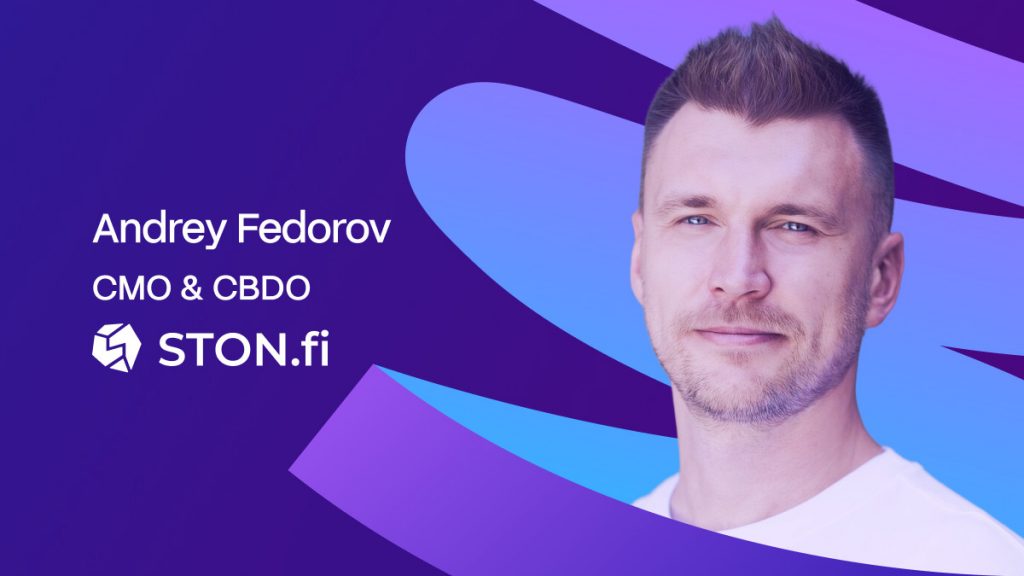
For STON.fi, the largest decentralized finance (DeFi) protocol on TON (The Open Network), the rollout of cross-chain swaps this summer marks a deliberate widening of scope. Andrey Fedorov, CMO and CBDO at STON.fi Dev, sat down with Metaverse Post to explain what that shift means in practice. The conversation covered the architectural choices underpinning the Omniston protocol, why connecting TON and TRON was the logical first step, and what chain abstraction genuinely requires before the term carries real weight. Fedorov also argued that wallet-level fragmentation remains the true barrier holding users back today, and outlined how AI agents may eventually redefine what cross-chain execution looks like altogether.
STON.fi launched cross-chain swaps this summer and is set to begin its "One Swap. Across Chains" campaign on September 15.
Removing the Liquidity Boundary Around TON
Asked why a cross-chain layer matters for the TON ecosystem, and why the moment had come to move beyond a single-chain automated market maker (AMM), Fedorov framed the answer as having two sides. For TON itself, the priority is dissolving what he described as a liquidity boundary. The TON ecosystem has its own users and its own DeFi economy, but users do not live on one blockchain. They may hold different assets on different chains: USDT (Tether) on TON, USDT on TRON, USDT on Base, other tokens on Ethereum, and so on. As long as the network stands apart from its neighbors, those users cannot access other ecosystems directly from TON. They are effectively locked into a single ecosystem unless they manually move assets between chains—and that, he said, is precisely the problem cross-chain swaps solve.
The logic runs in the opposite direction as well. Millions of users on other chains want access to the TON economy, and until now there was no straightforward way in. Moving assets from another chain to TON was not easy; now it is much simpler. In Fedorov's plain summary: cross-chain is about connecting ecosystems so that users can reach the liquidity and the economy wherever it lives.
On timing, he pushed back on the notion that the team had been waiting for an ideal window. The decision to build a cross-chain solution was made a long time ago, he said, and the window of opportunity opened roughly two to three years ago and remains open. The goal was never specifically to launch in summer 2026—the idea was to build as soon as possible. The undertaking is not a simple one: there are genuinely difficult technical problems involved, especially when constructing something that did not previously exist in the market. The summer launch came down to two conditions aligning—there was real demand, and the team was ready.
An Airline Metaphor for Complicated Machinery
The upcoming campaign relies on gamified onboarding built around miles, Priority Passenger tickets, and limited rewards. Fedorov explained the thinking: cross-chain technology is becoming much simpler, yet psychologically it still feels complicated. Telling a user they are about to use a solution with atomic execution, a resolver network, and RFQ (request-for-quote) or HTLC (hash time-locked contract) settlements will not attract anyone—it sounds too complex and, frankly, off-putting.
The campaign therefore approaches from the opposite direction, using a simple metaphor: direct flights between chains. The airline framing is intuitive. You fly between destinations and collect miles along the way, as on a real flight, which transforms a technically dense system into something far easier to understand. A user who is not especially technical never needs to think about atomic execution, resolvers, or HTLCs. They simply think: I am flying from chain A to chain B and collecting miles I can spend in an in-flight shop.
Gamification serves a second purpose beyond comprehension—giving users a reason to try cross-chain swaps at all. Some people are genuinely motivated by the ability to move assets between chains and can learn by doing, Fedorov said. But gamification also lowers the barrier for many others, making it easier to engage, try different routes, and keep exploring. Taken together, it adds up to a simple, understandable, and genuinely engaging experience.
Why TRON Came Early
TRON was among the first chains connected, alongside major EVM (Ethereum Virtual Machine) networks, and Fedorov described the prioritization as very deliberate. STON.fi does not select chains based on where media attention or social media conversation concentrates; it looks for where real users and real liquidity sit. TRON is one of the largest stablecoin networks in existence and holds enormous stablecoin liquidity. The same applies to TON, which also has a large user base and significant stablecoin activity. Connecting the two networks was, in his words, a logical step.
There is a technical dimension too. For EVM chains, cross-chain solutions are relatively plentiful. For TRON, the options are far fewer, and the ones that exist are technically complex, difficult for users to navigate, and unclear in terms of gas and wallet requirements. That gap is precisely why TRON looked like the strongest candidate to begin with.
Intents, Resolvers, and HTLC Escrows
Asked to contrast STON.fi's use of HTLC escrows and independent resolvers with the industry's pursuit of intent-based solver networks, Fedorov argued the two are more or less the same thing rather than two distinct models. STON.fi also uses an intent-based solver network: when a user holds an asset on one chain and wants a different asset on another chain, that is an intent, and resolvers compete to execute it. HTLC escrows, meanwhile, are the cryptographic mechanism that makes settlement safe—they are not a separate model.
The division of labor, as he put it, is that competition determines who executes, and cryptography determines whether settlement is safe. A user expresses an intent, resolvers compete to fulfill it, and the protocol ensures everyone is protected. For end users, none of this needs to be visible: they have an asset here, they want an asset there, they see a quote, and it executes. That, he said, is the entire experience from their perspective.
Chain Abstraction, Defined
With "chain abstraction" a central theme of 2026, Fedorov offered a blunt definition: a fully abstracted experience is one where users simply do not think about blockchains. Today's typical flow looks quite different—I have USDT on Ethereum, I want to buy something on TON, so I need to bridge assets, I need ETH for gas, I need two wallets connected on both networks, and so on. That is not chain abstraction, because the user is reasoning in terms of chains throughout. The underlying intent was always simple—have this asset, want that one—but the execution is not simple, so users are forced into chain-level thinking.
A chain-abstracted experience is one where users never engage with that layer at all: they have an asset, they want another asset, they get it.
He added a litmus test: cross-chain will have truly become chain-abstracted when the product category itself disappears from the conversation. Right now, people talk about cross-chain swaps, about moving assets between chains, about this being a new capability—and that language is itself the opposite of abstraction. True abstraction will arrive when nobody says "cross-chain" anymore, when the pitch is simply: you have this, you want that, here it is.
The Wallet Problem
Despite progress in hiding bridges and wrapped assets, cross-chain DeFi still produces friction, and Fedorov identified the largest remaining barrier as fragmentation at the wallet level. Users must manage multiple wallets across different blockchains, with separate balances, and often with identically named assets that are technically distinct. USDT on TON, USDT on TRON, and USDT on Ethereum carry the same ticker but live on different chains—looking like one asset from the user's perspective while technically being three different assets.
The user experience has improved: multi-chain wallets mean a separate wallet for every chain is no longer necessary, as it once was. But friction persists because users still have to select the right network, and balances shift depending on which one is active. Fedorov offered a personal illustration: he recently opened a wallet expecting a non-zero balance and saw zero. For a moment it was alarming—until he realized the wrong network was selected, switched it, and the balance reappeared. Working with this daily, he figured it out quickly; a typical user would not, and the experience is disorienting. That, he said, is the main obstacle right now, though it improves every day.
Telegram, Context, and the Next Wave of Users
TON has surpassed 100 million wallet sign-ups, many originating from Telegram, and Fedorov agreed that social platforms will be one of the major distribution channels for the next wave of crypto users. The crucial difference, he stressed, is context. Users inside a social platform are not thinking about finance: they are not opening Telegram with the intent to swap assets between chains. They are messaging a friend or reading a channel, and while they may encounter an opportunity connected to DeFi, their starting context is entirely different from someone opening a financial app with the explicit intention of doing something with their money.
That distinction shapes how cross-chain execution needs to behave. In a traditional financial app, the user arrives with a financial intent; in Telegram, they do not, and the gap has to be bridged entirely by the product. The complexity has to be completely invisible, because the user did not arrive prepared to engage with it.
On the difference between embedding financial services into a messaging platform versus a traditional financial interface, Fedorov returned to context and pointed to where Telegram itself appears to be heading. The best experience, he suggested, is one where users can send assets as easily as they send messages—and that seems to be what Telegram is building toward. Telegram already has Wallet built in, which makes it straightforward to send tokens to, and Pavel Durov has announced further wallet developments. Based on what has been shared publicly, sending tokens to friends may become even simpler. That, he said, is the direction he expects things to move.
AI Agents and the Execution Layer
Fedorov's team has been running vibe coding sessions and building AI-agent-friendly documentation, and he mapped out three dimensions of AI's role in STON.fi's cross-chain execution. First, internal use: the company runs vibe coding workshops and hackathons where participants use AI tools, and it works well. Second, the protocol is designed to be AI-friendly: a developer who wants to build an application using Omniston can feed the documentation to an AI agent and it will integrate the protocol—the documentation was designed with that use case in mind.
Third, and most relevant to execution: AI-driven DeFi execution has been discussed in the industry for at least two years, but Fedorov has not yet seen a truly strong product in that space. What he does see is infrastructure improving—embedded wallets and agentic tooling now exist, and the conditions for AI agents to actually act on users' assets are starting to materialize. The natural next step for STON.fi is for Omniston to serve as the execution layer that an AI agent uses: the agent understands the user's intent, or even defines it on their behalf, and then executes through the protocol. That, he said, is where this is heading.
A Three-Year Horizon
Today, most people think of STON.fi as the largest DeFi protocol on TON, or simply as a swap application. TON is where the project started and remains important, Fedorov acknowledged, but the larger opportunity—for both STON.fi and Omniston—is to become an execution layer that connects TON, TRON, and other EVM and non-EVM chains. If, in a couple of years, people stop thinking of STON.fi as a DeFi app on TON and start thinking of it as a multi-chain liquidity protocol or an execution layer, that is the goal.
Two products anchor the path there. STON.fi is the consumer product, used for product development, UX experimentation, distribution, and as a showcase of what the infrastructure can do—its users never need to think in technical terms; they simply use the app. Omniston is the second product: it powers STON.fi and it powers other applications. Over the next two to three years, the aim is for Omniston to become widely recognized as an execution layer—B2B infrastructure that developers and protocols build on. That, Fedorov said, is the trajectory the team is working toward. The near-term markers are already public: the "One Swap. Across Chains" campaign begins September 15, while the Telegram wallet developments Pavel Durov has announced and the embedded wallets and agentic tooling he cited as already in place are the pieces to watch as that horizon approaches.
This article is based on an interview originally published by Metaverse Post on September 14, 2026: Andrey Fedorov, STON.fi Dev: On Connecting TON To The World, The Real Barrier Holding Users Back, And Why AI Agents Are The Next Step In Cross-Chain Execution. Official website: STON.fi.

