Wall Street Posts Best Week Since April as Weak Jobs Report Cools Rate Hike Fears
Key Takeaways
- •The US economy lost 23,000 nonfarm payroll jobs in July, sharply missing economists' expectations for an 80,000-job gain, and June's employment figure was revised downward by 37,000.
- •All three major stock indexes posted winning weeks, with the Nasdaq surging 5% and the S&P 500 rising nearly 3.5%, marking their best weekly performance since April.
- •The 2-year Treasury yield fell 4.2% for the week, its largest weekly drop since June, signaling that traders are scaling back expectations for near-term Fed rate increases.
- •The probability of a September Federal Reserve rate hike dropped to 42% from 55%, while the likelihood of rates holding steady through year-end rose to 24.8% from 15.5%.
- •Investor focus now shifts to the July Consumer Price Index report due August 12, which is seen as the next decisive data point influencing the Fed's data-dependent policy path.
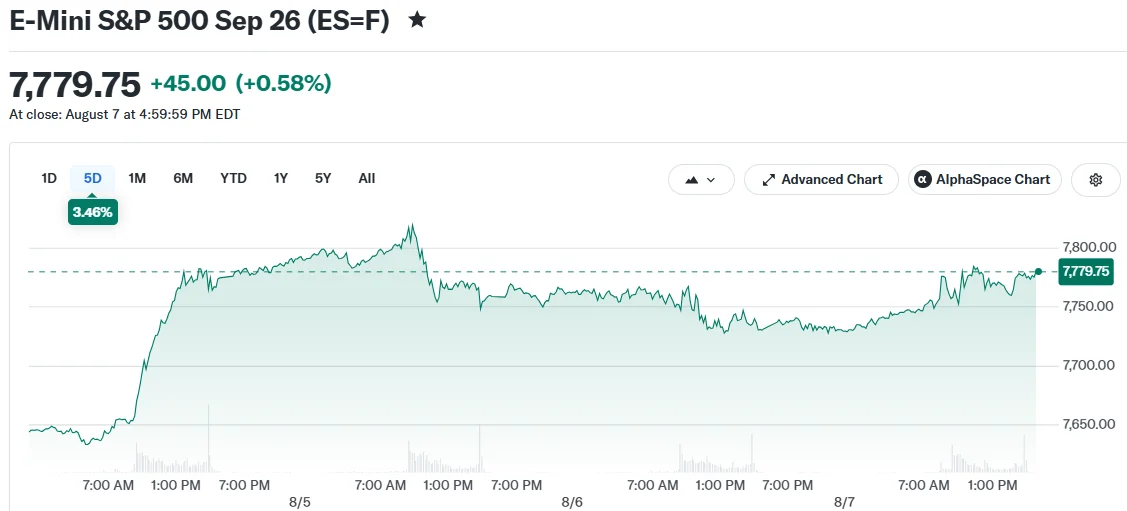
US stocks finished higher on Friday, capping their best week since April, after a weaker-than-expected jobs report eased concerns about another Federal Reserve rate hike.
The Dow Jones Industrial Average rose 151 points, or 0.3%, on the day. The S&P 500 gained 0.6%, and the Nasdaq climbed 1.3%. Weekly gains were more pronounced: the Nasdaq jumped 5%, while the S&P 500 rose nearly 3.5%. All three major indexes posted winning weeks.
July Jobs Report Drives the Rally
The catalyst was the July jobs report, released Friday morning by the Labor Department. The US economy lost 23,000 nonfarm payroll jobs last month, well below the 80,000 gain economists had expected. June's jobs number was also revised downward by 37,000.
The unemployment rate dipped to 4.1% from 4.2%, a modest decline that did little to alter the broader picture of a softening labor market. Under the Federal Reserve's dual mandate to balance price stability with maximum employment, a weakening labor market directly reduces the pressure to keep tightening, which is why equity and bond markets responded so sharply.
Bond Market Rallies on Weak Jobs Data
Bond markets reacted quickly to the data. The yield on the 2-year Treasury note fell 4.2% for the week, marking its biggest one-week drop since June. The 2-year yield is particularly sensitive to shifts in near-term Fed policy expectations, making its decline one of the clearest market signals that traders are dialing back rate-hike assumptions. The 10-year yield fell below 4.66%. Since bond prices move inversely to yields, the drop triggered a bond market rally, and equities followed suit.
David Rosenberg of Rosenberg Research described the report as "bond-bullish" and said he could not see the case for a Federal Reserve rate hike in September or beyond.
According to the CME FedWatch Tool, the probability of a September rate hike fell to 42%, down from 55% before the report. Traders now see a 24.8% chance that rates remain unchanged for the rest of the year, up from 15.5% the previous day.
Attention Turns to CPI
With the jobs report behind them, investors are shifting focus to inflation data. The Consumer Price Index for July is scheduled for release on August 12, followed by the Producer Price Index on August 13. Because the Fed has emphasized that future rate decisions will be data-dependent, the CPI reading takes on added weight as the next critical input for policymakers assessing whether inflation is sustainably trending toward their 2% target.
Christopher Shaffer of Talaria Capital Management said the jobs report puts "100% of the focus on CPI."
Earnings season is winding down, but results from Super Micro Computer, Applied Materials, and Cisco Systems remain on the calendar and are expected to draw attention.
On the energy front, oil prices slipped Friday amid ongoing uncertainty surrounding the US-Iran situation. Iran and Oman continue working toward a deal to reopen the Strait of Hormuz — through which roughly a fifth of global oil supply transits daily — with Iran reportedly seeking to block US and Israeli ships from using the waterway.
The next major market test arrives Wednesday, August 12, when the CPI report is released.
