Wall Street Falls as Strong August Jobs Data Fuels Fed Rate Hike Speculation
Key Takeaways
- •The U.S. economy added 162,000 jobs in August, nearly triple the 55,000 gain analysts had projected, while the unemployment rate matched expectations at 4.1%.
- •The Dow fell roughly 0.7% (about 380 points), the S&P 500 slipped 0.5%, and the Nasdaq declined about 0.4%, though all three indexes remained near record highs.
- •CME Group data showed traders raised the probability of a September Fed rate increase to roughly 60% following the jobs report.
- •The August CPI report, due September 11, will be the last major inflation reading before the Fed's meeting, as the PCE index is not released until September 30.
- •Lululemon shares plunged roughly 16% after management cut full-year revenue and earnings forecasts and reported a decline in second-quarter sales.
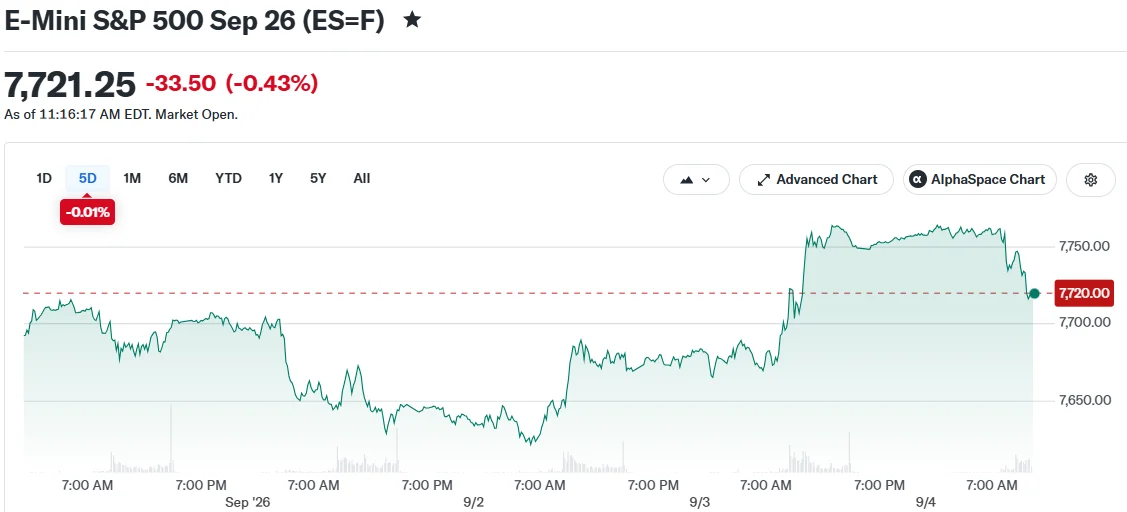
U.S. equity markets fell broadly on Friday after August employment figures came in far stronger than expected, prompting investors to reassess their outlook on Federal Reserve policy. The pullback illustrated a core dynamic of the current market: in an environment where the Fed's next move is actively in question, signs of economic strength can weigh on equities because they raise the perceived odds of tighter — and therefore more restrictive — monetary policy, while weak data has at times been received more favorably.
The Dow Jones Industrial Average lost roughly 0.7%, or about 380 points, while the S&P 500 slipped 0.5% and the Nasdaq Composite gave up around 0.4%. By the close, the S&P 500 stood near 7,708, the Dow around 53,301, and the Nasdaq near 26,463.
The monthly employment situation report showed the U.S. economy added 162,000 jobs in August — nearly triple the 55,000 gain Wall Street analysts had projected. The unemployment rate came in at 4.1%, matching expectations. July's figure was also revised upward by 43,000 jobs, putting it in positive territory for the month. The upside surprise reinforced the picture of a resilient labor market and sparked a key debate among market participants: would Federal Reserve officials read this strength as justification for further monetary tightening?
BREAKING: The US economy adds +162,000 jobs in August, well above expectations of +55,000. The unemployment rate was 4.1%, in-line with expectations of 4.1%. July's job number was also revised up by +43,000 jobs and is now positive for the month. The US job market nearly… — The Kobeissi Letter (@KobeissiLetter) September 4, 2026
Data from CME Group showed traders raised the probability of a September rate increase to roughly 60% following the release — a notable shift from sentiment earlier in the trading week. CME's fed funds futures are among the most widely watched real-time gauges of market-implied policy expectations, which is why the jobs report moved them so quickly.
Central Bank Outlook and Upcoming Catalysts
Federal Reserve Chair Kevin Warsh has indicated he avoids overreacting to any single economic release. He has also suggested that wage trends may correlate less strongly with inflation than conventional wisdom holds, which could lessen the influence of employment data on policy decisions.
Several market observers argue that Friday's jobs report alone may not justify policy action. The next major data point will be the August Consumer Price Index, due September 11. The Personal Consumption Expenditures price index — the Federal Reserve's primary inflation gauge — is not scheduled until September 30, after the upcoming policy meeting, meaning officials may have to decide without their preferred inflation metric in hand. That sequencing makes the CPI print the last major inflation reading officials and investors will see before the meeting, heightening its significance.
Government bond yields rose Friday as investors recalibrated their interest rate expectations. Rising yields tend to pressure equities by making risk-free assets more attractive relative to stocks and increasing borrowing costs across the economy. Even after the day's pullback, all three benchmark indexes remained near their record highs, and the modest scale of the selloff suggested to some that investors believe the economy can withstand higher borrowing costs. Employment figures are also frequently revised in subsequent months, and some market participants may be waiting for confirmation of the August number before drawing conclusions.
Lululemon Weighs on Market Mood
Beyond the macro backdrop, Lululemon was Friday's biggest individual equity story. Shares of the athletic apparel retailer plunged roughly 16% after management cut its full-year revenue and earnings forecasts and disclosed a decline in second-quarter sales. No other major corporate earnings were scheduled for the session.
Original reporting: Yahoo Finance | X post
