Lindsey Graham's Rebuke of Trump Exposes a Dark Truth About Republican Loyalty, Author Argues
Key Takeaways
- •Stephens contends that many Republican voters accept harmful policies on the environment, rights and immigration as long as gasoline prices remain affordable.
- •Senator Lindsey Graham condemned Trump after January 6 but soon reemerged as one of his most visible allies and remains a defender during Trump's second presidency.
- •Stephens argues Trump's mishandled pandemic response cost him the 2020 election, as narrow margins in Wisconsin, Michigan, Pennsylvania, Georgia and Arizona delivered Biden the presidency.
- •Attorney General Merrick Garland delayed legal action against Trump until the January 6th Committee pressed him, by which time Trump had politically survived, Stephens writes.
- •Former North Carolina governor Roy Cooper is running for the open Senate seat of retiring Republican Thom Tillis with the slogan 'Make stuff cost less,' in one of 2026's most competitive races.
The lesson that must be learned from this disgraceful moment in American history, D. Earl Stephens argues, is that millions of Republicans will go along with any heinous thing -- poisoning the air, water and animals, incinerating voting rights, employing masked men to slaughter and cage people, and the rape of children -- just as long as it doesn't cost too much to fill up their pickup trucks and thirsty SUVs. That, he writes, is the deal-breaker for these people, and more than anything else it illustrates the decline of America, or perhaps more sadly, reveals what the country has always been about at its core.
The past 20 months, in Stephens's assessment, have been the most debilitating, evil and regressive stretch in American history. Slow, incremental progress on enormously important matters -- protecting the environment, the sciences, human rights, women's rights and voting rights -- has not only come to a halt but been thrown into reverse by what he calls the ugliest, most dangerous political party the country has ever seen.
Stephens writes that the United States has a president who, by words and actions, is closer in character to Adolf Hitler than even Richard Nixon. He describes Trump as a racist who urged a violent attack on America on January 6, 2021, then sat back, watched it unfold, and did nothing for three hours but root for its success.
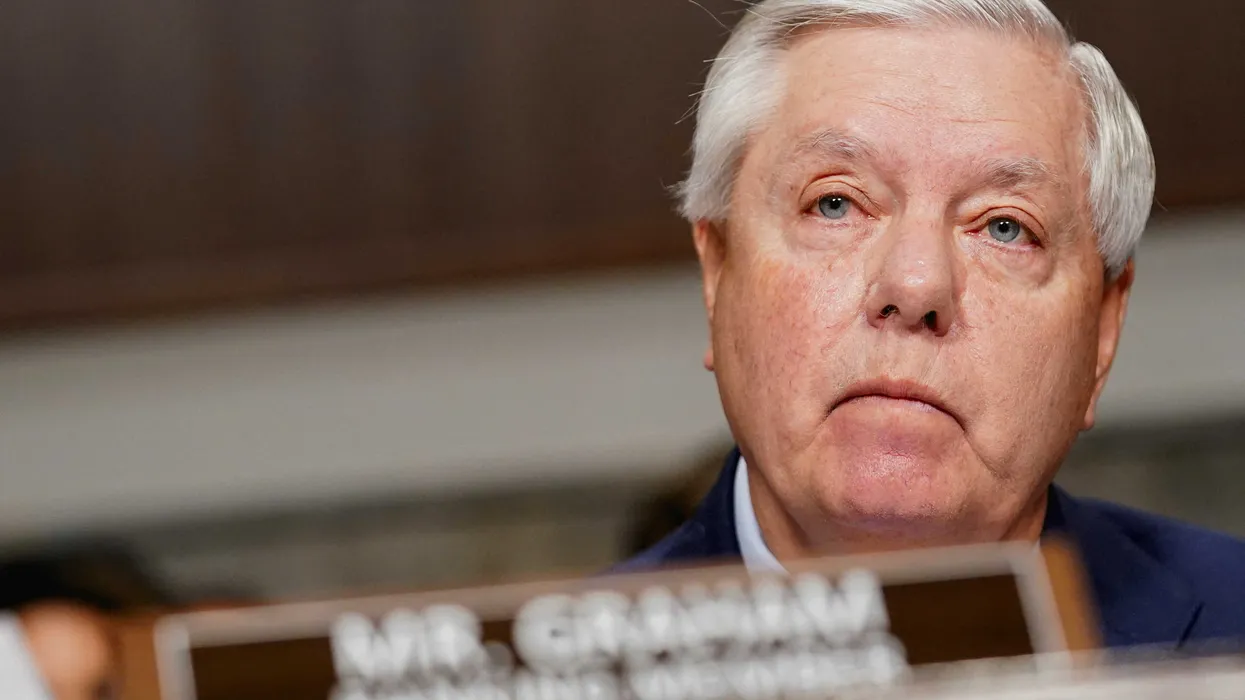
So heinous was the January 6 attack, Stephens notes, that even Senator Lindsey Graham had seen enough, saying on the Senate floor that night:
"Trump and I, we've had a hell of a journey. I hate it to end this way. Oh my God, I hate it. From my point of view, he's been a consequential President, but today (is the) first thing you'll see. All I can say is count me out. Enough is enough."
Of course, Stephens writes, it turned out Graham never meant a word of what he said, and proved a profile in cowardice. That reversal is well documented: within weeks of the attack, Graham had reemerged as one of Trump's most visible allies, golfing with him at his club and urging the party to reconcile with the former president -- a pattern that has continued through Trump's return to the presidency, during which Graham has remained a steadfast defender.
Stephens argues that Americans must do everything they can to extinguish what he calls a fascist bonfire, or be incinerated by it, because thanks to people like Graham, figures such as JD Vance, Stephen Miller and Vladimir Putin are both giving orders and taking notes, and will only continue to fine-tune the poison they are eagerly pumping into the Republican Party's veins.
Their aim, he writes, is to end their opponents and ensure that American democracy, like the history they are busy erasing, is wiped away forever. They do not believe for a minute that all men and women were created equal, and this, Stephens argues, is beyond dispute at this point.
In his telling, the country is lucky its end hasn't already arrived, and there is still a chance to preserve what thousands have died for on battlefields around the world over the past 150 years.
The truth of the past decade, Stephens writes, is this: if Trump had been just a tad more subtle in dealing out his agenda on behalf of the billionaires, oligarchs and fascists who own him, the country would have fallen six years ago at the voting booth rather than through any attack on the Capitol.
It can reasonably be argued, he continues, that if Trump had not encouraged people to drink bleach while completely mangling the response to the once-in-a-century pandemic that killed millions -- and had instead handled that crisis with even a minimum of competence -- he would have won in a landslide in 2020. He then would have immediately proceeded to do all the things he is doing now, with the crystal-clear intent of never relinquishing a presidency he values only to pad his ego and bank accounts.
People forget, Stephens writes, that at the time of the outbreak Trump's approval rating had risen to 49 percent, because no matter how incompetently he had handled his presidency to that point, many people needed to believe he could protect them from the deadly pandemic. And before dismissing a 49 percent approval rating, he notes, consider that it is actually high compared with other presidencies of the past half-century at similar junctures: Joe Biden stood between 36 and 40 percent at the same point of his presidency in 2024.
Instead, Stephens argues, Trump proved he did not have what it takes to govern through a crisis, showing once again that he is far better at starting them. Just enough Americans in the swing states of Wisconsin, Michigan, Pennsylvania, Georgia and Arizona decided they had at least temporarily seen enough, and ushered Biden into office. It was that close.
America was given a four-year stay of execution, he writes, and squandered it when it refused to finish the job. Instead of making sure Trump could never run for office again, just enough Republicans -- led by Graham, in Stephens's words -- gave him life. Instead of bringing the full weight of the law down on him, Attorney General Merrick Garland dithered until Democrats had to belatedly summon him into action with their January 6th Committee. By that time it was clear Trump had survived and would be around to haunt the next election.
The leadership of the Democratic Party, Stephens writes, had underestimated how sick America still was while overestimating their own popularity, after the 2022 midterms proved not nearly as fatal to them as forecast. By 2024, Biden and his 39 percent approval rating stood atop a ticket that had run out of juice and could not connect with the slim majority of sane people left in America. What followed, Stephens writes, was a continuation of the beginning of the end.
Stephens recalls his old stomping grounds of Madison, Wisconsin, labeled "77 square miles surrounded by reality" by a frustrated Republican governor, Lee Sherman Dreyfus, 40 years ago. Madison, he writes, is a liberal bastion of real truths and real justice, where people are judged by the content of their character and not the color of their skin. But venture outside that liberal square today and you will see endless farms with billboard-sized TRUMP signs. Trump has done nothing for the farmers, Stephens writes, but he hates who they hate, so they are plenty appeased.
America is on life support right now, he argues -- that is the reality. Trump, in his framing, is still doling out variants of that bleach, but this time not because he thinks it can help anybody, rather because he hopes it hurts them.
In his new home state of North Carolina, Stephens notes, former governor Roy Cooper is running to flip a crucial Senate seat in November with the simple slogan: "Make stuff cost less." The seat, held by Republican incumbent Thom Tillis, who announced in 2025 he would not seek reelection, ranks among the most competitive Senate contests of the 2026 cycle and is widely viewed as central to control of the chamber. It isn't that Cooper fails to grasp how sick the American electorate is, or how obscene it is that an entire political party has fallen at the feet of a traitor, Stephens writes; it is that he knows that to win a purple state, talking about affordability is the best way to pull over just enough right-leaning votes to prevail. More North Carolinians are worried about the price of gas than about attacks on life-saving vaccines and the air and water they breathe, he writes, which makes the state a microcosm of the country.
So perhaps Cooper and the Democrats will have the big Election Day in November that Stephens believes they will. And perhaps, he writes, the Supreme Court won't throw out those elections for the benefit of itself and the king's Republicans. Perhaps the sane, caring people in America will have bought themselves a little more time to regroup, and some semblance of power to curtail the nonstop assault on the country.
Perhaps, Stephens concludes, Americans should take some absurd solace in the fact that had the incompetent Trump kept gas prices low, everything still being fought for this November would already be gone. And perhaps people will finally stop pretending that these lifeless Republicans care a single bit about the country, when it is so obvious that the things they really value can be found by looking at the prices at the gas pump.
D. Earl Stephens is the author of "Toxic Tales: A Caustic Collection of Donald J. Trump's Very Important Letters" and finished a 30-year career in journalism as the Managing Editor of Stars and Stripes. You can find all his work here.

