Political Analyst Predicts Stephen Miller Would Assume Power if Trump's Health Declines
Key Takeaways
- •David Rothkopf identified Stephen Miller as the aide most likely to assume behind-the-scenes presidential authority if Trump's health declines, citing Miller's daily West Wing presence and influence over policy.
- •Vice President JD Vance holds the constitutional successor role under the 25th Amendment, but Rothkopf noted that the amendment has historically been invoked only for planned medical procedures rather than contested or ambiguous fitness declines.
- •Rothkopf argued that Trump's reduced schedule and fewer public appearances suggest aides are already managing his visibility, drawing a parallel to how Biden's public role was similarly curtailed.
- •Rothkopf cited multiple historical episodes—including those involving Eisenhower, FDR, Wilson, Reagan, and Nixon—where unelected officials effectively performed presidential duties during periods of executive incapacity outside formal constitutional mechanisms.
- •During the Nixon administration, Chief of Staff Al Haig bypassed the president entirely during a reported Russian missile attack incident, consulting Secretary of State Henry Kissinger instead due to Nixon's impaired state from heavy drinking during the Watergate scandal.
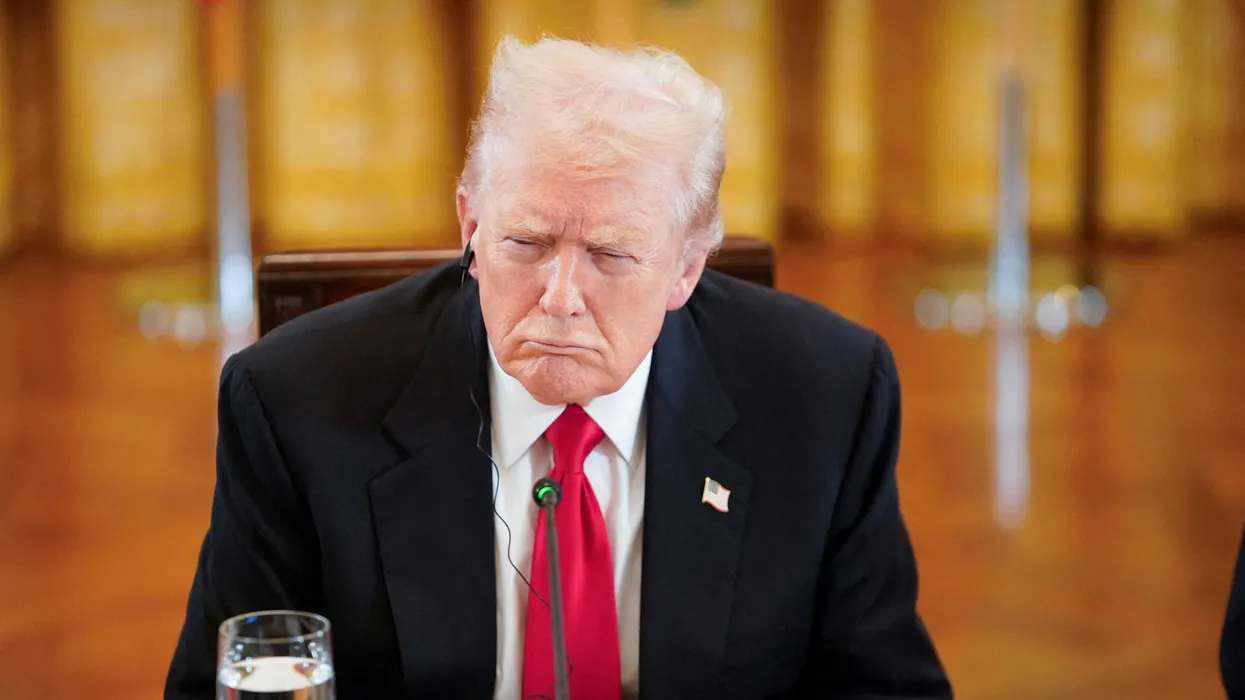
Political analyst and commentator David Rothkopf has suggested that Stephen Miller, rather than Vice President JD Vance, is the official most likely to seize behind-the-scenes power if President Donald Trump's health continues to decline. Speaking as a guest on The Daily Beast Podcast, Rothkopf presented his case for why he believes Trump's deputy chief of staff for policy is uniquely positioned to assume control if the president is incapacitated.
Miller, who served as a senior advisor and chief speechwriter during Trump's first term and was the principal architect of the administration's hardline immigration policies, has reemerged in the current administration as one of the president's most influential aides operating inside the West Wing on a daily basis. Vance, by contrast, holds the constitutionally designated role of successor under the 25th Amendment, which provides the legal framework for transferring presidential powers in the event of incapacity — a mechanism that has historically been invoked only for planned medical procedures, not for contested or ambiguous declines in fitness.
Rothkopf argued that President Trump, whom he described as an "80-year-old guy," is visibly struggling with the demands of the office.
“This is an 80-year-old guy who is obviously not physically or mentally healthy or up to the job he’s got,” Rothkopf said. “Trump’s schedule is so micromanaged these days, and he does a couple of hours a day, he doesn’t appear on TV, he does fewer of these open press things than he used to do, and it’s because people are sort of easing him away. This happened with Biden, by the way, where they just sort of don’t put you center stage. And it does raise a question, which is: If he declines further, if he is less capable of handling the job, who’s going to handle it for him?”
Rothkopf suggested that Miller would be the one to "handle" things, predicting that Miller would effectively sideline the president by instructing staffers: "Just send those memos to me."
To contextualize his prediction, Rothkopf pointed to multiple instances throughout American history where unelected officials or cabinet members effectively performed the duties of the presidency due to the commander-in-chief's declining health — a pattern that in each case unfolded outside the 25th Amendment's formal disability provisions.
"We have had multiple times in our history — after Eisenhower’s heart attacks, when FDR was in his declining health at the end of his term, when Woodrow Wilson was bedridden after a stroke — where other people did the job of president," Rothkopf noted. "And I’ve got to tell you, you look at Donald Trump, you look at the bruises, you look at his behavior, you look at his age, you look at his family history, and we could be heading for one of these periods where somebody other than Trump is actually, behind the scenes, the acting president."
Rothkopf further illustrated his point by recounting conversations with officials who served under President Ronald Reagan, who experienced cognitive decline while in office.
" I talked to people like Frank Carlucci was a Defense Department, the Secretary of Defense under Reagan, and Colin Powell, who was the chairman of the Joint Chiefs and later Secretary of State," Rothkopf explained. " And they said that after Reagan entered his decline, they had rules after 5 p.m., they didn't ask a question. They said they would try to resolve the question among themselves, and it would get passed on. And, you know, his role as president grew more diminished. They would run more things by Nancy Reagan."
A similar scenario occurred during the Nixon administration, Rothkopf added, when President Richard Nixon began drinking more heavily as a result of the Watergate scandal. He highlighted one specific national security incident where staff bypassed the president entirely.
" Same thing happened during the Nixon administration when, as a result of Watergate, he started drinking more heavily, a nd there was even one instance during the Nixon administration when there was a report of an incoming Russian missile attack," Rothkopf detailed. "Al Haig, who was acting as the chief of staff at the time, didn't call Nixon. He called [Secretary of State Henry] Kissinger. He said, what do we do with this?"
