Titi Adewusi and Jadesola Adedeji pledge to grow Africa’s next innovators through STEM Africa Fest
Key Takeaways
- •The 6.0 edition of STEM Africa Fest was held at Landmark Event Centre in Lagos and attracted about 3,500 children and parents.
- •The festival began in 2021 during the COVID-19 lockdown as a virtual initiative to connect classroom theory with practical STEM experience.
- •Organisers said the programme has reached more than 25,000 children across Nigeria and six other African countries.
- •Adewusi and Adedeji said STEM should be embedded in curriculum, teacher training and institutional support rather than treated as an extracurricular activity.
- •The founders want STEM Africa Fest to become a yearly national platform that prepares Nigerian children to build solutions, not just pass exams.
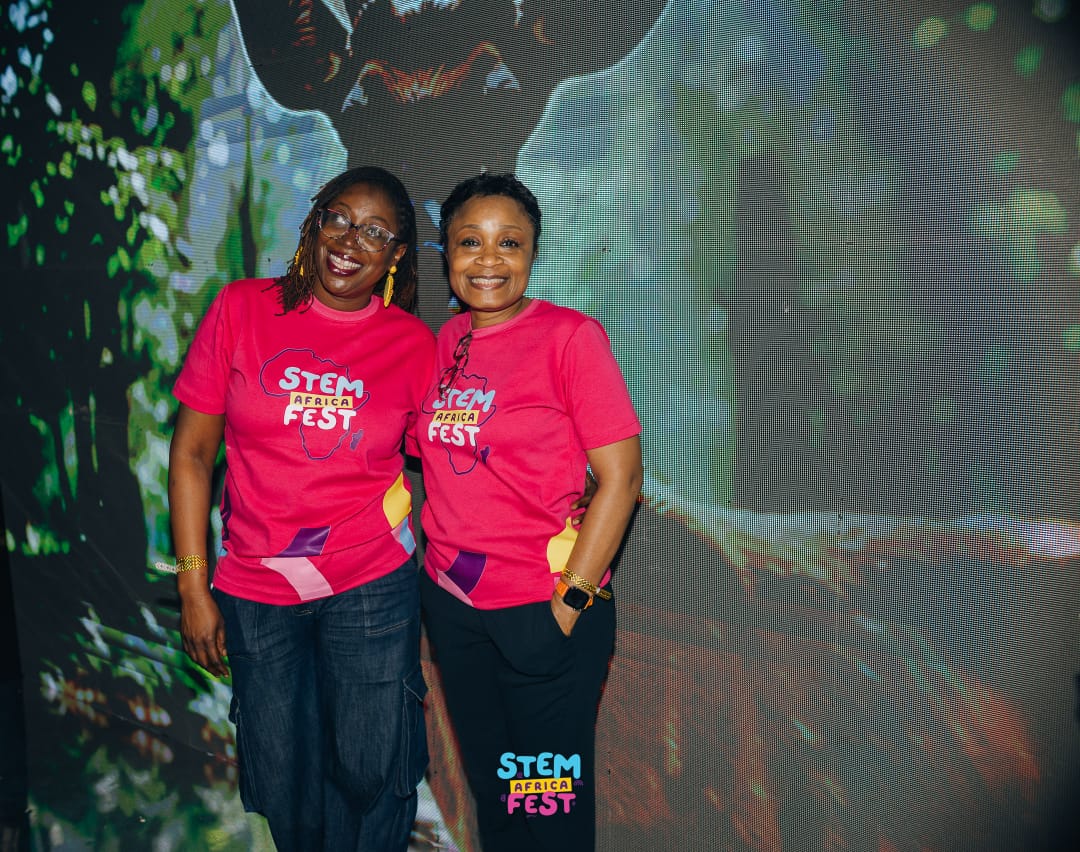
Conveners of STEM Africa Fest, Titi Adewusi and Jadesola Adedeji, have reaffirmed their commitment to raising Africa’s next generation of problem-solvers, saying practical science education must move from the margins to the centre of Nigeria’s learning system.
The call came during the 6.0 edition of the annual science, technology, engineering and mathematics (STEM) fair for children aged 5 to 15, held at the Landmark Event Centre in Lagos.
About 3,500 children and parents from across Lagos attended the one-day event.
The Lagos edition followed the 2.0 edition held on July 4 at the Ilorin Innovation Hub in Kwara State, underscoring the organisers’ effort to extend hands-on STEM learning beyond Lagos and into more Nigerian states.
According to the conveners, STEM Africa Fest was conceived in 2021 during the COVID-19 lockdown to bridge the gap between classroom theory and practical experience.
What began as a virtual pilot with more than 1,000 participants globally has grown into a continental movement that has reached over 25,000 children across Nigeria, Ghana, Sierra Leone, The Gambia, Zambia, Rwanda and Kenya, promoting experiential learning through science, technology, engineering, arts and mathematics, or STEAM.
Speaking in a press interview, Adewusi said this year’s theme, “Building Future Innovators”, was deliberately chosen to reflect the urgent need for Africa to produce its own innovators and creators.
“Children are learning the theories and we wanted to bring the real thing, hands-on,” she said. “If you’re teaching a child about 3D printing, we want them to actually experience it. If you’re teaching a child about building robots or AI, we wanted them to experience it.”
Adedeji said the festival grew out of conversations on how to make science more engaging for African children. She noted that the first physical edition attracted more than 6,000 attendees, and that demand has since outpaced the founders’ capacity.
She identified funding, stakeholder mobilisation and geographic expansion as key challenges. To address them, the organisation adopted a partnership model that allows collaborators in other states and countries to replicate the programme using a standardised framework. That model, she explained, made it possible to stage the Ilorin 2.0 edition and the Lagos 6.0 edition within the same month.
Both conveners stressed that government support must extend beyond financial grants.
“We need curriculum development, teacher training and institutional backing for STEM-focused initiatives,” Adedeji said. “STEM is not an extracurricular. It must sit at the centre of how we teach.”
Adewusi said there is a need for STEM curriculum to be rolled out, and she expressed readiness to work with the ministry, government and schools to scale adoption in line with SDG 4 on Quality Education.
Representing Access Holdings Plc, Programme Manager for Sustainability Ikechukwu Iheagwam said the company’s continued sponsorship reflects its commitment to education and technology. He added that early exposure to artificial intelligence and robotics will better prepare children for future jobs, and urged more private-sector involvement to complement government efforts.
On the event’s impact, Jason Lawal of Court Hill College, Opebi, said he took part in a Rubix’s Cube challenge and an AI masterclass where students created short AI-generated animations. Fatima Namama of Greater Ecstasy High School, Iyana-Ipaja, said attending the festival over the years deepened her interest in laboratory science and called for wider integration of STEM in schools.
Organisers said the festival’s legacy now extends beyond attendance figures. Some past participants have returned as exhibitors in coding and robotics, which they described as evidence that the initiative is already nurturing the next generation of African innovators.
With two editions already held in July, Adewusi and Adedeji said the goal is to institutionalise STEM Africa Fest as a yearly national platform that prepares Nigerian children not just to pass exams, but to build solutions.
Sponsors and partners for the 6.0 edition included Argentil Capital, Access Bank, Maltina, First Bank, Lebara STEM METS and 9ijakids. Others were Iwosan, Barium Tech, VDL Technologies, The Place, Fanice and MARS Program.

