CNN Anchor Notes Warning in James Stavridis’ Remarks on Trump’s Iran War Comments
Key Takeaways
- •James Stavridis said Trump’s remarks could indicate a wider and more forceful use of U.S. military power against Iran.
- •Stavridis cited B-1 bombers and aerial refueling tankers as assets that could support sustained strike operations.
- •He said Israel and several Arab nations, including Saudi Arabia, the UAE, Bahrain, and Kuwait, could be part of a broader regional effort.
- •Stavridis observed that Trump appeared tired and under significant stress while facing upcoming military decisions.
- •CNN anchor Kasie Hunt described Stavridis’ comments as carrying a warning.
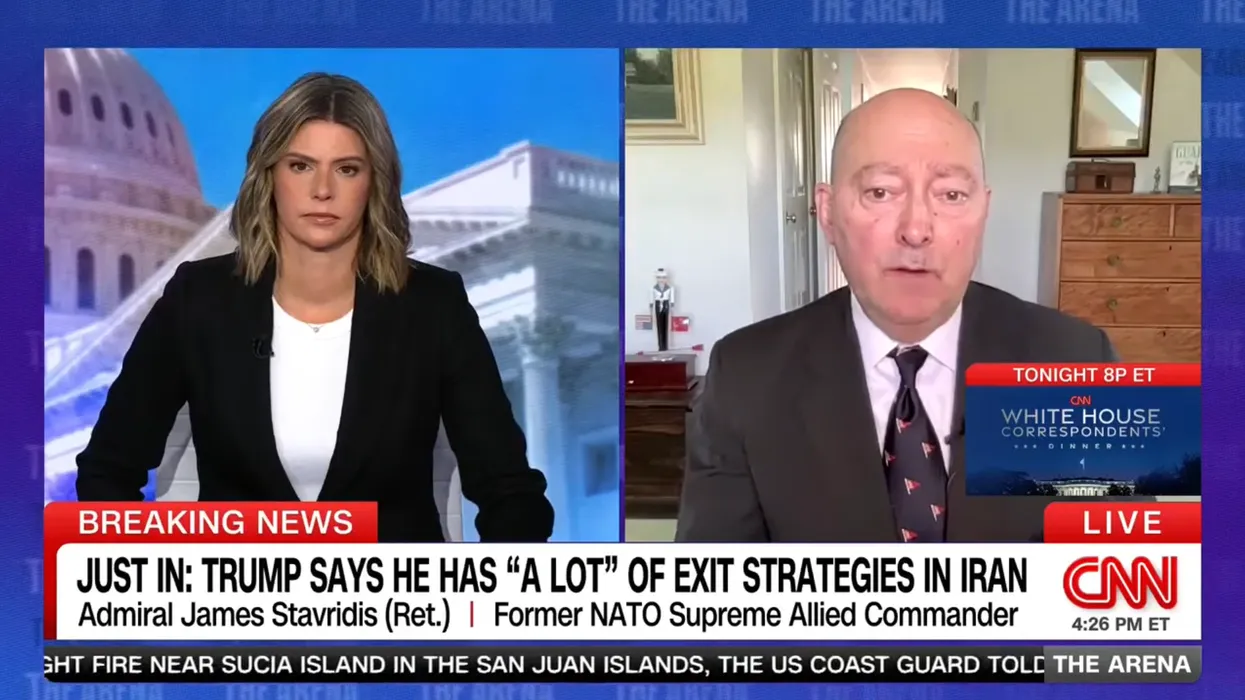
Retired Navy Admiral James Stavridis, a former Supreme Allied Commander of NATO who oversaw U.S. and allied military operations across Europe and the Mediterranean, said Friday on CNN that President Donald Trump’s remarks about U.S. military strategy in the Iran war could point to a broader and more intensive use of American force, prompting anchor Kasie Hunt to describe his assessment as “a little bit of a warning.”
Hunt spoke with Stavridis after Trump addressed military strategy in the region. She asked the retired admiral for insight into what the president appeared to be suggesting. Stavridis said Trump’s reference to applying a “heavier dose” against Iran through American military strikes could indicate increased and larger-scale attacks.
“Going big, sending B-1 bombers in, putting up all those new air tanker aircraft that Kristen [Holmes] mentioned coming out of Europe gives you the ability to recycle your strikes,” Stavridis said. The B-1 is a long-range, high-payload strategic bomber that has been used extensively in U.S. strike operations across the Middle East, while aerial refueling tankers extend the range and endurance of combat aircraft, allowing sustained bombing campaigns over contested airspace. Stavridis continued: “I think also going to the Israelis and putting them into the mix, and also talking to the Arab nations. Increasingly, I'm seeing reporting that the Saudis, the Emiratis, lately I've seen the Bahrainis, the Kuwaitis, have potentially participated. So I think what you're hearing is somebody considering going very, very big in order to push things along.”
Stavridis also offered a personal observation about Trump’s appearance as he weighed the military decisions ahead.
“By the way, on a human level, the president just looks tired to me,” Stavridis added. “He looks like he's a man under significant stress. And frankly, I don't envy him the decisions ahead.”
Hunt responded by noting the gravity of Stavridis’ assessment.
“A little bit of a warning in your words,” Hunt said, appearing surprised by the comment.

