Starlink urges South Africa to ease ownership rules in latest spectrum review
Key Takeaways
- •Starlink asked South African authorities to reconsider the ownership rules that have blocked its entry into the market.
- •SpaceX said the required 30% equity stake for historically disadvantaged groups is incompatible with Starlink’s global ownership structure.
- •The company is pushing for equity-equivalent investment programmes to be accepted as an alternative route to licensing.
- •Starlink also wants spectrum licences to run for at least 10 years, with clearer renewal rules and fees charged per licence rather than per station.
- •ICASA says it cannot fully implement the current policy direction without an amendment to the Electronic Communications Act.
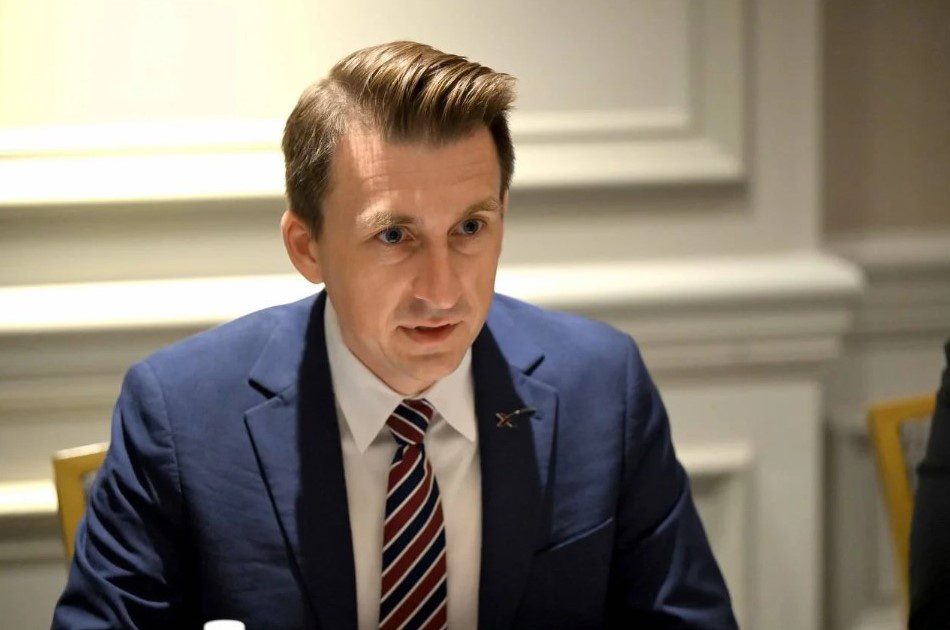
Starlink, the satellite internet provider owned by SpaceX, has asked South African authorities to address the Broad-Based Black Economic Empowerment (B-BBEE) Act, a key requirement the company has struggled to meet. The appeal is the latest in a series of Starlink requests as it continues its long-running effort to launch in South Africa.
The call came during a hybrid stakeholder meeting on draft amendments to the country's Radio Frequency Spectrum Regulations, 2015, which runs from Wednesday to Thursday. Starlink urged South African regulators to consider scrapping or relaxing the rule.
Presenting comments on Wednesday, Ryan Goodnight, senior director for market access and development at SpaceX, encouraged South Africa's communications regulator, the Independent Communications Authority of South Africa (ICASA), to address how the licensing and ownership regime clashes with fee rules. He noted that spectrum regulations require a minimum 30% equity stake for historically disadvantaged groups — a threshold Starlink cannot meet given its management structure and global operations.
The local ownership rule has been a major hindrance to Starlink's launch in South Africa. Last year, Elon Musk said the country had refused to bend its rules or approve the company's licence because "he is not black".
Specifically, the Electronic Communications Act (ECA) requires holders of individual licences to be at least 30% owned by historically disadvantaged groups, a policy rooted in the B-BBEE Act of 2003 and designed to redress economic inequality stemming from the apartheid era.
Amid calls for relaxation, Communications Minister Solly Malatsi gazetted a final policy direction on 12 December 2025. The document aims to compel ICASA to recognise equity-equivalent investment programmes as an alternative mechanism — an approach SpaceX has advocated since 2024 by offering its hardware free of charge to schools and rural communities. Equity-equivalent programmes are already recognised under the B-BBEE codes as an option for multinationals whose global structures make a direct equity sale impractical. Because satellite broadband can reach users beyond fixed and mobile network coverage, how the choice between equity transfer and investment programmes is resolved also carries consequences for connectivity outside South Africa's main centres. However, ratification and approval of the framework have stalled after ICASA said it could not give full effect to the policy without an amendment to the ECA.
Meanwhile, Amazon is set to launch its satellite internet operation, Amazon Leo, in South Africa, but with a different approach: the company will partner with Herotel, a local firm that will serve as its distributor.
As of July 2026, Starlink has launched in 29 African countries, the latest being Côte d'Ivoire. Amazon Leo, Spacesail and Space24 are also seeking entry into South Africa.
Starlink calls for longer spectrum licence terms
Aside from its push for equity-equivalent investment programmes, Starlink also encouraged South African regulators to consider extending spectrum licence terms to a minimum of 10 years, with clear renewal rules. Goodnight argued that this would give operators an avenue to set out long-term infrastructure and operational plans.
In addition, the company wants the new gateway earth station fee to be charged per licence rather than per station, so that a single licence can cover multiple gateways across the country. It also urged the regulator to expand the Ku-band spectrum available to earth stations in motion.
Starlink described the spectrum consultation as a welcome development. Goodnight called it an improvement on the existing regime and commended ICASA for drawing on international best practice. According to him, SpaceX, founded in 2002, has completed more than 680 successful missions and now serves over 12 million Starlink customers. He added that the experience accumulated across its global footprint has given the company a clear view of which regulatory approaches work.
For now, Starlink is still exploring the equity-equivalent investment programmes option as its route to a launch in South Africa. Whether that route opens rests on the ECA amendment ICASA says it needs, and on the final shape of the spectrum regulations emerging from the current review.

