Starcloud Plans to Mine Bitcoin in Space With Upcoming Starcloud-2 Satellite Launch
Key Takeaways
- •Starcloud plans to equip its Starcloud-2 satellite with Bitcoin mining ASICs alongside Nvidia Blackwell chips and AWS server blades, with launch now targeted for 2027 as of a pair of satellites.
- •The company's first test satellite, Starcloud-1, launched on November 2, 2025, carrying a single Nvidia H100 GPU that reportedly became the first data-center-class GPU to operate in orbit.
- •CEO Philip Johnston said ASICs cost about $1,000 per kilowatt compared with roughly $30,000 per kilowatt for high-end GPUs, a 30x difference that makes miners a natural fit for solar-powered orbital platforms.
- •The mining capability is framed as both a proof of concept and a revenue hedge, allowing ASICs to keep generating income when demand for AI compute dips.
- •Starcloud closed a $170 million Series A in March 2026 at a $1.1 billion valuation, later raising total funding to approximately $450 million at a $2.3 billion valuation, and filed with the FCC in February 2026 to deploy a constellation of up to 88,000 satellites.
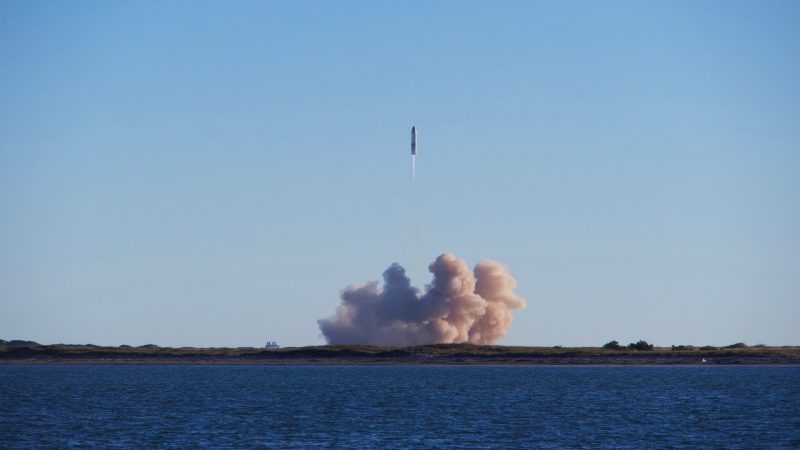
Starcloud, Inc., a Washington-based startup, is preparing to do something that sounds like science fiction: mine Bitcoin from orbit. The company announced plans to install Bitcoin mining ASICs aboard its upcoming Starcloud-2 spacecraft, a move that would place it among the first companies to attempt cryptocurrency mining in space.
The rationale rests on energy economics. On Earth, energy is the single largest cost in Bitcoin mining, and mining operators have historically clustered wherever electricity is cheapest. In orbit, solar panels receive nearly uninterrupted sunlight, which means energy becomes essentially free once the hardware is deployed.
From GPU in Orbit to Mining Rigs in the Sky
Starcloud was founded in January 2024 with a broader mission: building orbital data centers for AI workloads. The company launched its first test satellite, Starcloud-1, on November 2, 2025. That spacecraft carried a single Nvidia H100 GPU, reportedly making it the first data-center-class GPU to operate in orbit.
The Bitcoin mining component enters the picture with Starcloud-2, which CEO Philip Johnston described as a natural extension of the platform. The spacecraft will carry ASICs alongside Nvidia Blackwell chips and AWS server blades, creating a multi-purpose computing node floating above the atmosphere.
Originally slated for late 2026, Starcloud-2 is now expected to launch in 2027 as part of a pair of satellites. That mission will be the first real-world test of whether mining ASICs and AI hardware can run side by side in orbit, making the 2027 window the company's next milestone to watch.
Johnston framed the Bitcoin mining capability as both a of concept and a pragmatic business decision. When demand for AI compute is high, the orbital hardware will handle those workloads. When demand dips, the ASICs can keep hashing and generating revenue.
The Economics of Mining Beyond Earth
According to Johnston, ASICs cost about $1,000 per kilowatt, compared with roughly $30,000 per kW for high-end GPUs. That is a 30x difference in hardware cost per unit of power consumed, which he argued makes ASICs an almost obvious addition to a solar-powered platform already in orbit. The gap reflects the hardware itself: ASICs are single-purpose chips built to run Bitcoin's mining calculations, while GPUs are general-purpose processors whose flexibility carries a premium.
Johnston acknowledged the broader economic challenges facing the mining industry, but maintained that the unique advantages of space—particularly near-continuous solar power—create a viable niche.
Big Funding, Bigger Ambitions
Starcloud closed a $170 million Series A round on March 30, 2026, achieving a $1.1 billion valuation. By August 2026, the company had raised an additional $250 million, bringing total funding to approximately $450 million and pushing its valuation to $2.3 billion.
In February 2026, Starcloud filed with the FCC for permission to deploy a constellation of up to 88,000 satellites—a scale that would far exceed any satellite constellation in operation today.

