Stablecoin Supply Falls $14.2 Billion in Sharpest Drop Since 2022
Key Takeaways
- •On-chain analytics firm Glassnode reported a $14.2 billion contraction in stablecoin supply over the 30 days through Nov. 9, the sharpest monthly decline since June 2022 and the steepest in more than four years.
- •U.S. spot Bitcoin ETFs recorded $1.6 billion in cumulative net outflows across 20 trading sessions through Nov. 9, and U.S. spot Ethereum ETFs saw more than $1.8 billion leave over six consecutive weeks.
- •CryptoQuant data showed USDT's market capitalization dropped $6.6 billion over the 60 days through Nov. 7, exceeding twice the roughly $3.2 billion decline recorded after FTX collapsed in November 2022.
- •Total stablecoin supply stood just below $280 billion on Nov. 11, the lowest level since September 2025, with USDT representing roughly 62.8% of supply and USDC 25.1%.
- •Glassnode found that wallets holding 100 to 1,000 BTC and 1,000 to 10,000 BTC had recently accumulated, and identified buy orders between $68,000 and $72,500 on Binance and Coinbase on Nov. 11.
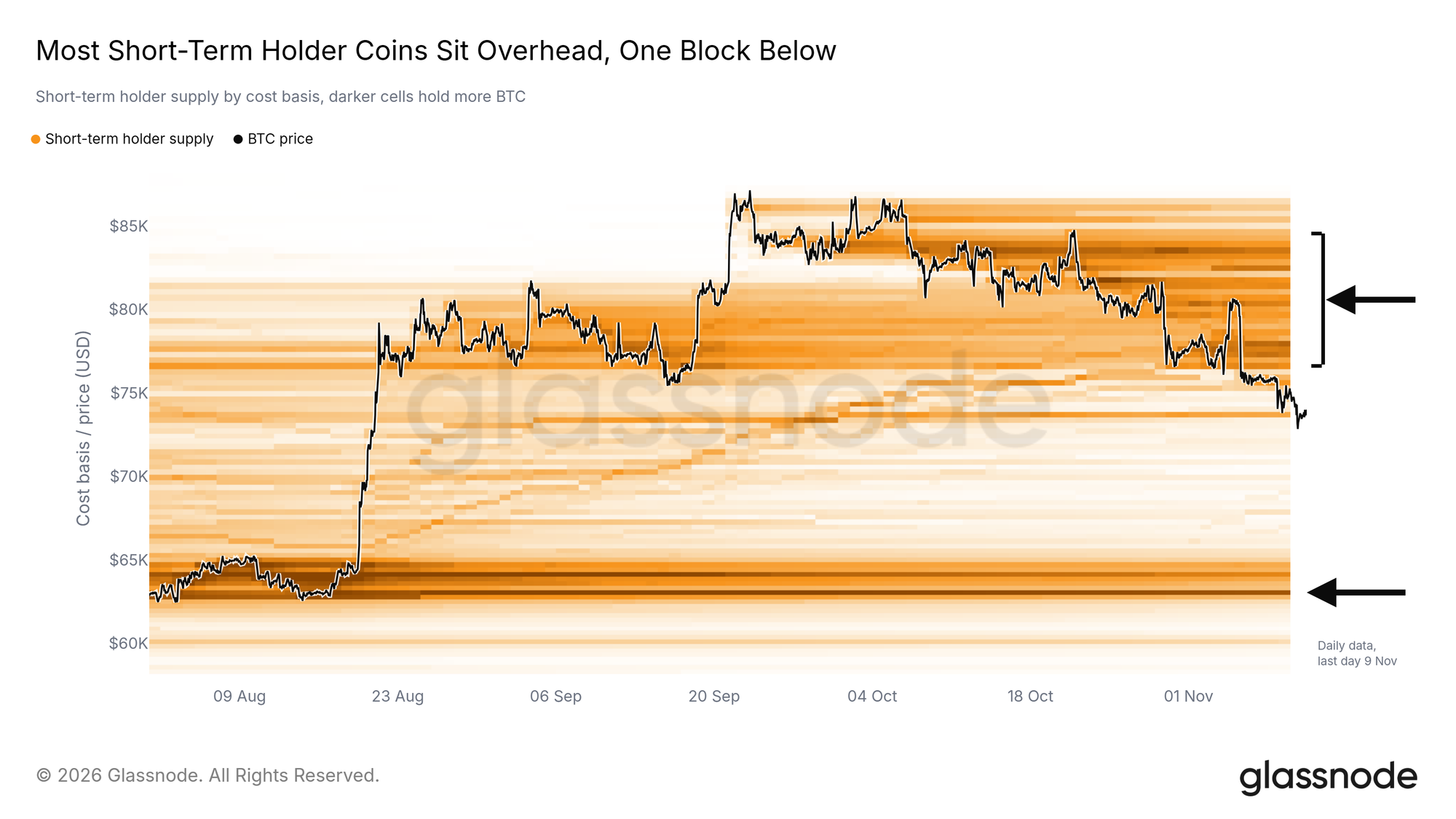
Stablecoin supply contracted by $14.2 billion over the 30 days through Nov. 9, the sharpest monthly decline since June 2022 and the steepest contraction in more than four years, according to on-chain analytics firm Glassnode. The pullback coincided with pressure elsewhere in digital assets: U.S. spot Bitcoin exchange-traded funds (ETFs) recorded $1.6 billion in net outflows across 20 trading sessions through the same date, while separate data from CryptoQuant showed a $6.6 billion drop in USDT's market capitalization over 60 days.
The figures appear in Glassnode's latest Week Onchain report, which draws on market data through Nov. 9. Bitcoin traded near $71,500 on Nov. 13, after slipping toward $74,000 the previous day. Market participants are watching whether dollar-linked tokens return to growth as investors assess the buying power available across the crypto market.
Stablecoin Supply Shrinks as USDT Market Value Falls
Glassnode placed the current contraction alongside June 2022, shortly after the collapse of Terra's algorithmic stablecoin UST. The comparison measures dollar changes across different periods; it does not establish that the same conditions exist today. The earlier monthly decline reached nearly $30 billion in June 2022, according to The Block, whose data put total stablecoin supply just below $280 billion on Nov. 11 — the lowest level since September 2025.
Stablecoins are blockchain tokens designed to track a reference asset, most commonly the U.S. dollar. The largest such tokens, including Tether's USDT and Circle's USDC, aim to maintain a value of $1. Traders rely on them to move funds and buy digital assets without arranging a bank transfer for each transaction.
Circulating supply can decline when holders redeem tokens for dollars. A smaller pool may leave less dollar-linked buying power available for crypto trades, Glassnode said. A sale between two traders, by contrast, changes ownership without necessarily changing the total number of tokens in circulation.
Stablecoin supply alone cannot show where every dollar goes. The tokens also support payments, transfers and collateral, and users can move balances between different issuers.
As reported earlier, CryptoQuant data shows USDT's market capitalization dropped $6.6 billion over the 60 days through Nov. 7. That exceeded twice the roughly $3.2 billion decline recorded over a comparable period after the FTX exchange collapsed in November 2022. The recent drop was larger in dollar terms, but smaller as a percentage of USDT's much larger market value. Market capitalization also reflects the token's price, which can move slightly above or below its dollar target.
USDT represented roughly 62.8% of stablecoin supply as of Nov. 11, with USDC accounting for 25.1%, according to The Block's figures. Gold-backed tokens had a combined market value of $5.61 billion, below their $6.31 billion peak in February.
Bitcoin ETFs See Outflows as Large Holders Accumulate
The $1.6 billion in net outflows from U.S. spot Bitcoin ETFs covered 20 sessions through Nov. 9. That figure is a cumulative total and does not mean every session recorded an outflow. Spot ETFs hold the underlying asset directly, giving investors exposure to Bitcoin through brokerage accounts rather than holding the token itself. U.S. spot Ethereum ETFs also saw more than $1.8 billion leave over six consecutive weeks, The Block reported on Nov. 10. ETF flows and stablecoin supply measure different markets, and the figures do not establish that ETF redemptions caused the token contraction.
CoinMarketCap's Fear and Greed Index stood at 26 on Nov. 11, indicating fear on the gauge's scale from 0 (extreme fear) to 100 (extreme greed). Bitcoin accounted for about 60.5% of total crypto market value that day.
Glassnode found that wallets holding 100 to 1,000 BTC and those with 1,000 to 10,000 BTC had recently accumulated. Other wallet groups were still reducing their holdings in the data through Nov. 9. On Nov. 11, the firm identified buy orders between $68,000 and $72,500 on Binance and Coinbase, noting that traders can withdraw those bids at any time.
Glassnode also said most nearby long liquidation levels had already been cleared as Bitcoin fell. Long positions are trades that profit when prices rise. Its Nov. 11 heatmap placed the largest modeled cluster between $59,500 and $62,600. Such clusters show where leveraged positions could be forced to close, rather than predicting where Bitcoin will trade.

