South Africa Need New Zealand Tests to Deliver Revenue — but All Blacks Fans Are No Lions Tourists
Key Takeaways
- •Tickets are still available for two of the three Tests in Johannesburg and Cape Town, with prices starting at £38 for the Ellis Park opener and £75 for the potential decider at the 95,000-capacity FNB Stadium.
- •South Africa's economic constraints, including unemployment above 30 per cent affecting more than 8 million people as of 2025, limit how rugby tickets can be priced domestically.
- •A fourth Test at the Baltimore Ravens' M&T Bank Stadium will target American audiences, with ticket prices from £130 to over £1,200, ahead of the United States hosting the Rugby World Cup in 2031 (men's) and 2033 (women's).
- •All Blacks supporters travel in far smaller numbers than British and Irish Lions fans, whose 2025 tour of Australia is estimated to have injected more than £200m into the host economy.
- •The Springboks enter the series as back-to-back world champions after winning the 2019 and 2023 World Cups plus the 2024 Rugby Championship, but their union prioritizes long-term revenue stability.
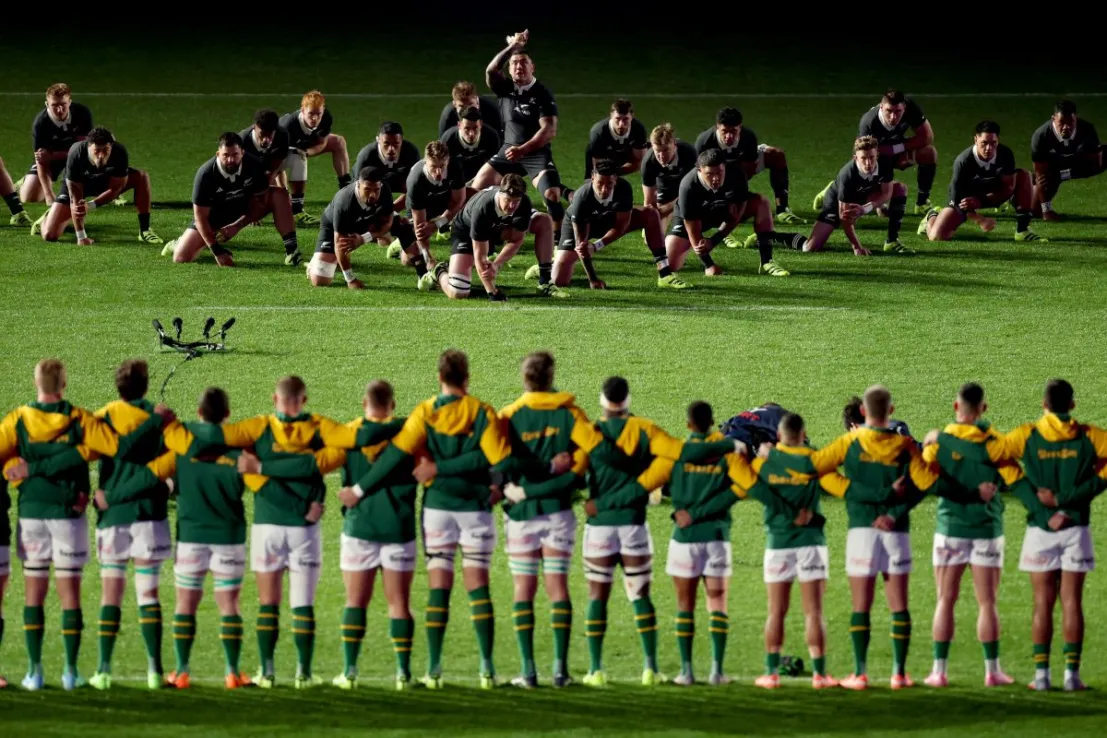
It is a straightforward equation: the Greatest Rivalry series between South Africa and New Zealand, which gets under way on Saturday, needs to be a genuine money-spinner for the Springboks. Few rivalries in the sport carry the weight of this one — the two nations first met in 1921, and their contests have framed more than a century of Test rugby — but heritage alone does not pay the bills.
Every seat should be occupied for the three Tests in Johannesburg and Cape Town, and the All Blacks' matches against the Stormers, Sharks, Bulls and Lions should draw healthy crowds. In practice, some of those club fixtures have been played in front of disappointing attendances, and tickets are still available for two of the three Tests — the only seats on sale in Cape Town have been reserved for disabled fans.
Current availability shows tickets starting at £38 for Saturday's opener at the iconic Ellis Park and £75 for the potential series decider on the other side of Johannesburg at the 95,000-capacity FNB Stadium. Were this series — even one pitting South Africa and New Zealand against each other rather than England or France — staged in Europe, there would be no problem shifting millions of tickets at that price point, or even double it. But this is South Africa, and there is rather more nuance.
South Africa's economic hit
According to World Bank data, Africa's second-biggest economy has been on a slow but unsteady GDP growth decline since the 1960s, falling from a high of nearly 8 per cent to far lower levels today. The nation "remains too weak to materially improve jobs and poverty outcomes", with unemployment still above 30 per cent as of 2025, affecting more than 8 million people.
That means rugby cannot be priced at £150 per ticket, and the powers that be have probably priced this Test series pretty well — if not slightly too high. It also forces the so-called Greatest Rivalry series to be a blockbuster show, one capable of attracting the broadcasters, sponsors and global eyeballs that can prove more financially lucrative to the South African rugby union.
New Zealand's All Blacks fans, after all, do not and will not travel to South Africa in the numbers that British and Irish Lions supporters do when they head out on tour. Part of that is simple arithmetic: New Zealand's population is barely five million, whereas the Lions draw travelling support from four rugby nations. The Springboks were forced to host the European touring team without fans because of Covid-19, in a blow not only to the rugby team's coffers but to the nation's. For comparison, the 2025 British and Irish Lions tour of Australia is estimated to have injected more than £200m into the host nation's economy, while Rugby Australia generated over £75m from the month of rugby.
That will not be the case for South Africa over the next three weekends. The union will need bumper spectator numbers, a spread of global broadcasters, and sponsors signing late deals to be part of the second Test — always a decider in some sense — and the third match.
An ace in the pack
There is, however, an ace in the pack for the Springboks, and it comes in the shape of Baltimore, Maryland. The so-called Charm City is home to NFL team the Ravens, and their M&T Bank Stadium will host a fourth Test between South Africa and New Zealand that serves a dual purpose: topping up team coffers and exposing one of rugby's marquee match-ups to an American audience that has been paying upwards of $10,000 to watch the Fifa World Cup in recent months.
The stateside stop is well timed. The United States will host the men's Rugby World Cup in 2031 and the women's tournament in 2033, and the sport has made no secret of its ambition to grow the American audience before then. The All Blacks have recent experience of playing there, too, having faced the USA Eagles in Washington DC in 2021.
Interestingly, a look on Ticketmaster shows the fixture listed under "All Blacks tickets" rather than a South African listing, with prices starting at £130 — a huge hike on the most expensive cheapest ticket in South Africa — and rising to well over £1,200. Here is the money.
The US market could swallow rugby up in a heartbeat if it wanted to, and credit is due to both South Africa and New Zealand for admitting they want a slice of the pie.
Over-performing is putting it mildly: the Springboks are back-to-back world champions, having won the 2019 and 2023 World Cups — the latter with a 12-11 victory over New Zealand in the Paris final — and backed that up with the 2024 Rugby Championship title. South Africa's union needs the stability of long-term revenue more than its already over-performing team needs a series win, though those in charge would argue that both would be preferable. On a personal note, here is hoping for a tied series in South Africa — one win apiece and a draw — and an ultimate decider on the East Coast of the United States.
Former England Sevens captain Ollie Phillips is the founder of Optimist Performance. Follow Ollie @OlliePhillips11.

