Spiro and ESP Launch Programme to Help 5,000 African Women Build Electric Motorcycle Businesses
Key Takeaways
- •Spiro and ESP have launched a programme named Women in E-Mobility that aims to help 5,000 African women build businesses around electric motorcycles by 2030.
- •A first cohort of 50 women has begun training in Rwanda as part of a pilot intended to reach 500 participants before wider expansion.
- •The initiative follows a three-step model covering training in riding and business skills, lease-to-own access to Spiro electric motorcycles with battery swapping, and connections to ride-hailing, delivery and logistics platforms.
- •Women make up roughly 4% of Rwanda's transport workforce, while a 2025 Kigali study found that 47.7% of surveyed women would consider working as motorcycle taxi drivers.
- •If pilot results on participants' progress, earnings and business performance are positive, the programme will roll out to other countries where Spiro operates between 2027 and 2030, with the partners seeking support from development finance institutions, impact investors, governments and commercial partners.
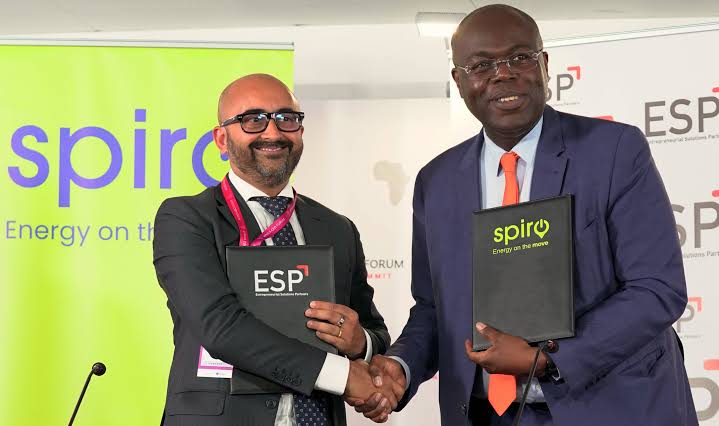
Spiro, an electric mobility company, has partnered with Entrepreneurial Solutions Partners (ESP), a consulting and investment firm that backs entrepreneurs across Africa, to launch a programme designed to help 5,000 African women build businesses around electric motorcycles by 2030.
In a statement issued on 28 October, the two partners said 50 women have already begun training in Rwanda. That cohort is the first group in a pilot intended to reach 500 participants in the country before the programme expands to other markets.
Three-Step Model: Training, Motorcycles, Customers
The initiative, named Women in E-Mobility, is structured around three stages. The first is training, which covers safe riding and road rules alongside money management, digital tools and small-business operations. The second is vehicle access: participants can lease-to-own a Spiro electric motorcycle and use the company's battery-swapping stations. The third connects riders with ride-hailing, delivery and logistics platforms that can provide a customer base.
According to Spiro, women account for roughly 4% of Rwanda's transport workforce. A 2025 study conducted in Kigali and cited by the company found that 47.7% of women surveyed said they would consider working as motorcycle taxi drivers. Read together, the figures highlight a gap between women's current presence in the sector and their stated interest in joining it.
"Electric mobility is creating new economic opportunities across Africa, and we want more women to be part of this transformation," said Anant Badjatya, Spiro's Group CEO. "Our ambition is to encourage a new generation of women entrepreneurs who will help shape the future of mobility on the continent," he added.
Why Rwanda, and What Comes Next
Rwanda is the starting point because Spiro already operates there, assembling motorcycles and running a battery-swapping network that supports the country's growing electric mobility sector. ESP, meanwhile, manages the business dimension of the programme, from developing participants' skills to helping them secure financing.
"For women entrepreneurs, having access to a motorcycle is only the first step. Building a successful business also requires skills, financing, customers and ongoing support," said Eric Kacou, Co-founder and CEO of ESP.
Founded in 2011, ESP maintains offices in Kigali, Abidjan, Nairobi and Dakar and operates across 28 countries. By its own count, the firm has supported more than 12,900 micro, small and medium enterprises, contributed to 43,153 direct jobs and helped businesses gain access to $104.5 million in financing. More than 23,700 young women have taken part in its programmes, a track record relevant to an initiative aimed at women entrepreneurs. Its institutional partners include the Mastercard Foundation, the World Bank Group and the African Development Bank.
The Rwanda pilot is intended to demonstrate how participants fare, measured by their progress, earnings and the performance of their businesses. If results are positive, the programme will roll out to other countries where Spiro operates between 2027 and 2030. At that stage, the partners plan to seek backing from development finance institutions, impact investors, governments and commercial partners able to contribute financing, training and commercial opportunities.
Spiro describes itself as Africa's largest electric mobility company. It says it operates in seven countries, with more than 156,000 electric motorcycles on the road, supported by over 2,500 battery-swapping stations and more than 57 million battery swaps to date. The company assembles bikes in Uganda, Kenya, Nigeria and Rwanda.

