Spiro Targets 200,000-Bike Production Capacity in Nigeria, Expands Battery-Swapping Network
Key Takeaways
- •Spiro plans to increase its Nigerian motorcycle production capacity from roughly 30,000 units to 200,000 and relocate assembly from Sagamu, Ogun State, to a new facility whose location and timeline have not been disclosed.
- •Since launching in July 2024 with three battery-swapping stations in Ogun State, Spiro has expanded into Lagos, Oyo, and Benue states and completed around 84,000 battery swaps.
- •The company plans to add eight new battery-swapping stations by the end of December 2026, build larger stations in Ijebu, Sagamu, and Ibadan, and enter Kano, Kaduna, and Abuja in 2027.
- •Spiro targets a network of 18,600 motorcycles and 62 major battery-swapping stations, with sales of 50,000 motorcycles by 2027 and a goal of 100,000 electric bikes on Nigerian roads within two to three years.
- •Spiro secured a combined $320 million in financing this year, comprising $50 million in debt in February and a $270 million equity round in June that included a $55 million investment from NewTrails Capital.
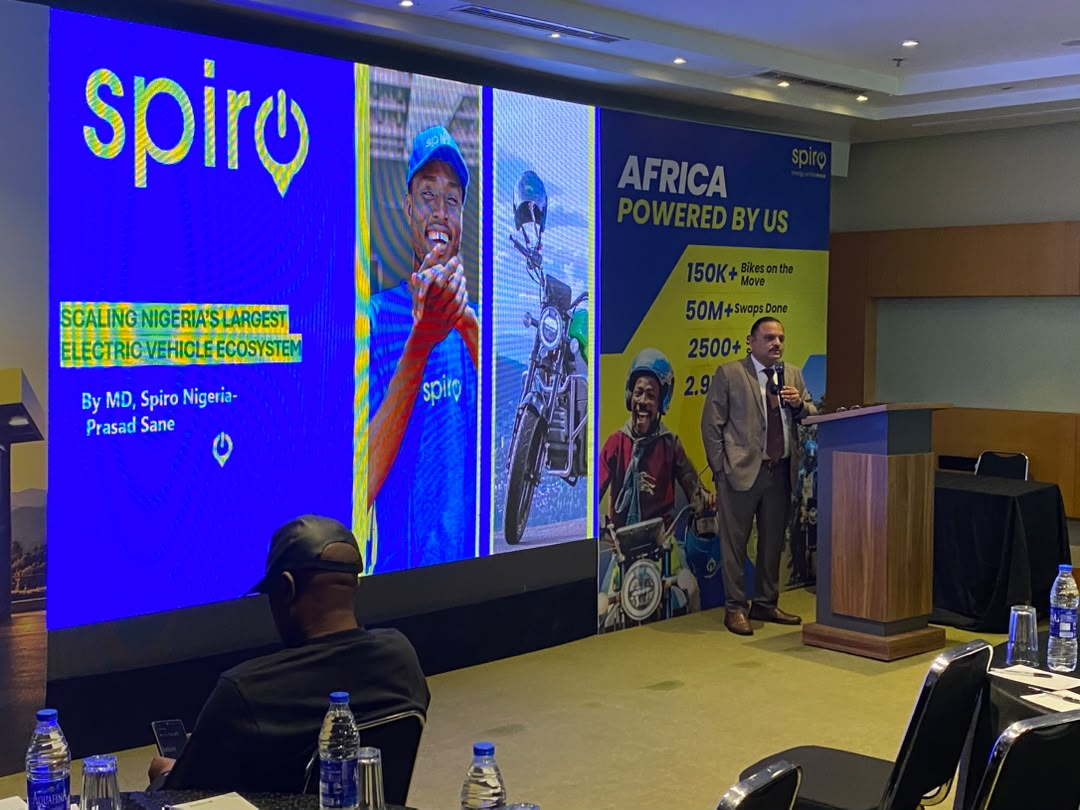
Electric motorcycle company Spiro plans to raise its motorcycle production capacity in Nigeria from roughly 30,000 units to 200,000 — a more than sixfold increase — with executives announcing the plan at the Spiro Nigeria Media Connect event held in Lagos on Friday. Company officials used the gathering to share details of their broader plans, which include widening the firm's battery-swapping network and introducing its electric motorcycles to more regions of the country.
Battery swapping allows riders to exchange depleted batteries for charged ones at dedicated stations rather than waiting for their vehicles to recharge. For riders who depend on their motorcycles for daily income, the model's appeal lies in keeping a vehicle on the road instead of parked at a charger.
Prasad Sane, managing director and country head of Spiro Nigeria, said the company is to relocate its assembly operations from Sagamu in Ogun State to a new facility to accommodate the major increase in production.
"Right now, our plant produces around 30,000 bikes, but we are committed to scaling up to 200,000 bikes soon, and we will be moving to a new location," Sane said. He did not disclose the location of the new site, the timeline for the move, or the expected cost of the expansion.
In addition to expanding capacity, Spiro is exploring the development of local manufacturing capabilities, which may include the production of batteries and other components in Nigeria. The company presents the move as a way to boost job creation, strengthen the local economy, and consolidate its position as a key player in the Nigerian motorcycle market.
Battery-Swapping Network Growth
The event also highlighted the role battery-swapping stations play in supporting Spiro's electric motorcycle business in Nigeria. Edward Amanambu, head of operations for Spiro Nigeria, shared updates on the company's progress since launching in July 2024. Starting with three battery-swapping stations in Ogun State, Spiro has since expanded into Lagos, Oyo, and Benue states and has completed around 84,000 battery swaps.
Looking ahead, Spiro plans to strengthen the network further by adding eight new stations by the end of December 2026. Larger stations are set to be established in Ijebu, Sagamu, and Ibadan, and the company is preparing to expand into Kano, Kaduna, and Abuja in 2027. Across the planned network, Spiro is targeting 18,600 motorcycles, whether through new sales or conversions of existing motorcycles to electric power, and a total of 62 major battery-swapping stations.
The larger stations are designed to make it easier for riders to access batteries, particularly as the number of electric motorcycles continues to grow on Nigerian roads. According to the company, a mega-station equipped with 48 battery racks could serve approximately 1,200 riders, significantly improving convenience for users.
Sales and Fleet Targets
Spiro has set a target of selling 50,000 motorcycles by 2027, with an ultimate goal of having 100,000 electric bikes on the roads within the next two to three years. The company frames the plan as part of Nigeria's broader shift toward sustainable mobility.
Product Development Plans
At the Lagos event, Spiro also unveiled its product development plans for the Nigerian market. Attendees received a preview of the Spiro Ekon M1V 3, a model that remains under wraps and has yet to reach Nigerian streets. The company additionally displayed the Ekon M12, a motorcycle that features alloy wheels, LED lighting, a storage compartment, and a longer seating area for added comfort.
The demonstrations went beyond showcasing design, according to the company, underscoring Spiro's vision of growing its product lineup alongside its charging and battery-swapping infrastructure.
Recent Funding
The company's ambitions in Nigeria come on the heels of significant financing announcements made earlier in the year. In February, Spiro secured $50 million in debt financing. In June, it followed with a $270 million equity funding round that included a $55 million investment from Chinese investor NewTrails Capital — a combined $320 million in announced financing for the year.
Spiro has not specified how much of the funding will be allocated to its assembly plant or battery-swapping network in Nigeria, though the amounts provide a substantial financial foundation for the planned expansion.
The developments announced at the Lagos event underscore the company's commitment to boosting electric motorcycle adoption across Nigeria, with a focus on local assembly, improved access to battery-swapping facilities, and entry into new markets. How quickly Spiro can roll out the necessary infrastructure and production enhancements will shape the pace of the expansion. With the new plant's site and timeline still undisclosed, the markers to watch include the eight additional stations promised by the end of December 2026 and the planned entries into Kano, Kaduna, and Abuja in 2027.
This article was originally published by TechNext24.

