Pirro's Reported Special Grand Jury Plan Could 'Spectacularly Backfire,' Lawfare Analyst Warns
Key Takeaways
- •Special grand juries were established under the Organized Crime Act of 1970 to help prosecutors handle complex cases and can sit for up to 36 months.
- •Unlike regular grand juries, special grand juries may issue a public report at the end of their term.
- •Any report from the D.C. grand jury would require majority approval from the jurors and would need judicial review before becoming public.
- •Chief Judge James Boasberg previously quashed subpoenas in Pirro’s investigation of Jerome Powell, saying the government had produced essentially zero evidence of a crime.
- •Bower said a special grand jury is better suited to a long investigation than to creating a public document condemning political opponents.
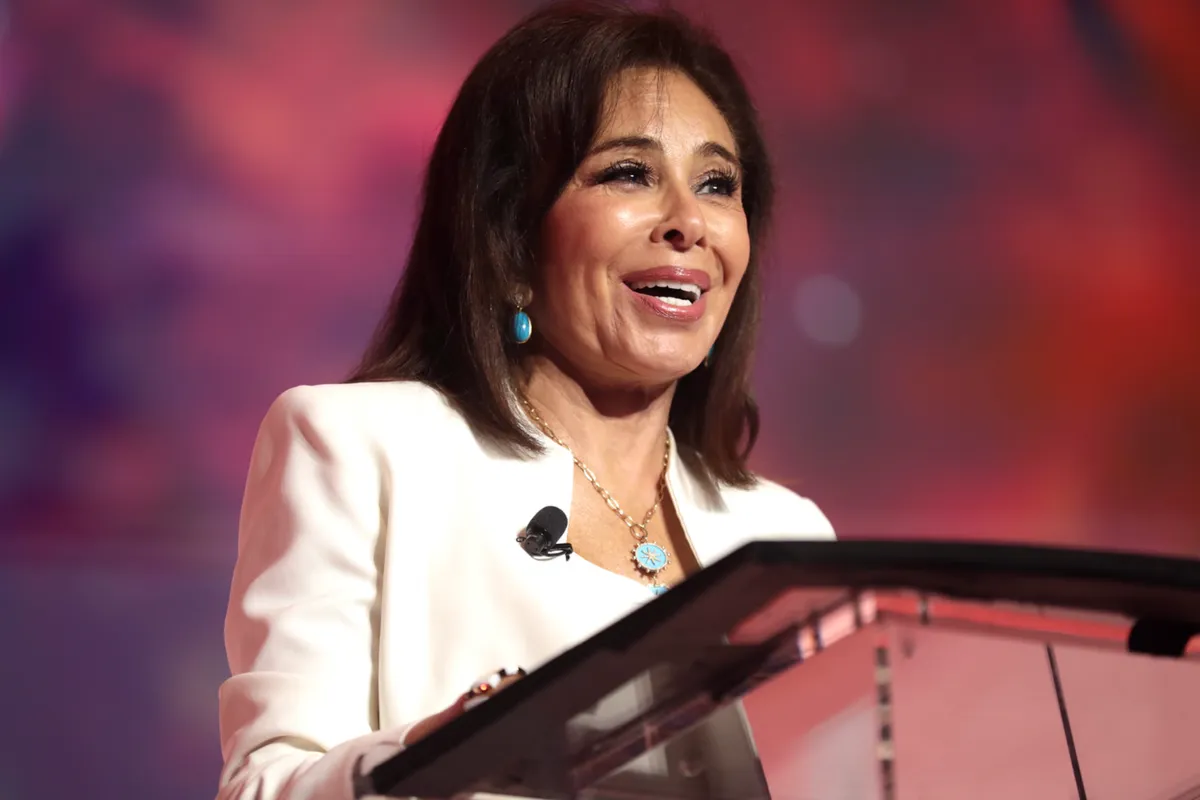
President Donald Trump is rumored to be furious and considering firing U.S. Attorney Jeanine Pirro over her decision not to pursue a criminal case against Olympian David Hearn — and one legal expert says Pirro's possible attempt to save face could "spectacularly backfire."
Lawfare's Anna Bower raised the question on X on Monday: "Last week, WaPo reported that a 'special grand jury' has been empaneled in D.C." She asked: "Could U.S. Attorney Jeanine Pirro use that grand jury to release a damaging report against Trump's critics?"
"If that's her galaxy-brain plan, it's not a very good one," Bower added.
In her Lawfare analysis of special grand juries, Bower observed that "turning one loose to investigate purported crimes can, on occasion, spectacularly backfire."
Special grand juries were created through the Organized Crime Act of 1970 as a specialized tool to make it easier for prosecutors to handle complex organized crime cases. Like regular grand juries, they operate in secrecy and are empowered to subpoena documents, require testimony, and issue indictments. They must be empaneled every 18 months in judicial districts with more than four million people, though they can also be used under distinct circumstances in smaller districts. Special grand juries may sit for up to 36 months — twice as long as regular grand juries — and, most notably, they are permitted to issue a public report at the end of their term, something regular grand juries cannot do.
Those features give prosecutors more runway in long investigations, but they also come with constraints that matter if the goal is a public document rather than a charging decision. According to Bower, those limits make a special grand jury a less potent political weapon against Trump's critics.
"Beyond the statutory limitations, the practical realities of this particular special grand jury make the idea of using its report as a political weapon look even less plausible," Bower wrote. "A report can only be submitted with the concurrence of a majority of the grand jurors. And this is, after all, a D.C. grand jury. Pirro's office has already had a remarkably difficult time persuading D.C. jurors to go along with some of its more politically charged prosecutions."
The judge who would likely decide whether any report becomes public "is hardly a pushover," Bower added. That task would fall to Chief Judge James Boasberg, who has already had occasion to criticize Pirro's use of grand jury powers. Earlier this year, Boasberg quashed subpoenas issued in Pirro's investigation of Federal Reserve Chair Jerome Powell, concluding that the government had produced "essentially zero evidence" of a crime and that the subpoenas had been issued for an improper purpose.
For that reason, Bower argued that even if a special grand jury is available, it is not a reliable tool for generating a public record on demand. The statutory structure was designed for criminal investigation, not for turning a grand jury into a vehicle for publishing accusations.
Taken together, these factors led Bower to conclude that if Pirro has convened a special grand jury in the hope of pleasing Trump by continuing to pursue his political adversaries, she may be making a serious mistake.
"All of which is to say: If Pirro's objective is simply to conduct a long-running criminal investigation, a special grand jury may give her a useful tool," Bower wrote. "But if the objective is to manufacture a public document condemning Trump's political enemies, the tool looks considerably less formidable. The statute was not written to give prosecutors a mechanism for publishing accusations they cannot otherwise persuade a grand jury to charge."
Ultimately, she wrote, "if you give a grand jury the opportunity to speak, you cannot count on it to tell the story you want it to tell."

