Spain Confronts EU Migration Hawks in Tense Ceuta Crisis Talks
Key Takeaways
- •Approximately 72,000 people crossed from Morocco into the Spanish enclave of Ceuta, with 70,000 having since returned, according to Spanish government figures.
- •A coalition of 22 EU member states led by Italy, Denmark, Germany, and Hungary sent a letter warning against migration policies that could act as pull factors, specifically citing Spain's regularisation programme.
- •Italy's interior minister advocated for EU-wide return centres modeled on the Italy-Albania bilateral agreement and proposed using trade measures to pressure Morocco into cooperating on repatriation.
- •Italy and Denmark called for suspending Spain from the Schengen free-travel area over the Ceuta crisis, a proposal that is legally impossible under existing EU rules.
- •EU ministers expressed united solidarity with Spain in a joint statement after more than three hours of talks but conceded that crisis communication among member states needed to be strengthened.
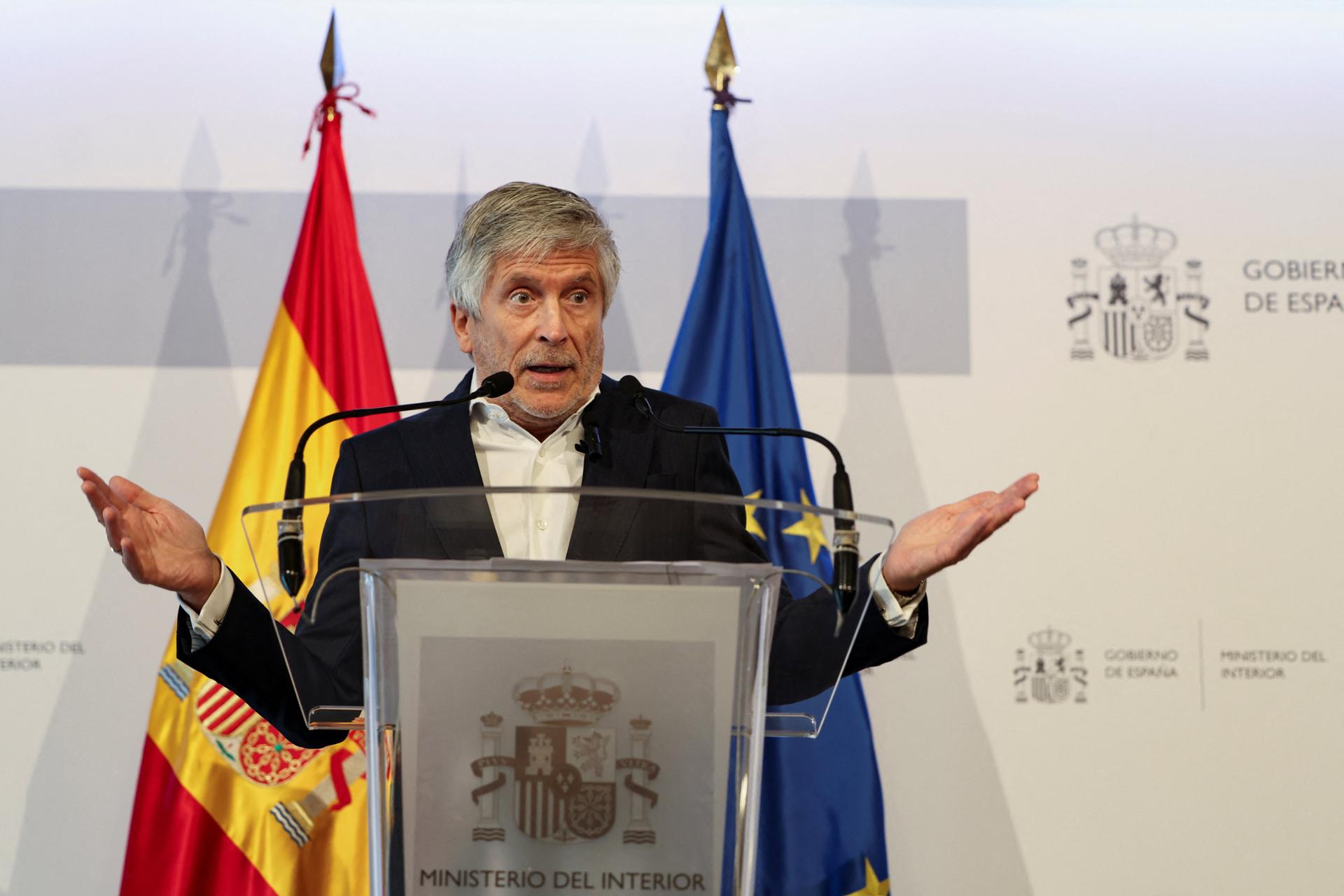
BRUSSELS, Belgium — Spain's interior minister clashed with hawkish EU counterparts during a tense video conference on Tuesday, as the bloc sought to draw lessons from the mass influx of migrants into the North African enclave of Ceuta — a crisis that has exposed deep fault lines in Europe's migration policy.
The unprecedented arrival of tens of thousands of people streaming into Ceuta from Morocco — with dozens dying in the attempt and nearly all having since departed — has left the Spanish government at odds with many of its EU partners. Ceuta, a Spanish territory on the North African coast separated from the Spanish mainland by the Strait of Gibraltar, shares the European Union's only land border with an African nation, making it a persistent flashpoint in Europe's migration debates.
Although Spain moved swiftly to return migrants from Ceuta, the government of Prime Minister Pedro Sánchez has championed a more open approach to migration than many EU counterparts, including hardliners such as Italy and Denmark. Spain's regularisation initiative — which would grant legal status to hundreds of thousands of undocumented migrants already living and working in the country — has drawn particular fire from governments that argue such policies act as pull factors.
A hastily convened video conference of the bloc's interior ministers on Tuesday offered an opportunity to seek common ground — but also carried the risk of a diplomatic showdown. The talks came at a sensitive moment, as the EU begins implementing its New Pact on Migration and Asylum, a sweeping legislative overhaul agreed in 2024 that aims to standardise asylum procedures and expand the use of externalised return mechanisms across the bloc.
A joint statement issued after more than three hours of talks declared that member states "were united in expressing strong solidarity with Spain" and commended its "swift and effective efforts" to resolve the crisis.
However, the ministers also conceded that "communication during moments of crisis" could be "reinforced" and made "more coherent" — a tacit acknowledgment that the European response fell short on that front.
Diplomatic Letter War
Leading the hardliner faction, Italian Prime Minister Giorgia Meloni has openly criticized Madrid's migration policies, particularly a recent initiative to grant legal status to undocumented migrants already residing in the country.
Both Italy and Denmark advocated last week for suspending Spain from the Schengen free-travel area over the Ceuta crisis — a proposal firmly rejected by Madrid and, in any event, legally impossible under EU rules. The Schengen area, which permits passport-free movement across most of continental Europe, has no formal mechanism for expelling a member state, making the demand largely symbolic.
Tuesday's meeting was requested by both sides: Sánchez, who wrote to the heads of EU institutions over the weekend to rebuke the "selfish" stance of fellow member states, as well as by Madrid's critics.
Twenty-two countries led by Italy, Denmark, Germany, and Hungary sent their own letter on the Ceuta crisis, warning against migration "policies that can serve as pull factors" and specifically citing Spanish-style regularisation schemes.
The EU has significantly tightened its migration rules in recent months, including provisions allowing member states to send failed asylum seekers to so-called "return hubs" located outside the bloc's borders — a concept central to the recently adopted pact.
Italy Pushes Return Centres
Italy's Interior Minister Matteo Piantedosi opened his address by expressing "sincere solidarity" with Madrid, but quickly doubled down on a tougher line.
According to a transcript shared by his office, Piantedosi argued that "the time has now come" for EU countries to establish return centres modeled on the agreement between Rome and Albania. Under that bilateral protocol, Italy sends asylum seekers rescued at sea to Albanian-run facilities for processing — a model Rome has promoted as a blueprint for the wider EU despite ongoing legal challenges.
He also suggested the EU should deploy trade measures to pressure Morocco, which he accused of "failing to cooperate on repatriation" while enjoying "significant advantages in its trade relations with Europe."
"If a third country refuses to cooperate on the readmission of its own citizens, the union must be able to apply strict conditions across all sectors, using all the levers at its disposal," Piantedosi told fellow ministers.
France, an EU heavyweight, distanced itself from the 22-country initiative, characterizing it as exploiting a deadly crisis for political ends.
Crisis by the Numbers
The Spanish government reported on Tuesday that 72,000 people entered Ceuta from Morocco, of whom 70,000 have since returned.
European Commission President Ursula von der Leyen commended Sánchez's "swift handling" of the situation and welcomed Tuesday's talks as a first step toward forging a "common European response."
The Commission chief urged the bloc to "double down" in five key areas: preventing irregular migration at its source through cooperation with partner states; strengthening external borders; implementing early warning systems; dismantling smuggling networks; and reinforcing returns.
Source: The Korea Times

