Musk Says SpaceX and Tesla Have Formed Special Committees to Study a $3.5 Trillion Merger
Key Takeaways
- •The boards of SpaceX and Tesla have each formed special committees of independent directors to evaluate a potential merger, but no terms have been agreed Musk cautioned against treating the deal as certain.
- •SpaceX reported third-quarter revenue of $14.58 billion, well above the $12.72 billion analysts expected, and booked its first quarterly profit since going public.
- •Tesla shares rose almost 4% and SpaceX jumped 10% after Musk's comments, with investor Gene Munster putting the odds of a deal within two years at 95%.
- •A merger would pool AI software, chip design, robotics, and satellite connectivity, including the Starmind project, which has asked U.S. regulators to approve up to 1 million satellites for orbital AI data centers with deployments starting in late 2027.
- •Any deal would need backing from 50% of all outstanding Tesla shares, could draw scrutiny from both Washington and Beijing, and would leave Musk with roughly 56% of the combined company's votes according to Barclays.
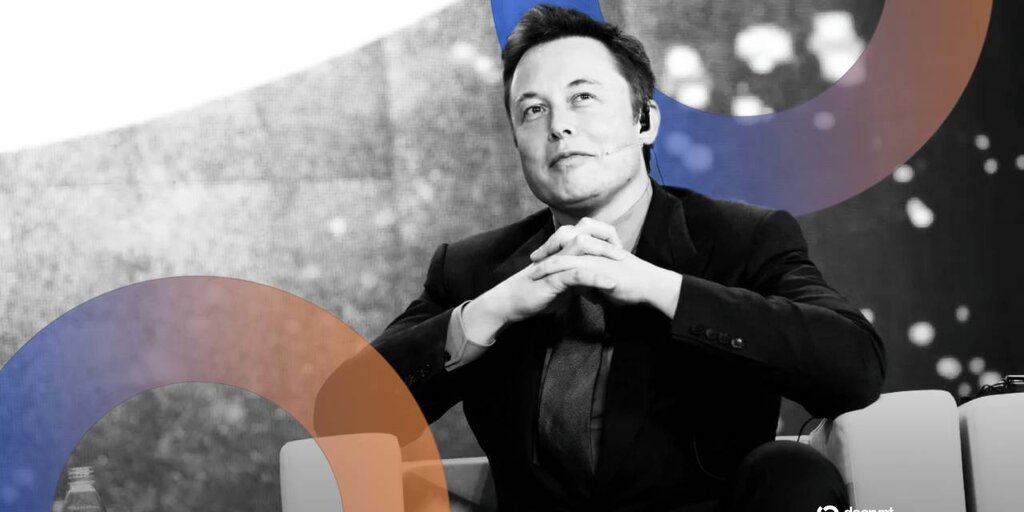
Elon Musk said Tuesday that the boards of SpaceX and Tesla have each formed special committees of independent directors to study merging his two biggest companies, though no terms have been agreed. Such committees—panels of directors with no ties to management or the controlling shareholder—are the conventional mechanism for evaluating a transaction between companies under common control, and their conclusions are the first formal gate any proposal must clear before it can reach shareholders.
A combined corporation worth roughly $3.5 trillion would own the Grok chatbot, X, Starlink, the Terafab chip project, the Starmind orbital data center plan, and Tesla's robotaxi and Optimus businesses—placing rockets, electric cars, humanoid robots, a social network and a leading AI chatbot under a single corporate roof.
"I do think there's a lot of merit to combining the companies as we are pretty much in the superintelligence singularity," Musk said on SpaceX's third-quarter earnings call. The singularity is Silicon Valley shorthand for the point at which AI outsmarts humans and begins improving itself faster than anyone can keep up.
Musk listed what the two companies would pool: "superintelligence software, chip design, the Terafab obviously, robotics, mass-to-orbit with the Starmind constellation, connectivity." In practical terms, that means AI models, custom chips, a giant chip factory, robots, and satellites that function as data centers in orbit.
If the deal goes through, one company—controlled by a single man holding the majority of its votes—would own a leading AI chatbot, the social network that feeds it data, the satellites that connect it, the factory that makes its chips, and the cars and robots those systems are meant to drive.
Nothing has been signed, and Musk cautioned that treating a merger as a certainty "would be overstating it." For index investors, the mechanics would be direct: anyone holding an S&P 500 fund already owns a sliver of Tesla—not SpaceX in an all-stock deal those shares would likely be swapped for stock in the combined company.
It would also be Musk's third consolidation since March 2025, when xAI absorbed X (formerly Twitter). In February, SpaceX took over xAI in a deal valuing the AI company at $250 billion, weeks after Tesla invested about $2 billion in it; in June, SpaceX went public in the largest IPO ever.
SpaceX reported third-quarter revenue of $14.58 billion on Tuesday, well above the $12.72 billion analysts expected. It also booked its first quarterly profit since going public, driven largely by renting the computing power of its AI server farms to firms such as Anthropic and Google.
The most ambitious piece is Starmind, SpaceX's plan to put AI data centers in orbit. The company has asked U.S. regulators to approve up to 1 million satellites that would run AI models on near-constant sunlight, and Musk expects deployments to start in late 2027 and reach "significant scale" in 2028.
Musk's argument is that Earth is running out of room and electricity for AI, and the politics currently back him up. An Annenberg survey found 61% of Americans now oppose new data centers in their area, and roughly $130 billion in projects were blocked or delayed in the first quarter of 2026 alone.
SpaceX's own IPO paperwork, however, warned investors that orbital AI computing relies on "unproven technologies" and "may not achieve commercial viability." Tesla's main contribution to a merger would be Terafab, a $16.8 billion chip factory the two companies are building in Texas to supply Optimus robots, Cybercab robotaxis, and the planned space data centers.
Musk is not the first to look beyond dry land to keep servers cool. Microsoft's Project Natick sank 855 servers off the coast of Scotland in 2018. Over two years, only six failed—a 0.7% failure rate against 5.9% for a comparable group on land—yet Microsoft shut the program down anyway, with cloud operations chief Noelle Walsh saying, "I'm not building subsea data centers anywhere in the world."
China has since picked up the idea with a wind-powered underwater data center about six miles off Shanghai, which its builder, HiCloud, says uses at least 30% less electricity than land-based rivals, while startup Lonestar aimed to launch a small data storage unit toward the Moon in early 2025.
Wall Street has mostly welcomed the idea—at the right price. "We believe this is a no-brainer move for both SpaceX and Tesla, it comes down to the price for shareholders," Dan Ives of Yorkville Ives & Co. told Reuters, estimating Tesla shares would need to be valued around $550 apiece—a premium over the market price large enough to win the vote.
Markets responded to Musk's comments. Tesla spiked almost 4% after his statements went public—a stronger reaction than the stock showed after the company's flying car demonstration, which was followed by a dip. SpaceX reacted even more favorably, jumping 10%, its best movement since June. Even with nothing certain, Tesla investor Gene Munster of Deepwater Asset Management now puts the odds of a deal within two years at 95%.
A merger could also draw government scrutiny. SpaceX is a major contractor for the U.S. military, intelligence agencies, and NASA, while Tesla relies heavily on its Shanghai factory—a national security mix that Reuters said could attract attention from both Washington and Beijing.
The deal would also hand Musk the tighter grip on Tesla he has long demanded. He owns about 20% of Tesla but controls most of SpaceX's votes through supervoting shares—stock that carries extra votes—and Barclays estimates he would hold about 56% of the votes in a combined company.
Any deal still needs the backing of 50% of all outstanding Tesla shares, not just those cast—a bar Musk called "quite a high hurdle." Barclays suggested last week that an announcement could come before Tesla's annual meeting on December 3.

