SpaceX Briefly Returns to $135 IPO Price After Revenue Beat and Bullish Analyst Calls
Key Takeaways
- •SpaceX briefly returned to its $135 IPO price after reporting second-quarter revenue above expectations.
- •Citi kept a buy rating and set a $200 price target, while Deutsche Bank kept a buy rating and set a $235 target.
- •Retail investors became net sellers of SpaceX shares on August 7 for the first time since the company began trading.
- •The amount of SpaceX stock available to trade more than doubled last week after the first lockup period expired.
- •The broader market fell Monday, with the S&P 500, Nasdaq, and Dow all lower as oil prices rose about 4%.
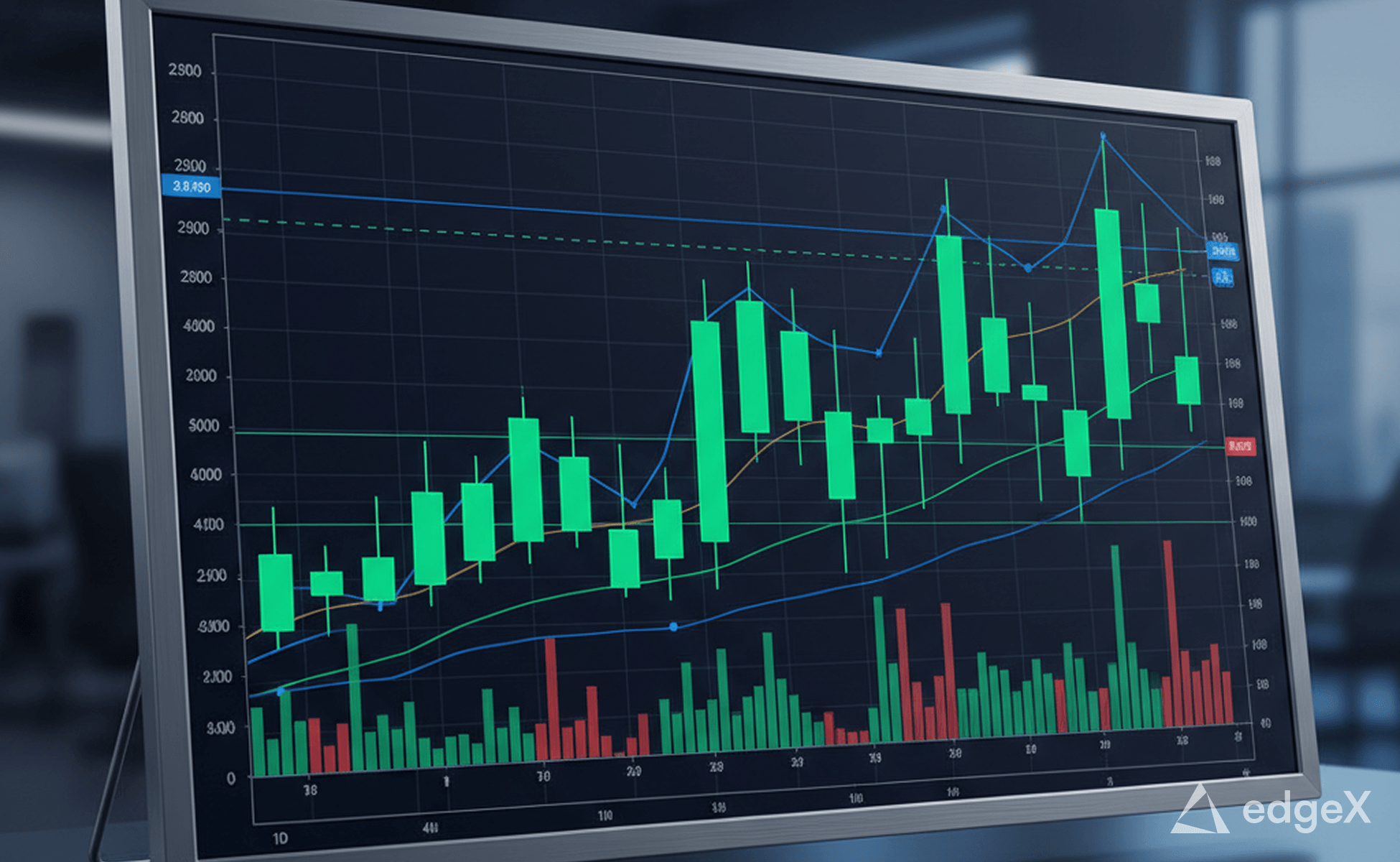
SpaceX (SPCX) got a lift Monday after investors digested its first earnings report as a listed company and Wall Street remained bullish on the results.
The stock briefly returned to its $135 IPO level following last week's second-quarter earnings, in which revenue came in above expectations, as Cryptopolitan reported live.
Analysts kept their positive views after the report. Citi analyst John Godyn maintained a buy rating and a $200 price target, implying close to 50% upside from the listing level. Deutsche Bank Research analyst Edison Yu also kept a buy rating and a $235 target.
Yu said SpaceX has a "fast path" to an annual revenue pace of $100 billion. His forecast includes expected growth from the company's neocloud operation and Cursor business.
Wall Street is also factoring in SpaceX's ability to launch more rockets and build a larger network of infrastructure in orbit. The company's reusable Falcon 9 rockets and growing Starlink satellite constellation have made it the dominant operator in U.S. orbital launches, giving analysts confidence in its capacity to scale revenue alongside its newer ventures. The bullish targets came after shares had recently fallen to $108.27, underscoring a volatile first two months of trading.
Retail traders turn sellers as more shares enter public trading
Retail investors reversed course on Friday after spending most of the post-IPO period buying SpaceX. Vanda Research data showed small traders sold a net $4.5 million of SpaceX shares on August 7, their first day as net sellers since the company began trading on June 12.
That selling remained modest compared with the earlier wave of buying. Retail purchases reached a one-day record of $144.6 million on June 16, only four days after the listing.
The change followed another active retail session. SpaceX dropped 13.6% on August 5 as investors reacted to the earnings report, and small traders bought aggressively into the decline, making that day their fourth-largest net buying session since the company went public.
Artificial intelligence spending was one of the main issues raised after earnings. SpaceX told investors it was seeing quicker returns from money spent on AI. A bigger question for investors is how long Starlink's profitable satellite internet business can continue to support the company's expensive AI projects. Starlink, which operates thousands of satellites in low Earth orbit providing global broadband coverage, has been a key revenue driver and remains one of the few satellite internet operators operating at commercial scale.
SpaceX has already gone through a sharp price cycle. During June, the stock traded as much as 67% above its IPO valuation. Those gains disappeared over the following weeks, and by August shares had fallen more than 22% below the debut level. The stock has also closed below its IPO price in every session since July 16.
Retail traders have played an unusually large role in SpaceX's public-market debut. At least 30% of the stock offered in the IPO was reserved for individual investors. Online attention has also remained strong. Over the past week, SpaceX was the second-most-discussed ticker on Reddit's r/WallStreetBets, according to data collected by SwaggyStocks.
There is also now more stock available to trade. The amount of SpaceX equity available on public exchanges more than doubled last week after the first lockup period expired. Lockup expirations, which unlock shares held by insiders and early backers after a set waiting period, are a standard post-IPO milestone that can shift the supply-demand balance for a newly public stock. More lockup expirations are still ahead, which means additional shares can become tradable over time.
Weak tech stocks and higher oil prices pressure broader markets
The wider market had a tougher Monday. The S&P 500 (.SPX) was down about 0.1% as investors became less confident that the U.S. and Iran would reach a lasting settlement to their conflict soon. The Nasdaq Composite (.IXIC) fell 0.4%, while the Dow Jones Industrial Average (.DJI) lost 136 points, or 0.3%.
Several large technology stocks were under pressure. Intel (INTC) fell 3% after the chipmaker said it plans to sell $15 billion worth of common stock. Nvidia (NVDA) declined 2%, and Apple (AAPL) was also down 2%.
Monday's weakness followed a strong week for U.S. stocks. The S&P 500, Nasdaq Composite, and Dow each posted their best weekly performance since April, and the S&P 500 finished Friday at a new record closing high.
Labor data played a major role in Friday's trading. U.S. nonfarm payrolls unexpectedly contracted in July, easing expectations for another Federal Reserve rate increase. Futures tied to the federal funds rate were pricing an almost 50% chance of a September hike, according to CME FedWatch figures. Traders had assigned those odds a 67% chance one week earlier.
Oil moved in the opposite direction Monday. West Texas Intermediate crude rose about 4% to roughly $81 a barrel as uncertainty around the U.S.-Iran conflict kept energy markets tense. U.S. crude holdings in the Strategic Petroleum Reserve fell to their lowest level since January 1983. Brent crude, the main international benchmark, also gained about 4% and traded near $87 a barrel.

