S&P 500 More Than Doubles From End-2022 Levels After Michael Burry’s January 2023 ‘Sell’ Warning
Key Takeaways
- •The S&P 500 closed at a record 7,757.64 on August 7, 2026, representing an approximately 90% gain from its January 31, 2023 close of 4,076.60 tied to Burry's warning.
- •Burry explained that his 'Sell' post was connected to an emerging banking crisis and he later retracted the warning after federal authorities intervened to stabilize the financial system, including the creation of the Bank Term Funding Program and guarantees on uninsured deposits.
- •The market's advance was driven by moderating inflation, expectations of a less restrictive Federal Reserve stance, and a major artificial intelligence investment cycle that significantly boosted technology and semiconductor companies.
- •S&P 500 companies reported year-over-year earnings growth exceeding 50% in the second quarter of 2026, with a large majority surpassing analyst expectations.
- •The S&P 500's record performance has been disproportionately influenced by mega-cap technology stocks, with the top five constituents at times accounting for more than a quarter of the index's total market capitalization.
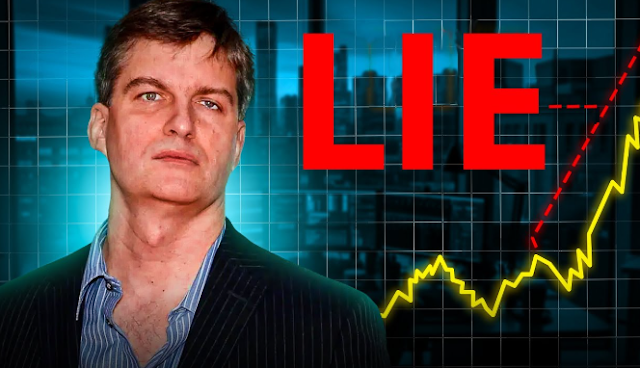
The S&P 500 has reached another record high, leaving the U.S. stock market more than 90% above the level it held when investor Michael Burry posted his now-famous “Sell” warning in January 2023.
The milestone has renewed a long-running Wall Street debate over how much weight investors should give to warnings from well-known market bears, especially when those warnings come years before a major market move actually unfolds.
The S&P 500 closed at 7,757.64 on Friday, August 7, 2026, setting a new record. That level is up roughly 90.3% from the index’s January 31, 2023 closing level of 4,076.60, which was the close associated with Burry’s brief social media post.
The often repeated claim that the S&P 500 is “up more than 100%” since Burry’s January 2023 warning depends on the starting point. From the end of 2022, when the index closed at 3,839.50, the S&P 500 has indeed more than doubled. But measured from the January 31, 2023 close tied to the “Sell” post, the gain remains below 100%.
That distinction matters, particularly when a market statistic is being used to judge whether a prediction was right or wrong.
Still, the broader picture is striking. An investor who sold the S&P 500 at the end of January 2023 would have missed one of the strongest multi-year advances in the benchmark’s history.
Michael Burry’s “Sell” Warning Became a Market Meme
Burry became widely known after his successful bet against the U.S. housing market before the 2008 financial crisis, a story later dramatized in the film “The Big Short.” His reputation as a contrarian investor has made his public comments especially influential.
On January 31, 2023, Burry posted a single-word message on social media: “Sell.”
The warning came after the stock market had already staged a sharp rebound from its 2022 lows. The S&P 500 had gained about 6.2% during January 2023, while the Nasdaq Composite had risen more than 10%. Investors were growing more optimistic that inflation was cooling and that the Federal Reserve could eventually slow its aggressive pace of interest-rate increases.
Burry’s warning therefore stood out.
But the circumstances surrounding the message were more complicated than the meme that later developed around it.
In a later explanation, Burry said the January 2023 message was related to the banking crisis he believed was developing. He had been monitoring banks closely and had held a short position against Silicon Valley Bank.
As the crisis unfolded, several U.S. banks failed or came under severe pressure. Silicon Valley Bank collapsed on March 10, 2023, followed by Signature Bank two days later. First Republic Bank was seized and sold to JPMorgan Chase in May 2023. The failures collectively represented the largest U.S. bank failures since Washington Mutual in 2008, triggering deposit runs across regional lenders and emergency measures from federal regulators.
Burry later acknowledged that his “Sell” message had been wrong and said he eventually withdrew the warning after concluding that authorities had successfully intervened to stabilize the banking system. That intervention included the Federal Reserve’s creation of the Bank Term Funding Program, which allowed banks to borrow against their bond holdings at par value, and an extraordinary decision by the FDIC, Federal Reserve, and Treasury Department to guarantee uninsured deposits at the failed institutions.
That context is often left out when the original post is discussed online.
The Market Did the Opposite
Instead of collapsing, the U.S. stock market moved into a powerful long-term advance.
The S&P 500 recovered from the banking crisis and continued higher through the rest of 2023. The rally accelerated in 2024 and extended through 2025 and into 2026, with the index reaching successive records.
By August 2026, the benchmark had climbed to more than 7,700 points. The latest record close of 7,757.64 represents a dramatic gain from the 4,076.60 level recorded on January 31, 2023.
For investors who treated Burry’s warning as a signal to exit U.S. equities entirely, the opportunity cost would have been substantial.
That does not necessarily mean Burry’s concerns were irrational. It does show how difficult market timing can be.
Why the S&P 500 Kept Rising
Several forces helped drive the S&P 500 higher after Burry’s warning.
One of the most important was the changing outlook for monetary policy. The Federal Reserve had spent 2022 and much of 2023 aggressively raising interest rates to fight inflation. Those rate increases created significant pressure on technology companies, growth stocks and other assets whose valuations depend heavily on future earnings.
As inflation began to moderate, investors increasingly expected the Federal Reserve to move toward a less restrictive policy. Lower expected interest rates can support equity valuations because future corporate earnings become more attractive when discounted at lower rates. That helped create an environment in which investors were willing to pay higher prices for stocks.
The Artificial Intelligence Boom Changed the Market
Another major force was the rapid expansion of artificial intelligence.
The AI boom reshaped investor expectations for technology companies. Firms involved in semiconductors, cloud computing, data centers and AI infrastructure became some of the strongest performers in the market.
Nvidia emerged as one of the biggest beneficiaries. The company’s extraordinary growth in demand for AI accelerators helped push its market capitalization to historic levels and made the semiconductor company one of the world’s most valuable corporations.
The AI investment cycle also benefited other large technology companies. Major firms began spending vast sums on computing infrastructure, data centers and specialized chips. That spending created a feedback loop: strong demand for AI infrastructure boosted the earnings of semiconductor and technology companies, which in turn supported broader enthusiasm for continued AI investment.
By 2026, AI had become one of the defining themes of the U.S. equity market, drawing comparisons to the internet buildout of the late 1990s in terms of the scale of capital deployment and the breadth of companies affected.
The S&P 500 Is Not the Same Market It Was in 2023
One reason the headline comparison requires caution is that the S&P 500 is a market-capitalization-weighted index. That means the largest companies have far more influence on its performance than smaller constituents.
As mega-cap technology companies surged, their gains had an outsized effect on the overall index. The top five companies in the S&P 500 have at various points accounted for more than a quarter of the index’s total market capitalization, a concentration level not seen in decades. The result is that the S&P 500’s record performance does not mean every company in the index has enjoyed similar gains.
Recent market data shows that distinction clearly. On August 7, the S&P 500 reached another record, but only a relatively small number of individual components were simultaneously hitting new 52-week highs during the session.
That does not mean the rally lacked breadth. It means investors should distinguish between the performance of the overall index and the performance of individual stocks.
Earnings Have Supported the Rally
The market’s rise has also been backed by corporate earnings.
Recent reporting indicates that S&P 500 companies delivered exceptionally strong earnings growth in the second quarter of 2026. Barron’s reported that earnings for S&P 500 companies increased by more than 50% year over year during the quarter, with a large majority of companies beating analyst expectations.
Strong earnings matter because rising stock prices are easier to justify when companies are generating higher profits.
That has helped set the current market apart from periods when equity prices rise primarily on speculation.
Still, strong earnings do not eliminate risk. Investors continue to debate whether expectations around AI, technology spending and future corporate profitability have become too optimistic.
Burry’s Warning Was Not a Prediction of the Entire 2026 Market
The biggest problem with using today’s S&P 500 level as proof that Burry was simply “wrong” is that the January 2023 message was extremely short.
The word “Sell” did not specify a price target. It did not set a time horizon. And it did not explicitly say that the S&P 500 would collapse.
Burry later explained that the post was connected to the emerging banking crisis rather than being a permanent call for investors to stay out of stocks.
By March 2023, he had changed his view. He said the banking crisis could resolve quickly and later acknowledged that he had been wrong to issue the original “Sell” message.
That history makes the comparison more nuanced.
The viral version of the story suggests Burry told investors to sell stocks and then watched the market rise sharply. The actual sequence was more complicated.
The Cost of Getting the Timing Wrong
Even so, the episode highlights one of the biggest challenges facing investors.
A bearish thesis can eventually prove correct while still producing poor investment results if the timing is wrong.
Markets can remain expensive longer than investors expect. Economic risks can fail to trigger a decline. Central banks can intervene. Corporate earnings can surprise to the upside. New technologies can create fresh growth opportunities. And investor sentiment can remain optimistic despite warnings about valuations.
This is especially important for long-term investors.
Someone who sells a diversified portfolio because they believe a correction is imminent must eventually answer a second question: when to buy back in?
That decision can be even harder. If the market keeps rising, investors may wait for a correction that never comes and end up buying back at higher prices.
The Record High Puts the Debate in Perspective
The latest record adds another layer to the discussion.
At 7,757.64, the S&P 500 is now almost twice the level recorded when Burry issued his January 2023 warning.
From January 31, 2023 through August 7, 2026, the index gained approximately 90%. From the end of 2022, the gain exceeds 100%.
That distinction should be kept in mind when the statistic is repeated across social media.
The broader point remains the same: U.S. equities have performed extraordinarily well since the beginning of 2023.
What Investors Can Learn From Burry’s Warning
Several lessons emerge from the episode.
First, even highly respected investors can get market timing wrong. Burry’s success during the housing crisis built a reputation for spotting risks before they became obvious, but no investor has a perfect record.
Second, a single market call should not automatically determine a long-term investment strategy. A portfolio built around long-term goals is different from a short-term trading position.
Third, diversification matters. The S&P 500 provides exposure to hundreds of companies across different sectors, although its largest constituents can dominate returns. Investors who diversify across asset classes and time horizons may be less vulnerable to the consequences of one incorrect forecast.
Valuations Still Matter
The fact that Burry’s warning was early or wrong does not mean valuation concerns should be ignored.
The S&P 500 remains expensive by many historical measures. Technology companies command large valuations because investors expect continued earnings growth. AI has created substantial optimism about future productivity and corporate profitability.
But expectations can change quickly. If AI spending slows, economic growth weakens or corporate earnings fall short of forecasts, high-valued stocks could come under pressure.
That is why the discussion around Burry remains relevant.
His warning is not important only because he predicted a crash. It is important because it raises a broader question: how much optimism is already reflected in today’s stock prices?
A Strong Market Can Still Face Sharp Corrections
Another key point is that a strong long-term trend does not mean markets rise in a straight line.
The S&P 500 has seen numerous corrections throughout the current bull market. Investors who stayed invested have generally benefited from the long-term advance, but they have also had to endure periods of substantial volatility.
That is normal for equities.
Markets can fall sharply even during long bull markets. A record high therefore does not guarantee that the index will keep rising indefinitely. It simply shows where the market stands today.
Coin Bureau and the Broader Market Discussion
The comparison between Burry’s 2023 warning and the S&P 500’s later performance has also circulated among financial and cryptocurrency-focused commentators, including Coin Bureau.
The episode is especially relevant for investors who follow both traditional equities and digital assets.
Crypto investors often face similar market-timing questions. Bitcoin and other digital assets can produce large rallies followed by steep declines, making it tempting to try to identify the exact top or bottom.
The Burry episode is a reminder that even experienced investors can struggle to pinpoint when a major market move will happen.
The Bigger Story Is About Time Horizons
Perhaps the most important lesson from the S&P 500’s rise is the difference between a market forecast and an investment strategy.
A trader may believe stocks are overvalued. A long-term investor may reach the same conclusion but still hold a diversified portfolio because the timing of any correction is unknown.
Those positions are not necessarily contradictory.
Markets can be overvalued and continue rising. They can also fall sharply without warning.
The challenge is determining how much risk an investor can tolerate while staying committed to a long-term plan.
Burry’s January 2023 warning offers a vivid example of what happens when a market call is made at the wrong moment. The S&P 500 was already recovering from the 2022 bear market. The banking system appeared fragile. Inflation remained a major concern. The Federal Reserve was still fighting price pressures.
From that perspective, there were legitimate reasons for caution.
But markets do not simply price current risks. They price expectations about the future. And the future turned out to be much more favorable for U.S. equities than many investors expected.
A Record That Puts an Old Warning in Perspective
The S&P 500’s latest record has turned Burry’s 2023 “Sell” message into a historical market case study.
The index has risen roughly 90% since the January 31, 2023 close associated with his warning and has more than doubled from its end-2022 level. Burry later acknowledged that the original warning was wrong, putting the episode in clearer context.
The story is therefore not simply about one investor losing an argument with the stock market. It is about the difficulty of forecasting markets with precision.
Interest rates changed. Inflation changed. Corporate earnings changed. Artificial intelligence changed investor expectations. And the U.S. economy proved more resilient than many feared.
Those developments combined to produce one of the strongest market advances of the modern era.
For investors looking back at January 2023, it may be tempting to conclude that the lesson is simply to ignore bearish warnings. That would be too simple.
The more useful lesson is that even compelling forecasts need a time horizon, a defined thesis and an understanding of what could invalidate the argument.
Markets can move in unexpected directions for years. And as the S&P 500’s path since January 2023 shows, being early can look remarkably similar to being wrong when investors have to live through the difference.

