South Korean Finance Ministry Cites Inflation and Middle East Tensions as Sources of Uncertainty for US Rate Path
Key Takeaways
- •The US Federal Reserve held its benchmark interest rate steady at 3.5 to 3.75 percent, marking its fifth consecutive meeting without a rate adjustment.
- •South Korean officials identified persistent inflation in the US and Europe and Middle East geopolitical instability as factors contributing to uncertainty about future rate movements.
- •The interest rate differential between South Korea and the United States stands at up to 1 percentage point, with potential implications for capital flows and the Korean won.
- •Meeting participants noted that the US economy maintains solid momentum, with business facility investment remaining robust, particularly in AI-related sectors.
- •South Korea pledged to closely monitor major economies' monetary policy decisions and global oil price trends, given its status as one of the world's largest energy importers.
South Korea's finance ministry said Thursday that the trajectory of US interest rates remains uncertain, citing persistent inflationary pressures and escalating geopolitical tensions in the Middle East.
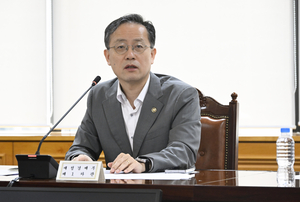
The assessment came during a meeting chaired by First Vice Finance Minister Lee Hyoung-il, which included officials from financial authorities such as the Bank of Korea. The gathering followed the US Federal Reserve's decision overnight to hold its benchmark interest rate steady within a target range of 3.5 to 3.75 percent.
The Federal Reserve's latest inaction marks its fifth consecutive meeting without a rate adjustment. The decision leaves the interest rate differential between South Korea and the United States at as much as 1 percentage point, a gap that has implications for capital flows and currency dynamics in emerging-market economies. For South Korea, whose export-driven economy depends heavily on global demand conditions, sustained higher US rates can influence investment flows and add pressure on the Korean won.
"The participants noted that the US economy is maintaining solid momentum, with business facility investment also remaining robust, led by AI-related investment," the finance ministry said in a statement.
"However, they also assessed that the rate path may remain uncertain, considering high inflation in the United States and Europe, along with geopolitical instability in the Middle East," the ministry added.
The meeting participants also pledged to continue closely monitoring the monetary policy decisions of major economies as well as trends in global oil prices, both of which could influence South Korea's economic outlook and financial stability. South Korea is one of the world's largest energy importers, making oil price movements tied to Middle East instability a direct input into its inflation and trade balance.
The discussion reflects broader concerns among policymakers worldwide about the competing risks of sticky inflation and slowing economic growth. Central banks across major economies have been navigating when and how quickly to ease monetary policy after a prolonged cycle of aggressive rate hikes aimed at curbing inflation. In South Korea, the Bank of Korea sets its own benchmark rate independently, and the interest rate gap with the United States is a key variable for the Korean won and cross-border investment flows.

