South Korea Tightens Crypto Transfers to Overseas Exchanges With Risk-Based Checks
Key Takeaways
- •The Financial Services Commission is tightening monitoring of crypto transfers sent to overseas exchanges.
- •The new framework uses risk-based checks instead of a blanket ban on cross-border transfers.
- •Transaction scrutiny may depend on factors such as transfer size, destination jurisdiction, and user-specific risk indicators.
- •Retail users may face additional verification steps and delays when sending funds abroad.
- •South Korea recently removed the 1 million won threshold for crypto travel rule reporting and is preparing a 22% tax on crypto gains from 2027.
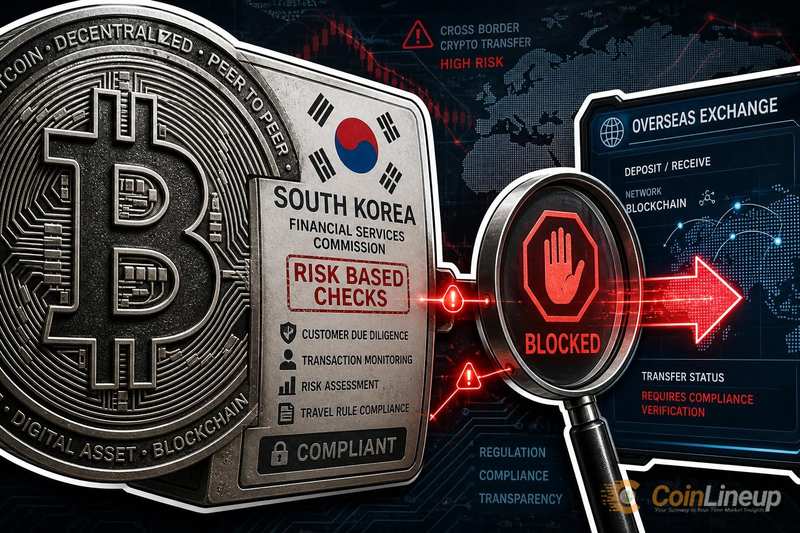
South Korea is moving to tighten oversight of cryptocurrency transfers routed to overseas exchanges, introducing a risk-based screening framework aimed at flagging suspicious activity and closing compliance gaps in cross-border digital asset movements. The measures arrive as the country—one of the world's largest retail crypto markets by trading volume—continues to calibrate its regulatory perimeter around digital assets following the 2022 collapse of Terraform Labs, whose algorithmic stablecoin meltdown was deeply tied to Korean users and exchanges.
Scope of the Policy Change
The new policy focuses on enhanced compliance monitoring of cross-border crypto transfers, particularly those directed to foreign exchange platforms, according to the Financial Services Commission (FSC).
Regulators have emphasized that the measures involve additional screening rather than a blanket prohibition. Users will retain the ability to send funds abroad, though their transactions will be subject to closer review. Cross-border transfer activity involving overseas platforms constitutes the core scope of the policy shift.
The initiative follows a broader pattern of tightening transfer regulations in South Korea. Notably, the country recently decided to scrap the 1 million won threshold for crypto travel rule reporting, which lowered the threshold at which transfers must be formally documented. That move aligns South Korea more closely with the Financial Action Task Force's global travel rule guidance, which requires virtual asset service providers to share sender and recipient information for qualifying transactions—an international standard that has seen uneven implementation across jurisdictions.
How Risk-Based Checks Are Expected to Function
Risk-based checks serve as the primary mechanism regulators have identified for implementing the tighter controls. Under this approach, scrutiny levels would vary based on factors such as transaction size, destination jurisdiction, or user-specific risk indicators, rather than applying a uniform standard across all transfers.
Such a framework is expected to involve enhanced transaction monitoring, with transfers to foreign platforms potentially triggering supplementary verification or documentation requirements. The intended outcome is heightened scrutiny of suspicious transfer patterns, though the FSC's published operational details will ultimately determine how specific thresholds are applied.
Implications for Traders and Exchanges
For retail users, the tighter screening process may introduce additional steps when moving funds to overseas platforms and could result in transfer delays while transactions are held for review.
Domestic exchanges will bear the primary compliance burden, as they are tasked with implementing and executing the new checks. Foreign exchanges serving Korean customers may also encounter increased friction if Korea-linked transfers attract additional review. This dynamic echoes earlier situations in which platforms have restricted user activity to meet local compliance demands, such as when Luno blocked certain crypto transfers ahead of an August 31 compliance deadline.
The impact on Korean users of offshore platforms comes as the country continues to restructure its digital-asset regulatory framework. Among the planned changes is a 22% tax on crypto gains scheduled to take effect from 2027. Collectively, these measures signal a compliance-first direction governing how Korean investors interact with overseas trading venues—a trajectory that market participants and exchange operators are likely to monitor as implementation guidance from the FSC takes shape.
