President Lee Jae Myung Designates Seven Future Industries as New Growth Engines and Strategic National Assets
Key Takeaways
- •President Lee identified small modular reactors, nuclear fusion, renewable energy, quantum technology, aerospace, advanced biology, and advanced material supply chains as seven priority sectors for national development.
- •The initiative seeks to leverage South Korea's record semiconductor revenues, driven by global AI demand, to diversify into new technological growth engines.
- •Approximately 60 government officials, researchers, and experts gathered at Cheong Wa Dae to discuss strategies for fostering the seven industries and nurturing science and engineering talent.
- •The president warned that rapid replacement cycles in emerging technologies mean countries failing to adapt risk being left behind in the global economy.
- •The government pledged backing for scientists and entrepreneurs to advance research, commercialization, and industrial deployment in the targeted sectors.
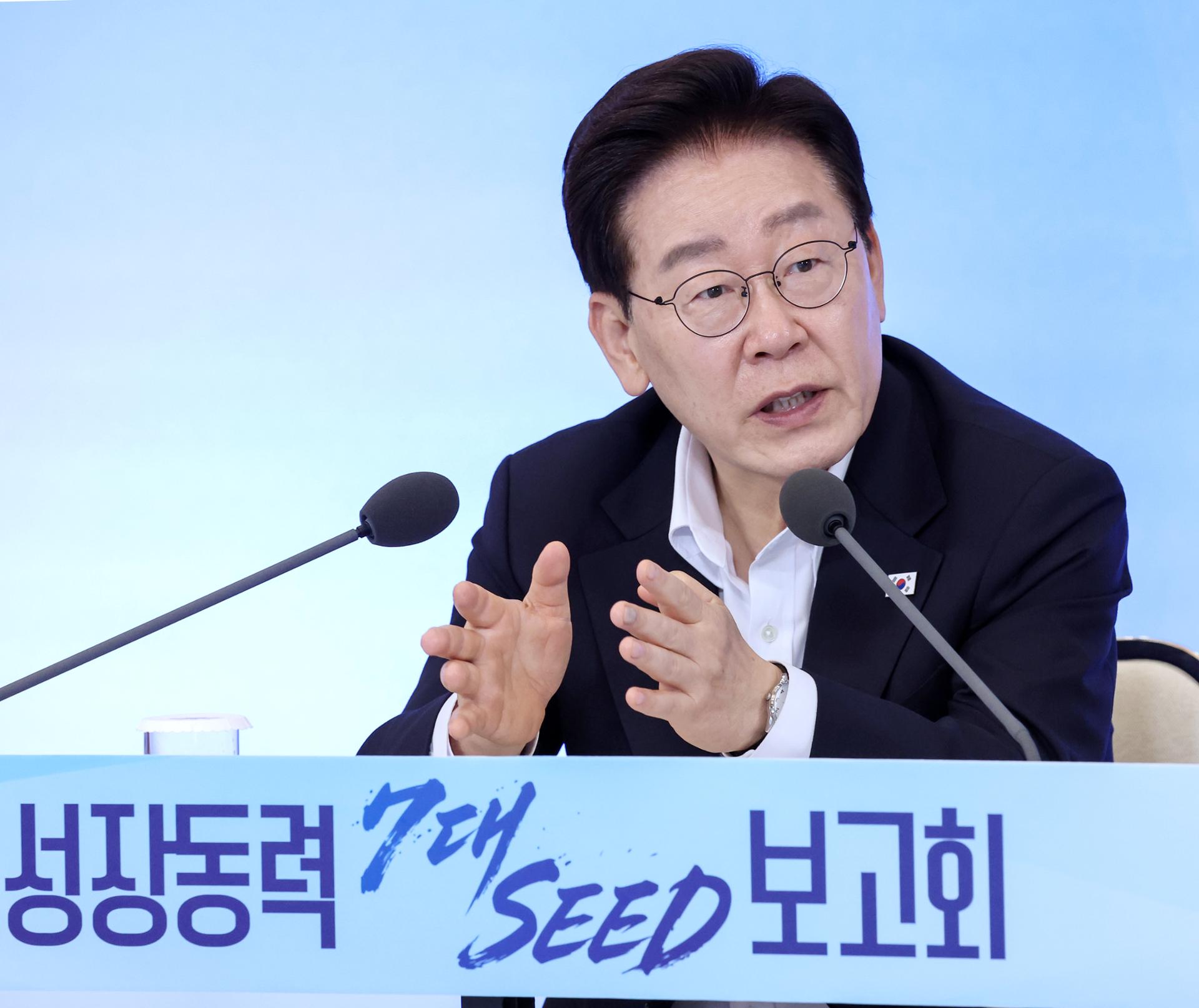
President Lee Jae Myung announced Wednesday that South Korea will cultivate seven advanced industries as future growth drivers and strategic national assets, seeking to build on the country's semiconductor boom by developing new economic engines for the artificial intelligence era and beyond.
Speaking at a meeting held at Cheong Wa Dae in Seoul, the president outlined what he termed the "seven seed projects" — small modular reactors (SMRs), nuclear fusion, renewable energy, quantum technology, aerospace, advanced biology, and supply chains for advanced materials and components.
"By making the best of the rare opportunity provided by the semiconductor industry, we should prepare the next engines of growth," Lee said. "The seven advanced technologies will become our economy's future growth engines and the country's key strategic assets."
Korean chipmakers have posted record-high revenues over the past several quarters, fueled by surging global demand for semiconductors used in AI applications. With the government now looking beyond that boom, Seoul is signaling that it wants to broaden the industrial base around technologies that could support future manufacturing, energy, and research capacity, while also reinforcing national security considerations tied to critical supply chains.
The president emphasized the urgency of adapting to rapid technological shifts, warning that lagging nations risk being left behind.
"The common trait of today's emerging advanced technologies is that their replacement cycles are very rapid and that both individuals and countries will be excluded if they fail to keep up with the change," he said.
Lee noted that amid sweeping changes in the industrial landscape, the country's choices will determine whether it leads or falls behind, adding that the initiative is designed to bring about a great leap forward for Korea.
The president instructed officials and experts to move forward with implementation and pledged government backing for scientists and entrepreneurs pursuing new frontiers in these fields.
Wednesday's meeting convened approximately 60 government officials, researchers, and other experts to discuss strategies for fostering the seven industries and nurturing talent in science and engineering, according to the presidential office. The focus on talent development suggests the initiative will depend not only on policy support but also on building the workforce needed to sustain research, commercialization, and industrial deployment across several technically demanding sectors.
Source: The Korea Times
