South Korea Taps SK Telecom, Kakao and KT to Build Free Nationwide AI Services
Key Takeaways
- •The Ministry of Science and ICT chose SK Telecom, Kakao and KT from six bidders for the “AI for Everyone” project.
- •The program is meant to expand access to South Korean AI services and strengthen the domestic AI ecosystem.
- •The government will provide the three consortiums with a combined 512 Nvidia B200 GPUs this year and plans to subsidize nationwide service costs starting in 2027.
- •Beta testing is scheduled to begin in September, and full services are expected by December.
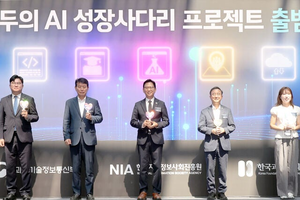
South Korea has chosen SK Telecom, Kakao and KT to develop government-backed artificial intelligence services that will offer the public free, unlimited access to general-purpose AI chatbots and agents capable of handling public and everyday tasks.
The Ministry of Science and ICT announced Friday that it selected the three consortiums from six bidders for its "AI for Everyone" project, an initiative designed to broaden access to homegrown AI and strengthen the domestic ecosystem. The program sits within a wider national AI push under President Lee Jae Myung, who has pledged a 100-trillion-won (about $72 billion) AI investment fund and set a goal of making South Korea one of the world's top three AI powers.
Under the plan, the government will supply the three groups with a combined 512 Nvidia B200 graphics processing units this year and intends to subsidize nationwide service costs from 2027. The B200 is Nvidia's flagship Blackwell-generation data-center chip, and supplying the GPUs addresses one of the largest costs of running large AI models at scale. Beta testing is scheduled to begin in September, with full services due by December.
The initiative goes beyond conventional chatbots, requiring AI agents that can carry out tasks on users' behalf — from navigating public services to accessing specialized offerings in areas such as health care, finance, education and housing. That emphasis on task-completing agents mirrors a broader industry shift toward "agentic" AI, an area where global players including OpenAI and Google are also racing to ship products.
SK Telecom, which already operates its A. (A dot) assistant app, plans an "action-oriented" AI that takes a request from planning through execution. The service will be accessible through apps, the web, phone calls and text messages, and will use AI-powered calls to reach businesses or government offices without digital interfaces.
Kakao will make KakaoTalk — the messaging app used by the vast majority of South Korean smartphone users — the main gateway to a service that combines a general-purpose chatbot with agents able to handle reservations, applications and payments. The company also plans to launch a lighter voice AI service with LG Uplus, the country's third major mobile carrier, and to distribute specialized agents through a marketplace.
KT, which has developed its own Korean-language large language model called Mi:dm, will connect its service with partner platforms including the Daum search portal, price-comparison site Danawa, fashion marketplace Musinsa and real-estate app Zigbang, as well as its own telecom and IPTV channels. Its AI is designed to take users from information searches and comparisons through to completing public or commercial tasks within a single conversation.
The ministry intends to sign agreements with the three groups in September, ahead of the start of beta services and a year-end rollout. Because each consortium will field its own service, users will be able to choose among three state-backed homegrown options, and how those free services stack up against foreign chatbots already used in South Korea will become clearer once full services begin in December.
Source: Korea Herald Business

