South Korea Orders Domestic Block on Polymarket After Illegal Gambling Ruling
Key Takeaways
- •The Broadcast Media and Communications Standards Commission approved a domestic blocking order for Polymarket on August 18.
- •Regulators said Polymarket’s prediction markets can constitute illegal gambling under the Criminal Act and, for sports-related markets, the National Sports Promotion Act.
- •Polymarket argued that it uses non-custodial peer-to-peer transactions and smart contracts, but regulators said its control over markets, rules, and fee collection still brings it under Korean law.
- •South Korea’s action follows similar restrictions on Polymarket in Indonesia, Spain, France, Germany, and Australia.
- •Police in South Korea opened an illegal gambling investigation into local users in June after trading activity around the presidential election.
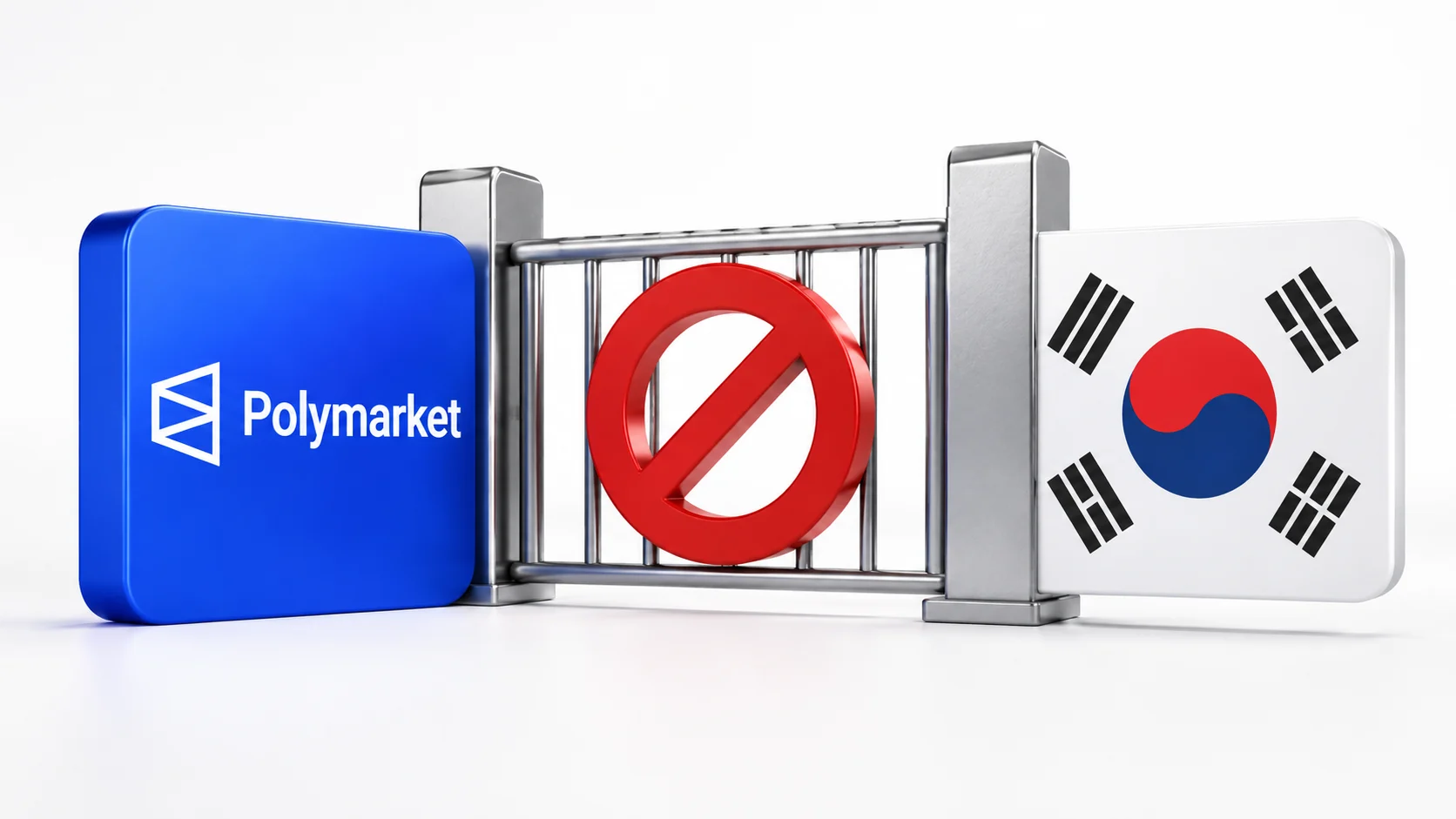
South Korea has ordered domestic access to Polymarket blocked after the country's media and communications regulator concluded that the platform's prediction markets constitute an illegal gambling environment under Korean law.
The Broadcast Media and Communications Standards Commission approved the blocking order on August 18, finding that Polymarket content can facilitate gambling and the operation of gambling venues under the Criminal Act, and that sports-related markets can fall within activities prohibited by the National Sports Promotion Act.
Regulator Rejects Polymarket's Non-Custodial Defense
The commission examined Polymarket markets covering politics, economics, international affairs, sports, elections and weather, in which traders take positions on outcomes they cannot control. It cited the platform's winner-take-all structure and a market tied specifically to August rainfall in Seoul as evidence that Korean users were being offered locally relevant wagering opportunities.
During the review, Polymarket argued that it had removed Korean-language services, does not support won-denominated payments, and operates through non-custodial peer-to-peer transactions and blockchain smart contracts. The platform also said it does not directly collect or manage customer funds.
Regulators rejected those arguments, noting that Polymarket still controls market creation and trading rules, provides crypto deposit, withdrawal and settlement infrastructure, and earns fees from trading activity. The commission said decentralized technology or the absence of Korean-language services cannot by itself remove a service from domestic legal requirements.
The result is a functional test rather than a technical one: what weighed against Polymarket was how the service operates in practice, including who sets the markets and rules, where deposits and settlements are processed, and how the platform earns fees, not the fact that trading runs on smart contracts. That framing is the decision's significance beyond Korea for blockchain-based platforms, because it locates legal responsibility in how a service operates rather than in how it is built.
South Korea Joins Wider Polymarket Crackdown
The Korean action follows a series of restrictions on prediction markets across Asia and Europe. Indonesia blocked Polymarket as an illegal online gambling platform in May, after the service offered markets tied to Indonesian political events.
Days earlier, Spain ordered Polymarket and Kalshi blocked while investigating whether the platforms offered betting products without the required authorization. France, Germany and Australia have also imposed access restrictions on Polymarket under their respective gambling frameworks.
The actions turn on the same underlying question: whether taking positions on real-world outcomes amounts to betting. Korea, Indonesia, France, Germany and Australia have each addressed that question through their own gambling statutes, while Spain's blocking order stands as its investigation continues.
Polymarket itself currently lists 39 countries as completely restricted, although those restrictions reflect a mixture of local regulatory requirements, gambling rules and international sanctions rather than a single legal classification.
Korean Users Face Tighter Enforcement
The block follows earlier scrutiny of Polymarket activity in South Korea. Police opened an illegal gambling investigation into local users in June after substantial trading around the country's presidential election, bringing individual participation as well as platform access under regulatory attention.
Enforcement is therefore running on two tracks: the blocking order cuts off domestic access, while the police probe reaches the act of trading itself. For Korean users, that distinction is the practical stakes of the ruling, since legal attention now attaches to participating on the platform, not only to operating the venue.
Under the August 18 decision, access to Polymarket must now be blocked domestically. The commission specifically cited markets tied to Seoul weather and the platform's crypto-based settlement structure in concluding that continued access created an illegal gambling environment for Korean users.

