South Korea Establishes Dedicated Teams to Accelerate Nuclear-Powered Submarine Program
Key Takeaways
- •South Korea's defense ministry and arms procurement agency are launching new divisions this week to manage the Jang Bogo N nuclear-powered submarine program following cabinet approval.
- •The new policy division will handle legal and institutional frameworks for nuclear fuel use, requiring consultations with the United States and the International Atomic Energy Agency.
- •The Jang Bogo N program aims to build submarines powered by high-assay low-enriched uranium enriched below 20 percent, a more technically challenging fuel choice than the highly enriched uranium used by established operators like the U.S. and U.K.
- •The United States has approved the project, but special arrangements are necessary because the existing nuclear cooperation pact prohibits South Korea from using uranium for military purposes.
- •South Korea plans to launch its first nuclear-powered submarine by the mid-2030s and construct at least three 8,000-ton vessels, with operational service expected by the late 2030s.
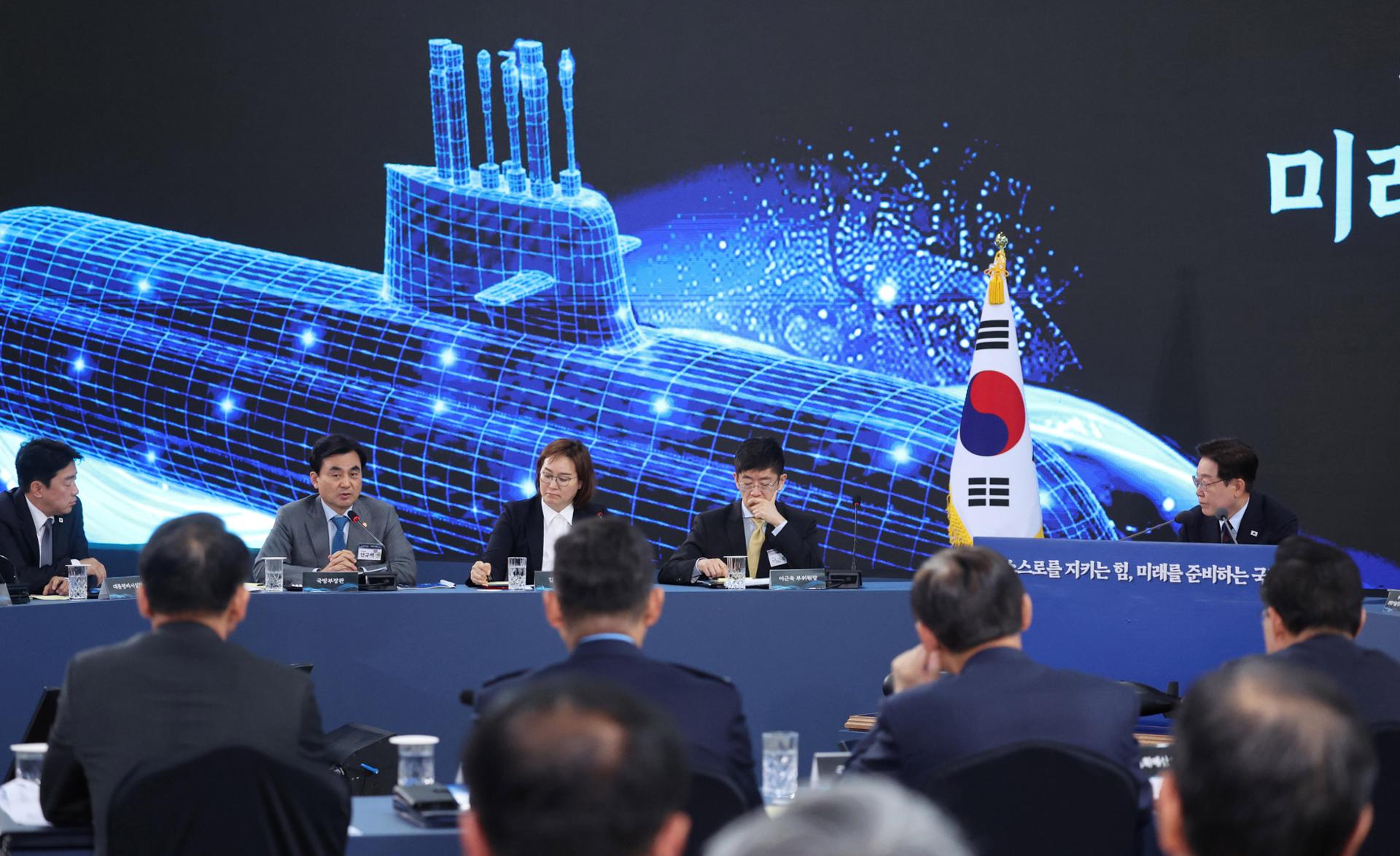
South Korea's defense ministry and arms procurement agency will launch new divisions this week to spearhead the country's nuclear-powered submarine program, known as the Jang Bogo N program, as Seoul accelerates efforts to bolster its naval deterrence capabilities.
Defense ministry officials announced Tuesday that a policy and planning division dedicated to the Jang Bogo N program will be established under the ministry. The division will oversee the program's development and coordinate cooperation with relevant agencies. The reorganization plan was approved during a Cabinet meeting earlier the same day and is scheduled to formally take effect Friday.
The new division's responsibilities include establishing legal and institutional frameworks for nuclear fuel use. This will require consultations with the United States and the International Atomic Energy Agency (IAEA), the United Nations' nuclear watchdog responsible for overseeing international safeguards on nuclear energy use. The division will also support efforts to enact a special law on the nuclear-powered submarine program through the National Assembly.
Separately, the Defense Acquisition Program Administration (DAPA) has restructured its existing submarine program office into a larger division. Two teams have been formed under this division to manage the entire development process, encompassing vessel design and construction as well as the acquisition of nuclear reactors for propulsion.
South Korea officially unveiled the Jang Bogo N program in late May. The initiative aims to build nuclear-propelled submarines fueled by high-assay low-enriched uranium enriched to below 20 percent. This fuel choice is technically demanding, as most established nuclear-submarine operators—including the United States and the United Kingdom—use highly enriched uranium for naval reactors. The program forms a key part of Seoul's broader strategy to enhance deterrence against regional threats, particularly from North Korea.
The United States has approved South Korea's pursuit of the project, and the two allies have initiated preliminary talks building on a security agreement reached by their leaders at a summit in October of last year. Under the existing nuclear cooperation pact with Washington, South Korea is effectively prohibited from using uranium for military purposes, meaning special U.S.-backed arrangements are necessary to acquire conventionally-armed, nuclear-propelled attack submarines. The U.S.-Australia-UK AUKUS partnership, under which Washington has committed to supporting Australia's acquisition of nuclear-powered submarines, has been cited by analysts as a reference point for how nuclear technology can be transferred to a non-nuclear-weapon state under the Nuclear Non-Proliferation Treaty.
According to the government's timeline, the first vessel is slated for launch by the mid-2030s, with the warship expected to enter operational service by the late 2030s. The military is reportedly planning to construct at least three 8,000-ton nuclear-powered submarines within the target period.
Defense Minister Ahn Gyu-back previously delivered a briefing on the country's basic plan for the Jang Bogo N program during a defense strategy meeting held in Changwon, South Gyeongsang Province, on May 26.

