South Korean Finance Minister Reviews Market Stabilization Measures as Rate Pressures and Mideast Tensions Mount
Key Takeaways
- •Finance Minister Koo Yun-cheol held a meeting with officials to review market stabilization measures amid rising rate pressure and renewed Middle East tensions.
- •Participants cited increased global government bond issuance and corporate borrowing by AI firms building data centers as drivers of upward pressure on interest rates.
- •The government pledged to protect vulnerable borrowers, noting South Korea's household debt is among the highest relative to economic output in advanced economies.
- •Implementation of the raised KOSDAQ minimum market capitalization requirement, from 20 billion won to 30 billion won, was postponed by six months to July next year.
- •Qualifying companies may transfer listings from KOSDAQ to the Korea New Exchange without a liquidation trading period to ease delisting impacts.
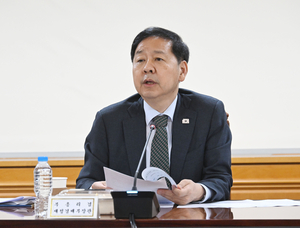
South Korea's finance minister on Friday discussed measures to stabilize financial markets amid growing concerns over rising interest rates and heightened volatility in global markets, as tensions in the Middle East renewed.
Finance Minister Koo Yun-cheol reviewed the latest developments in global and domestic financial markets with relevant officials, according to the Ministry of Finance and Economy. Such periodic checks are part of Seoul's standard playbook for responding to episodes of market stress, which have included coordinated verbal intervention and liquidity measures in past periods of volatility.
During the meeting, participants assessed that upward pressure on interest rates has persisted, driven by increased government bond issuance around the globe and corporate bond sales by global artificial intelligence businesses. Heavy borrowing by governments and by AI-related firms competing to build data centers has added to global bond supply, putting upward pressure on yields.
Participants also noted that rising crude oil prices amid renewed tensions in the Middle East could increase financial market volatility, and vowed to closely monitor the situation. South Korea, a major energy importer, is particularly sensitive to oil price swings, which feed through to its trade balance and consumer prices.
The government additionally pledged to protect vulnerable borrowers from rate hikes, noting that current conditions remain generally manageable but could deteriorate if interest rates rise sharply. Household debt in South Korea is among the highest relative to economic output in advanced economies, making borrowers' exposure to higher rates a recurring policy concern.
The meeting also covered progress in reforming the tech-heavy KOSDAQ market, the junior bourse modeled on the U.S. Nasdaq and home to many of the country's venture and technology firms. The government had planned to raise the minimum market capitalization requirement for continued listing from 20 billion won ($15 million) to 30 billion won starting in January.
However, participants decided to delay implementation of the new threshold by six months, to July next year, considering the time needed for the market to recover from recent volatility.
Companies that meet certain financial requirements will also be allowed to transfer their listings from the KOSDAQ to the small businesses-focused Korea New Exchange without undergoing a liquidation trading period, in order to cushion the impact of delisting. The Korea New Exchange was launched in 2025 to serve smaller companies, giving firms facing tougher KOSDAQ standards an alternative venue rather than outright delisting. (Yonhap)
