South Korea's Fair Trade Commission Approves KORAIL's Acquisition of SR Corp.
Key Takeaways
- •South Korea's Fair Trade Commission approved KORAIL's acquisition of SR Corp., concluding the transaction is unlikely to restrict competition in the transportation sector.
- •The deal places both of South Korea's high-speed rail operators under common public-sector control, as KORAIL already operates the KTX while SR runs the SRT service.
- •The FTC determined that existing regulatory constraints prevent KORAIL from unilaterally raising fares or reducing service levels without government approval.
- •The South Korean government holds a 58.95 percent stake in SR Corp., with KORAIL owning the remaining shares.
- •The FTC and the Ministry of Land, Infrastructure and Transport signed an agreement to continue monitoring KORAIL's operations after the takeover, which is expected to be completed in September.
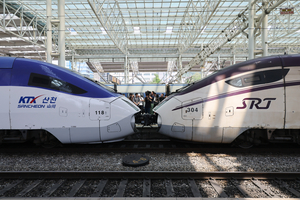
South Korea's antitrust regulator has approved the acquisition of SR Corp. by Korea Railroad Corp. (KORAIL), concluding that the transaction is unlikely to restrict competition in the transportation sector.
The Fair Trade Commission (FTC) announced its decision on Sunday, noting that KORAIL, as a state-run enterprise already subject to government oversight, is unlikely to leverage its market position in ways that would harm consumers.
KORAIL is South Korea's national railway operator, with services primarily departing from Seoul Station. KORAIL also operates the KTX, the country's first high-speed rail service, launched in 2004. SR Corp. is the operator of the Super Rapid Train (SRT), a high-speed rail service that departs from Suseo Station in southern Seoul and began operations in 2016, partly to introduce competition on major corridors such as the Seoul–Busan route. The South Korean government currently holds a 58.95 percent stake in SR, with KORAIL owning the remaining shares.
The approval effectively consolidates both of South Korea's high-speed rail operators under common public-sector control. The FTC said its assessment found that existing regulatory and ownership structures sufficiently constrain KORAIL's ability to act on any incentive to restrict competition.
"Above all, the high-speed rail industry is significantly regulated by the Railroad Service Act and other related laws," the FTC said, emphasizing that KORAIL operates in the public interest.
The watchdog further noted that ticket fares cannot exceed ceilings established jointly by the Ministry of Land, Infrastructure and Transport and the Ministry of Economy and Finance, meaning KORAIL cannot unilaterally raise prices. Additionally, KORAIL is barred from reducing the number of seats, cutting service frequency, or altering service routes without prior approval from the land minister.
On the same day as the approval, the FTC and the land ministry signed a memorandum of understanding to continue monitoring KORAIL's business operations following the completion of the takeover.
The acquisition is expected to be finalized in September. (Yonhap)

