BOK says September inflation may ease as underlying pressures persist
Key Takeaways
- •Consumer prices in South Korea rose 3.1% year on year in August, rebounding from a 2.8% increase in July.
- •The central bank expects September inflation to ease as the base effect from last year’s telecom discount program fades.
- •Deputy Gov. Lee Ji-ho said underlying price pressure is still expected to continue, especially in core items.
- •Higher oil prices and increased mobile service subscription charges helped lift August inflation.
- •Core inflation rose 3.4% in August, reaching its highest level since May 2023.
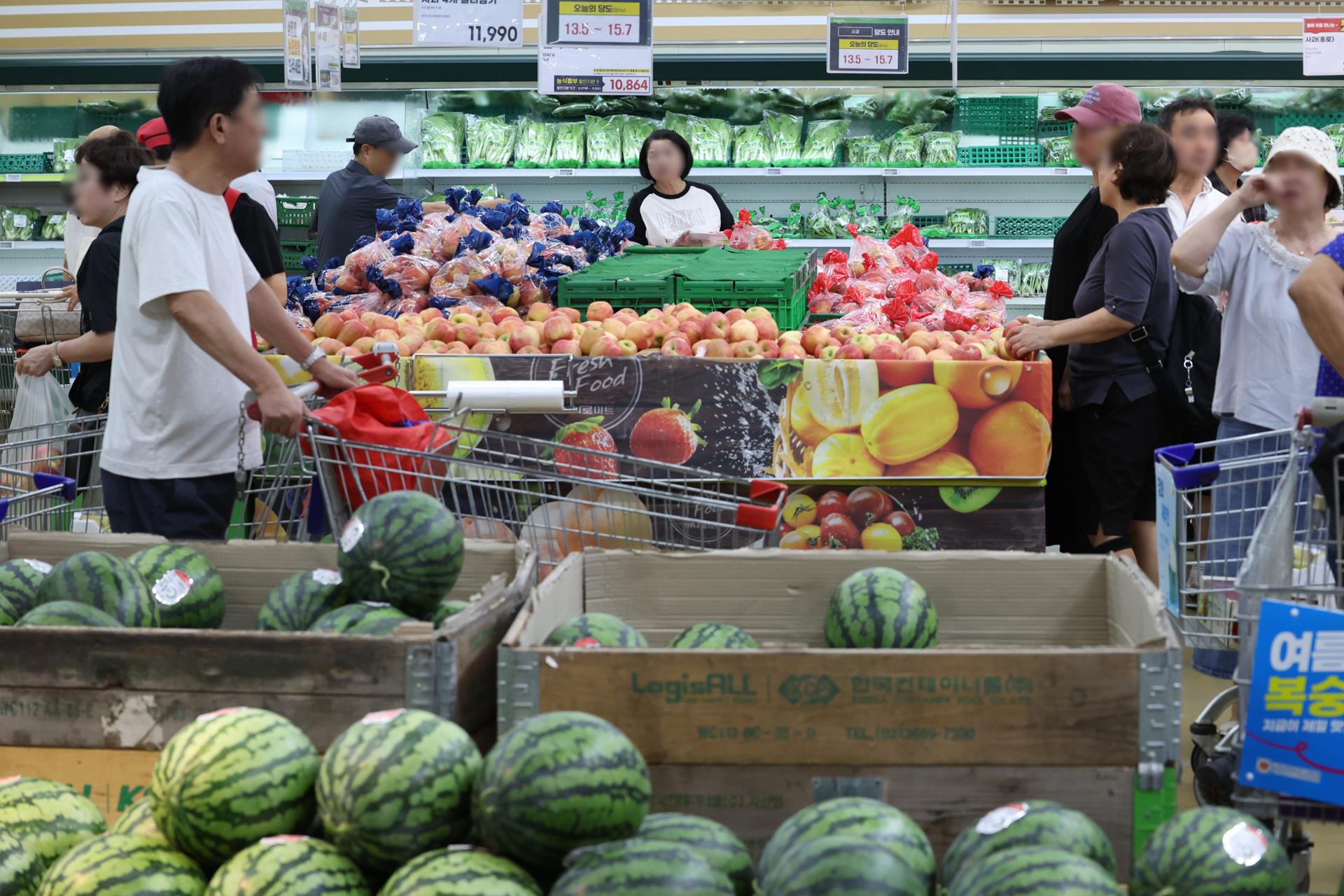
People shop at a supermarket in Seoul, Sunday. Yonhap
Inflation in September is expected to ease from the previous month as a base effect fades, but underlying price pressures will likely persist, particularly in core items, the central bank said Wednesday.
"In August, the consumer price index rose at a faster rate than the previous month due to a base effect resulting from discount programs by a telecommunications company last year," Deputy Gov. Lee Ji-ho said during a meeting to review inflation trends.
"In September, consumer price growth is expected to be lower than in August as the base effect fades, but the underlying upward trend is expected to continue, particularly in core items."
Earlier in the day, government data showed that the country's consumer prices rose 3.1 percent in August from a year earlier as oil prices remained elevated.
Higher mobile service subscription charges also contributed to the increase, due to the base effect from large-scale discounts offered last year following a hacking incident.
The August figure marked a rebound from a 2.8 percent on-year rise in July, following increases of 3.1 percent and 3.2 percent in May and June, respectively.
While the base effect is expected to ease headline inflation in September, the central bank's remarks suggest policymakers are still watching the persistence of broader price pressures beyond energy and mobile charges, which are excluded from core inflation readings.
Core inflation, which excludes volatile food and energy prices, advanced 3.4 percent on-year in August, marking its highest level since it rose 3.8 percent in May 2023.

