Europe's LNG Stockpiling Drives South Korea Electricity Cost Surge
Key Takeaways
- •South Korea's September gas price for power generation rose 38.7% year on year to 24,806.69 won per GJ, up 9.2% from August.
- •The System Marginal Price increased about 44% since January, reaching 148.91 won per kWh in August, as LNG plants with the highest generation costs set the SMP.
- •The Northeast Asian LNG spot benchmark JKM more than doubled to $23.18 per MMBtu as Europe, with storage at a record-low 64.4%, scrambled to secure winter supplies.
- •Global LNG production fell about 4% year on year after shipments from Qatar and the UAE dropped 35 billion cubic meters between March and June.
- •Experts expect international price increases to affect Korea's power market this fall and winter with a 2–3 month lag and call for preemptive measures such as diversifying import sources and balancing long-term and spot purchases.
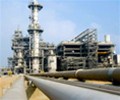
Domestic natural gas prices for power generation in South Korea have surged nearly 40% over the past year, sharply driving up the cost of electricity production. South Korea's power market is structured so that LNG (liquefied natural gas) power plants, which have the highest generation cost, determine the overall System Marginal Price (SMP). The rise in gas prices therefore leads directly to higher electricity purchase costs and mounting pressure to increase electricity rates.
The exposure is structural: South Korea relies on imports for virtually all of its natural gas, all of it delivered as LNG, so domestic prices track international spot benchmarks closely. The epicenter of this instability is Europe's stockpiling of LNG ahead of the winter season. Because international price increases hit the domestic market with a 2–3 month "lagged shock" that has not yet fully materialized, voices are growing for preemptive responses.
Gas Prices for Power Generation Surge 39%
According to Korea Gas Corporation on the 30th, the September natural gas price supplied by the corporation to power generation companies was 24,806.69 Korean won per GJ (gigajoule), a surge of 38.7% compared to the same month last year. Compared with last August (22,726.9 Korean won), it rose 9.2% in a single month. The increase stems from a 45.8% year-on-year rise in raw material costs.
The surge in gas prices has driven up electricity production costs. The SMP — the price at which Korea Electric Power Corporation purchases electricity from power generation companies — rose from 103.54 Korean won per kWh (kilowatt-hour) in January to 133.79 Korean won in July, and further surged to 148.91 Korean won in August (average of days 1–28), a 44% increase since the beginning of the year. A higher SMP widens the gap between KEPCO's purchase costs and the regulated retail tariffs it charges consumers, a dynamic that has weighed on the utility's finances in recent years and adds to the pressure on the government to adjust electricity rates.
European Supply Crisis Pushes Up Domestic Prices
The factor pushing up domestic gas prices is a supply crisis originating in Europe. According to Investing.com, the JKM, an indicator of Northeast Asian LNG spot prices, recorded $23.18 per MMBtu (heat unit) on the 28th, more than double the pre-Middle East war level of $10.73 on February 27. While demand in Northeast Asia remains stable, Europe's scramble to secure supplies is driving up prices in Asia.
The EU's gas storage rate stood at 64.4% as of August 28. Considering that storage is usually around 80% at this time of year, this is effectively the lowest level on record. Due to the Middle East war at the beginning of the year, LNG supply decreased and international prices surged, prompting Europe to delay summer stockpiling. With winter approaching, Europe's urgent demand has intensified the competition between Asia and Europe for LNG cargoes. Unlike pipeline gas, LNG is transported by ship and can change destinations depending on price, meaning Europe and Asia are essentially competing for the same "movable LNG."
Kim Tae-sik, a research fellow at the Korea Energy Economics Institute, said, "If Europe aggressively purchases LNG to secure inventory, Asia has no choice but to raise prices," adding, "The recent surge in JKM is judged to be a result of Europe's competition to secure supplies."
Europe's Stockpiling Stimulates Asian Prices — Preemptive Response Needed
According to the International Energy Agency (IEA), before the US-Iran war, LNG passing through the Strait of Hormuz accounted for about 20% of global LNG trade. From March to June, LNG shipments from Qatar and the UAE decreased by 35 billion cubic meters compared to the same period last year. Although increased production in North America and Africa offset a significant portion of the decrease, global LNG production fell by about 4% year on year. With the global LNG "pie" itself having shrunk, Europe and Asia are competing to secure alternative cargoes.
Experts predict that international prices surged by Europe's LNG stockpiling will impact the domestic power market this fall and winter with a time lag. How Europe's storage build progresses through the autumn — the EU typically aims to fill storage before the heating season — and whether Middle East supply disruptions ease will be key variables for the winter LNG market. Cho Hong-jong, a professor at Dankook University, said, "Preemptive measures should be urgently prepared to secure supply stability by appropriately allocating long-term contracts and spot purchases, diversifying import sources, and minimizing the impact of rising fuel costs on the power market and electricity rates."
Source: The ChosunBiz, via Hellenic Shipping News

