South Korea Flags 36 Penny Stocks Under Tougher Delisting Rules
Key Takeaways
- •The Korea Exchange designated 36 listed companies as administrative issues, including nine Kospi firms and 27 Kosdaq firms, after they fell below minimum listing requirements.
- •Under rules introduced last month, stocks trading below 1,000 won for 30 consecutive days or failing market capitalization thresholds enter delisting proceedings if they cannot recover within a 90-day period.
- •Over the past 20 years, 1,353 companies have listed on the Kosdaq while only 415 have been delisted, underscoring the imbalance the reforms are designed to address.
- •The Kosdaq has surged more than 18 percent this month and gained 33 percent since July 30, making it the best-performing major global stock index during that period.
- •Fifteen of the designated companies are preparing shareholder meetings to approve share consolidations or capital reductions aimed at lifting their stock prices above the 1,000-won threshold.
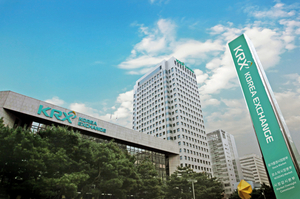
South Korea has placed 36 listed companies on notice under stricter regulations aimed at accelerating the removal of penny stocks and financially troubled firms from the market.
The Korea Exchange (KRX) designated the stocks as administrative issues on Wednesday after their share prices or market capitalizations fell below minimum listing requirements. Nine of the companies trade on the Kospi, South Korea's main board, and 27 on the Kosdaq, the country's growth-oriented junior market that lists many biotechnology, gaming, and technology firms. Of the total, 30 were newly designated, while six companies already holding administrative issue status received additional grounds for potential delisting.
The move follows reforms announced in February by the Financial Services Commission (FSC) and the KRX to expedite the exit of distressed and marginal companies. The delisting overhaul is part of a broader government push to strengthen Korea's capital markets and narrow the persistent valuation gap between Korean equities and global peers, an effort that has also produced the Corporate Value-Up Program encouraging companies to improve governance and shareholder returns.
Under rules introduced last month, a stock is designated an administrative issue if it trades below 1,000 won ($0.71) for 30 consecutive trading days. The same threshold applies when a company's market capitalization remains below 30 billion won on the Kospi or 20 billion won on the Kosdaq for the same period. A company enters delisting proceedings if its stock fails to stay above the applicable threshold for at least 45 consecutive trading days during a 90-day recovery period.
The market capitalization requirements are set to rise next year to 50 billion won for the Kospi and 30 billion won for the Kosdaq.
Affected companies include Kosdaq-listed CMG Pharma, LabGenomics, and JMI, as well as Kospi-listed Daeyoung Packaging.
Financial authorities and the exchange argue that faster delistings will help remove chronically weak companies from a market where exits have not kept pace with new listings. Over the past 20 years, 1,353 companies have joined the Kosdaq, while only 415 have been delisted.
Removing marginal companies could also significantly improve the junior market's earnings and valuation indicators. According to NH Investment & Securities, Kosdaq-listed companies generated a combined operating profit of 14.1 trillion won last year. Excluding marginal companies, that figure would have reached 18.8 trillion won. The brokerage estimated that the Kosdaq's price-to-earnings ratio would have fallen to 31.3 from 112.6.
"As tougher delisting rules accelerate the exit of insolvent companies, Kosdaq earnings should improve and its elevated valuation should come down," said Lee Sang-jun, a researcher at NH Investment & Securities. "The index should be able to reclaim the 1,000-point level."
The regulatory push comes as the Kosdaq stages a sharp recovery. The index has climbed more than 18 percent this month after weakening from May, making it the best-performing major global stock index. It has gained 33 percent since July 30, nearly twice the Kospi's 17.62 percent advance over the same period. The rally triggered buy-side sidecars — temporary curbs on program trading — four times, on July 31 and August 3, 4, and 10.
The government is also preparing a tiered system that could divide Kosdaq companies into segments such as Premium and Standard, helping investors distinguish stronger firms from riskier ones. Details could be announced as early as September or October, with implementation targeted for the first half of next year.
Critics warn that the stricter standards could place additional strain on smaller companies, particularly as investor demand remains concentrated in semiconductor stocks.
"For small and medium-sized enterprises struggling with market volatility, authorities need to distinguish between fundamentally weak companies and those facing temporary difficulties," said Kim Ki-mun, chairman of the Korea Federation of SMEs.
Companies at risk have begun taking defensive measures. Fifteen of those designated as administrative issues are preparing shareholder meetings to approve share consolidations or capital reductions intended to lift their stock prices above 1,000 won. JMI, for example, said Thursday that it would conduct a five-for-one share consolidation, raising the par value of each share from 1,000 won to 5,000 won. Some companies have also sought court injunctions to challenge their designation.
"It is reasonable for companies to take self-rescue measures to avoid delisting, but they should not focus on preserving their listings at the expense of improving their underlying competitiveness," said Eom Su-jin, a researcher at Hanwha Investment & Securities.

