South Korea's President Calls for 'Cybersecurity Czar' After $6.3 Billion Binance Hack
Key Takeaways
- •South Korean President Lee Jae Myung has proposed appointing a powerful cybersecurity czar to coordinate defenses across public agencies and private businesses.
- •The call came days after the Oct. 29 theft of $6.3 billion from Binance, which the FBI attributed to the North Korea-linked hacking group TraderTraitor, though Pyongyang denies involvement.
- •Lee argued that South Korea's current inspection-centered, after-the-fact security system has clear limitations and urged earlier threat detection and faster information sharing.
- •The president cautioned that rapidly advancing artificial intelligence is making cybercriminals more sophisticated and harder to counter.
- •The National Intelligence Service has ordered security checks at more than 2,100 government bodies, while the science ministry is reviewing roughly 170 major private-sector infrastructure facilities, including financial and telecommunications companies.
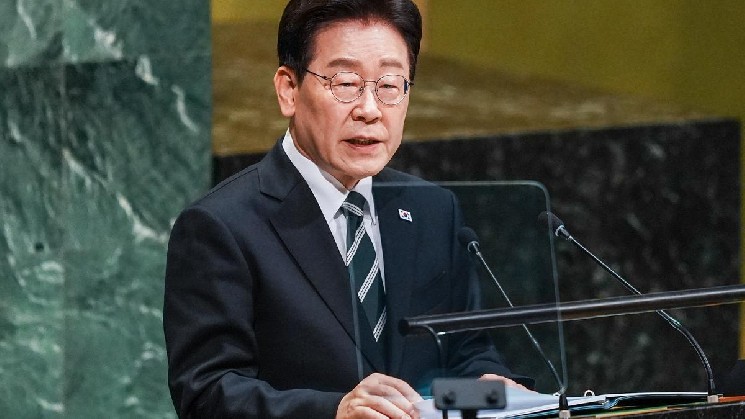
South Korean President Lee Jae Myung called on Tuesday for the appointment of a “powerful cybersecurity czar,” citing the $6.3 billion hack of crypto exchange Binance as evidence of a growing threat to financial institutions and critical infrastructure.
Speaking at a Cabinet meeting in Seoul, Lee said the country needs a government-wide body with the authority to coordinate cybersecurity across public agencies and private businesses, according to The Korea Times.
“The existing security system, which centers on inspections and after-the-fact responses, is showing clear limitations,” Lee said.
The proposal came days after the Oct. 29 theft of funds from Binance, which the FBI attributed to TraderTraitor, a hacking group linked to North Korea. Pyongyang has denied any responsibility for the attack. Lee did not name North Korea when discussing the Binance incident. The breach stands out both for its scale and for the FBI’s attribution to a state-linked group, and it is the incident Lee invoked to argue that financial institutions and critical infrastructure now face threats that inspections and after-the-fact responses cannot adequately address.
The president also warned that rapidly advancing artificial intelligence is making cybercriminals more sophisticated and harder to confront. He urged earlier detection and faster information sharing rather than reliance on post-breach inspections — a proactive posture that the proposed coordinating body is intended to deliver across public agencies and private businesses alike.
South Korea’s National Intelligence Service has already ordered security checks at more than 2,100 government bodies and public institutions, while the science ministry is inspecting roughly 170 major private-sector infrastructure facilities, including financial and telecommunications companies, according to The Korea Times. Together, the two reviews span the public and private sectors that Lee’s proposed authority would cover.
The government has not announced a timetable for establishing the proposed cybersecurity body. Until one is set, the near-term markers are the results of the security checks now underway and any announcement defining the new body’s mandate, including how its coordinating authority would apply to private financial businesses such as crypto exchanges.
Original report: CoinDesk

