Korea AI chief says government will shift focus to execution
Key Takeaways
- •Ha Jung-woo said the government’s AI focus will move from strategy planning to producing results that businesses and the public can directly feel.
- •The council’s priorities are to pool national resources, speed up AI adoption across sectors and expand access under the “AI for All” program.
- •Ha identified data access, permitting for AI data centers, GPU shortages and electricity supply as key barriers to AI development and infrastructure growth.
- •He said Korea must reduce dependence on foreign AI models and strengthen its own ability to develop and operate competitive systems in strategic areas.
- •Ha said the government should revisit its independent AI foundation model project and ensure the broader AI action plan leads to real investment, industrial growth and policy execution.
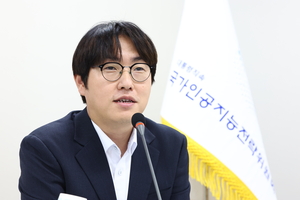
Presidential Council on National Artificial Intelligence Strategy Standing Vice Chair Ha Jung-woo said Monday the government will shift its AI policy focus from setting strategies to delivering results that businesses and the public can feel.
At his first press briefing after taking office Sunday, Ha said South Korea has reached a point where it must turn its AI ambitions into concrete outcomes if it wants to emerge as a leading player in the global AI race.
“The council has so far focused on setting the overall strategy and direction,” Ha told reporters in Seoul. “Now, we need to focus on producing results that people can actually feel.”
Ha, who previously served as senior presidential secretary for artificial intelligence policy and future planning, outlined three priorities for the council: pooling national resources to make Korea one of the world’s top three AI powers, accelerating AI adoption across industry and the public sector, and expanding access to AI under the government’s “AI for All” initiative.
He also explained how the council will work alongside the presidential office and government ministries as Korea increases coordination of its AI policies, a sign that execution will depend not only on strategy but on how quickly agencies can align budgets, permits and infrastructure plans.
The presidential office will focus on long-term planning and monitoring policy implementation, while individual ministries will remain responsible for carrying out policies and projects. The council, which brings together Cabinet members and private-sector experts, will coordinate policies across ministries and provide technical guidance.
“If the Ministry of Science and ICT is an implementation body, the strategy council is there to coordinate policy and direction across ministries,” Ha said.
The council will place greater emphasis on turning the government’s AI action plan into investment, industrial growth and visible changes on the ground.
Ha said he wanted the government to produce concrete results within the next year as it moves beyond broad policy goals.
“We want to create results that people can actually see and feel in their daily lives, working together with the ministries,” he said.
For businesses, Ha identified data access and permitting for AI data centers as two of the most pressing hurdles, both of which affect how quickly companies can move from planning to deployment.
He said restrictions on data use continue to complicate AI development and commercialization, while approval procedures can slow the expansion of large-scale computing infrastructure.
Ha said Korea needs to examine its AI supply chain as a whole, including electricity, semiconductors, graphics processing units, data centers and data.
Although the country has secured more GPUs over the past year, supply remains insufficient. Heavy reliance on a single supplier also poses a risk, making it necessary to diversify procurement and strengthen Korea’s domestic AI semiconductor industry.
Power supply is another issue the government must address as investment in AI data centers accelerates. Ha said the council plans to work with relevant ministries to prevent electricity constraints from becoming a bottleneck to AI infrastructure development.
Beyond infrastructure, Ha stressed the need for Korea to retain the ability to develop and operate advanced AI models on its own, especially as global technology controls and supply chain limits shape access to key tools.
He said export controls and other restrictions imposed by major economies could limit access to cutting-edge technologies, making excessive dependence on foreign AI models a potential risk to both industrial competitiveness and national security.
Korea may not be able to build the world’s most advanced model in every field, Ha said, but it should be capable of developing and operating competitive models in strategically important areas.
That approach could also shape the next phase of the government’s independent AI foundation model project.
Ha declined to comment on disputes surrounding the elimination of individual companies in the project’s latest evaluation round. Instead, he said the government should revisit a more fundamental question: whether the current framework remains the best way to achieve the program’s original goal.
“We need to look again at why we started this project in the first place and whether that objective is still valid,” Ha said.
Policymakers should examine whether the current approach can narrow Korea’s gap with the world’s frontier AI leaders and make changes where necessary, he added.
If the existing framework proves insufficient, Ha said Korea may need a different approach that brings together its strongest researchers and developers, supported by more concentrated government backing in areas such as GPUs and data.
He said the goal should go beyond developing another model and instead build domestic capacity to develop, operate and continuously improve advanced AI systems as the technology evolves.
Ha said the same focus on execution would apply to the government’s broader AI Action Plan and its three mega projects centered on semiconductors, physical AI and AI data centers.
“The AI action plan and the three mega projects need to lead to actual policies and projects, investment and industrial growth, and changes that people can feel,” Ha said. “We will closely track their progress and make sure the necessary work is carried through.”
