AI Chip Boom Reshapes South Korea: Factory Workers Earn $400,000 Bonuses as Semiconductor Demand Surges
Key Takeaways
- •South Korea produces approximately 80% of the world's high-bandwidth memory chips, which are critical components for AI data center infrastructure.
- •SK Hynix has committed $38 billion toward building new memory chip plants, signaling a long-term bet on sustained AI hardware demand rather than a cyclical peak.
- •Semiconductor factory workers in South Korea are receiving bonuses exceeding $400,000 through chaebol profit-sharing structures, rivaling or surpassing compensation in traditionally elite professions like medicine and law.
- •The city of Dongtan has become a primary residential hub for semiconductor workers, with its real estate market serving as a barometer for hiring activity at nearby Samsung and SK Hynix campuses.
- •U.S. export controls on advanced chip technology to China have placed South Korean firms in a difficult position, as they operate fabrication facilities in both countries and rely on both as major markets.
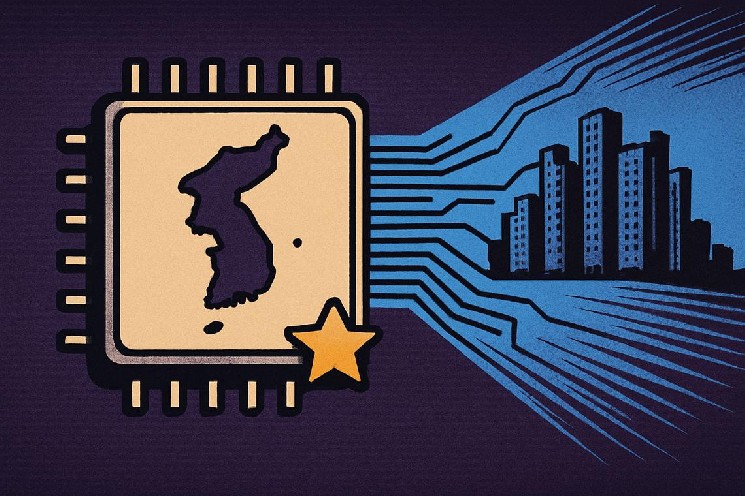
In a small real estate office in Dongtan, South Korea, agent Mark Yoon spends his days tracing laser lines across two wall-size maps, fielding questions about apartment prices, school districts, and commute times. But after eight years running the shop, he has noticed a pattern: nearly every conversation, regardless of where it begins, eventually turns to semiconductors. That detail captures the broader transformation artificial intelligence is driving across South Korea — redefining who accumulates wealth and how entire communities take shape.
South Korea's Command of AI Semiconductor Supply
South Korea's chip industry supplies approximately 80% of the world's high-bandwidth memory chips, the specialized components powering the artificial intelligence expansion now sweeping through data centers worldwide. High-bandwidth memory, or HBM, is critical because AI models require massive data throughput that conventional memory cannot deliver — chips like those produced by SK Hynix are stacked vertically and paired with AI accelerators from companies such as NVIDIA, which use them in their most advanced data center GPUs. That single statistic explains why two companies — Samsung Electronics Co. and SK Hynix Inc. — command so much national attention, and why semiconductors have become South Korea's single largest export category, making the country's trade balance heavily dependent on continued AI hardware demand.
Both firms operate massive semiconductor campuses south of Seoul. Samsung runs sprawling facilities in Hwaseong and Giheung, while SK Hynix's operations are situated within easy reach along nearby highways. Together, they have turned a corridor of the country into what effectively serves as the physical backbone of the global AI supply chain. Both companies are also part of South Korea's chaebol system — the family-controlled conglomerates that have anchored the country's industrial strategy since its rapid development decades ago, giving them a political and economic weight that few industries anywhere can match.
That dominance shows no sign of slowing. According to CNBC, SK Hynix has pledged $38 billion toward constructing new memory chip plants as AI-driven hardware demand continues its upward trajectory. The commitment signals that South Korea's semiconductor sector is making multibillion-dollar bets on the durability of this demand rather than treating it as a cyclical spike. The investment also comes at a moment of intensifying geopolitical pressure: U.S. export controls on advanced chip technology to China have placed South Korean firms, which operate fabrication facilities in both countries, in a delicate position between their two largest markets.
Dongtan: The Bedroom Community for Chip Workers
Dongtan, located roughly 30 miles south of Seoul, has emerged as the primary residential hub for South Korea's semiconductor workforce. The city sits at a geographic crossroads between Samsung's and SK Hynix's major sites. Shuttle buses ferry engineers directly from Dongtan to Samsung's Hwaseong and Giheung campuses, while highway access keeps SK Hynix's facilities within a manageable commute.
That convenience has quietly redefined Dongtan's identity. For Mark Yoon, the impact is visible on his sales floor every day. Clients come asking about apartments, but the underlying questions almost always revolve around proximity to chip campuses, the reliability of the commute, and which school districts serve semiconductor engineers' families. In practice, the Dongtan real estate market functions as a real-time barometer of the chip industry's health — when Samsung or SK Hynix accelerates hiring, housing demand rises in the neighborhoods feeding those campuses.
The dynamic extends beyond a single city. It illustrates how a concentrated industrial sector can reorganize where people choose to live, work, and raise families, with Dongtan serving as a compact, visible case study of that shift.
A New Economic Elite
Perhaps the most striking transformation tied to South Korea's AI boom involves who qualifies as economically successful. Factory workers at semiconductor plants are now receiving bonuses exceeding $400,000, placing them on par with — or ahead of — professions historically regarded as the apex of South Korean social status. Those bonuses are tied to profit-sharing arrangements embedded in the compensation structures of major Korean conglomerates, meaning payouts rise and fall with the chip cycle — a fact that adds an element of uncertainty even as current figures grab headlines.
Doctors and lawyers have long occupied that upper tier. Now, chip plant workers with outsized bonus packages are encroaching on that territory, reshaping how families evaluate career paths that AI has suddenly made highly lucrative. A production-line position at a semiconductor plant, once considered a steady but unremarkable occupation, is increasingly viewed as a fast track to the kind of wealth that traditionally required a medical degree or a law license.
The implications reach well beyond individual compensation. When factory work begins outpacing elite white-collar professions in earning potential, the effects cascade through university enrollment patterns, parental career guidance, and broader cultural assumptions about prestige and success.
Retail Investors and the Stock Market
The enthusiasm surrounding the AI-driven chip boom has not been confined to factories and residential neighborhoods. It has spilled directly into how ordinary South Koreans approach the stock market. Investors have been described as treating the market in a casino-like fashion, chasing gains tied to the same semiconductor companies powering the country's AI ambitions.
That behavior mirrors activity on the corporate side. As SK Hynix commits tens of billions of dollars to new memory chip capacity and Samsung continues expanding its footprint, retail investors appear determined to ride the momentum rather than remain on the sidelines. The dynamic underscores how deeply the AI narrative has permeated everyday financial decision-making in South Korea — not only among engineers and factory workers, but among retail participants wagering on the rally's next phase.
Source: CryptoNewsNet | Original reporting referenced via Cryptonomist

