South Central Natural Gas Storage Shrinks as Strong Demand Drives Weekly Withdrawal
Key Takeaways
- •The South Central region posted a 19 Bcf storage withdrawal for the week ended Aug. 21.
- •Regional natural gas inventories fell to 1,127 Bcf, leaving stocks 5.9% below year-ago levels.
- •The rare off-season draw resulted from intense late-summer heat combined with a rebound in LNG feedgas demand.
- •South Central hosts the nation's only salt-cavern storage facilities and sits near the Gulf Coast LNG export corridor, making it highly sensitive to demand swings.
- •The widening year-over-year deficit reduces the buffer heading into winter, with future trends dependent on weather and LNG feedgas flows.
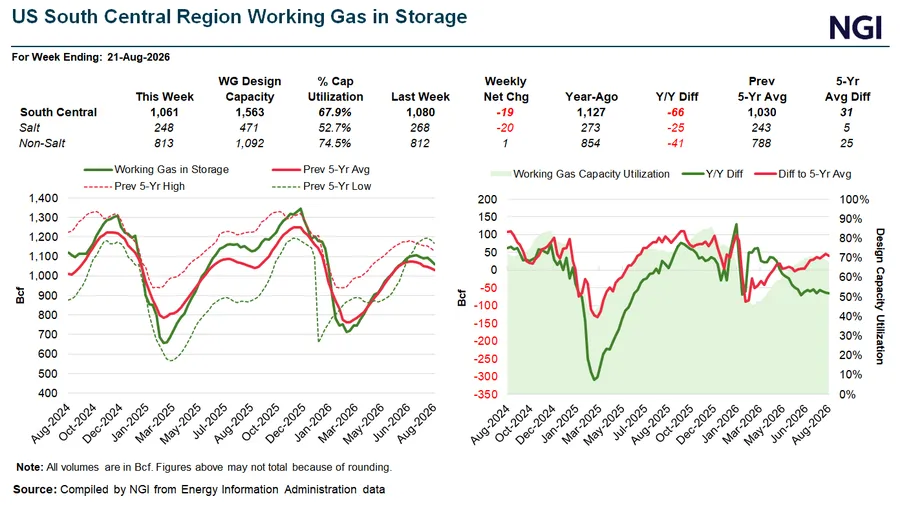
Operators in the South Central region drew heavily on natural gas held in storage during the week ended Aug. 21, as sweltering heat and recovering LNG activity placed upward pressure on demand.
At a Glance:
- South Central posts a 19 Bcf draw
- Regional stocks fall to 1,127 Bcf
- The year/year deficit widens to 5.9%
The withdrawal, reported as part of the weekly storage data, underscores how persistent late-summer heat across the region combined with a rebound in LNG feedgas demand to pull inventories lower rather than allowing the typical injection. Storage operators typically build inventories over the summer ahead of the heating season, so an off-season draw signals that consumption is outpacing available supply at a time when the region would normally be replenishing stocks.
South Central is a closely watched region in the Energy Information Administration's weekly storage reporting because it holds the country's only salt-cavern storage facilities, which can inject and withdraw gas at high rates, and because it sits adjacent to the Gulf Coast LNG export corridor. That makes the region particularly sensitive to swings in feedgas demand from LNG terminals as well as to cooling-driven power burn during heat waves.
According to the report from Natural Gas Intelligence, by Kevin Dobbs, the South Central region's stocks now stand at 1,127 Bcf, and the region's deficit relative to year-ago levels has widened to 5.9%. The widening year/year gap is a metric market participants monitor heading into the autumn injection season, as inventories that trail historical norms leave less buffer for winter demand. How the deficit evolves in coming weeks will depend on whether heat subsides enough to allow injections to resume and on the trajectory of LNG feedgas flows.
Source: Natural Gas Intelligence

