SolarEdge Launches UL 3141-Certified Power Control System for U.S. Commercial & Industrial Solar
Key Takeaways
- •SolarEdge introduced a UL 3141-certified Power Control System for U.S. commercial and industrial solar developers and installers.
- •The PCS integrates certified power controls directly into SolarEdge inverters, removing the need for external controllers or customized system architectures.
- •In California, the system supports non-export and export-limit applications, including Rule 21 non-export interconnection pathways.
- •The PCS can support certain system expansions while preserving existing interconnection terms, including NEM 2.0 status where applicable.
- •UL 3141 certification covers inverters supplying power to utilities and is typically required before utilities approve interconnection of distributed generation equipment.
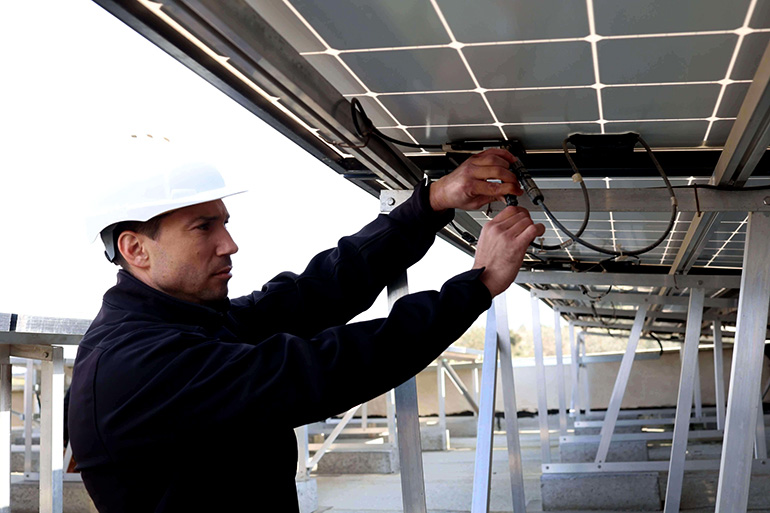
SolarEdge Technologies has introduced its UL 3141-certified Power Control System (PCS), a solution designed for U.S. commercial and industrial (C&I) solar developers and installers that aims to simplify utility interconnection while expanding on-site solar generation.
According to a company press release, the PCS was developed to address operational electrification, growing loads on the electric grid, and stringent utility interconnection requirements. Rather than relying on external controllers and customized system architectures, the PCS integrates certified power controls directly into the SolarEdge inverter.
UL 3141 is a safety standard covering inverters and power systems intended to supply power to an electric utility system, and certification to such standards is typically a prerequisite for utilities approving the interconnection of distributed generation equipment.
SolarEdge Technologies is a provider of inverters, power optimizers, and energy management systems for solar and storage applications, with a substantial presence in the commercial solar market.
"Commercial customers want to get the most value from their solar investments without adding unnecessary cost, complexity or engineering," said Kleber Facchini, senior director of C&I products and applications for SolarEdge North America. "Our UL 3141-certified Commercial Power Control System gives installers a simpler way to address export constraints and design systems around a customer's changing energy needs. As electricity demand continues to grow, we're helping businesses expand onsite solar generation while making better use of their existing electrical infrastructure."
When combined with SolarEdge's commercial system architecture, the PCS can reduce balance-of-system requirements through longer strings and fewer components. In California, it can support commercial non-export and export limit applications, including eligible projects pursuing Rule 21 non-export interconnection pathways. It can also support certain system expansions while preserving existing interconnection terms, including NEM 2.0 status where applicable.
Rule 21 is the tariff governing the interconnection of distributed energy resources in California, while NEM 2.0 refers to the state's second-generation net energy metering framework, under which many existing commercial solar customers grandfathered interconnection terms retain their status. Non-export and export-limit configurations allow customers to generate and consume solar power on-site without exporting surplus electricity to the grid, a pathway that can be simpler to approve than full export interconnection in utility territories with capacity constraints.
News item from SolarEdge. Original article: Solar Power World
