Solana Price Under Pressure as SOL ETF Outflows Rise and Chain Fees Slump
Key Takeaways
- •Solana traded at $71.80, well below its September high of $124.43, after forming a death cross pattern that technical analysts view as a bearish signal.
- •Spot SOL ETFs posted $57.75 million in outflows this month, the second consecutive month of net redemptions, although the products retain $1.03 billion in assets and remain net positive overall.
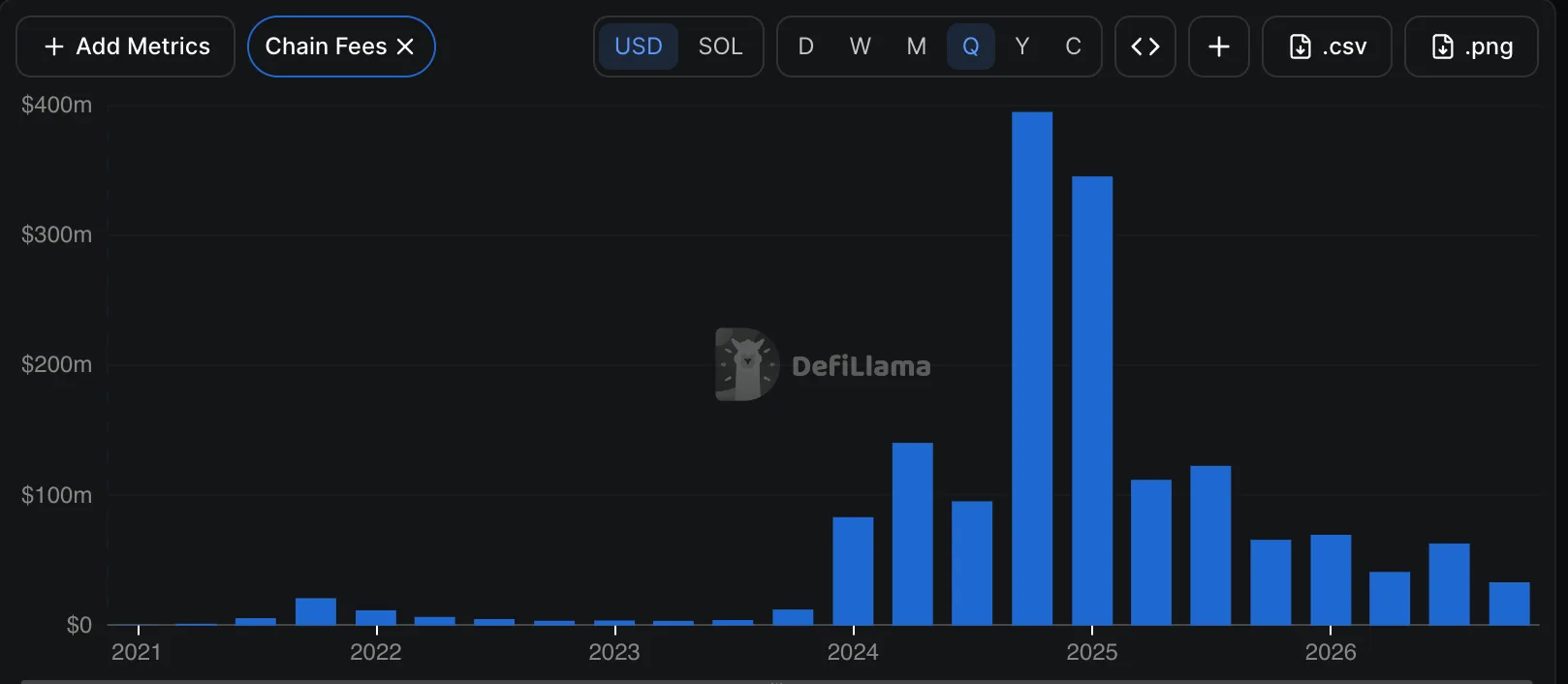
- •Solana's network fees fell to $33 million this quarter, down from $62 million the prior quarter and far below the roughly $400 million quarterly peak, as meme-coin demand and DEX volume declined.
- •The network's DeFi TVL has dropped to $4.6 billion from an all-time high above $12 billion, while stablecoin supply contracted to $13.6 billion from a record of nearly $16 billion.
- •Traders are monitoring $60 as key support, coinciding with the token's June low, while a move above the $80 resistance level would invalidate the bearish technical outlook.
Solana (SOL) remains under pressure this week, having already formed a death cross pattern that technical analysts view as a bearish signal. The token was trading at $71.80, down sharply from its September high of $124.43, as accelerating spot ETF outflows, plunging chain fees, and a falling stablecoin supply weigh on the network.
ETF Outflows Accelerate as Demand Cools
SOL price has been in a strong sell-off in recent months as cryptocurrencies plunged, and its decline has coincided with persistent outflows from spot SOL ETFs, a sign that demand for the token is falling. Because these funds give investors Solana exposure through standard brokerage accounts and publish their flow data daily, they have become one of the most closely watched gauges of investor appetite for the token.
Spot SOL ETFs recorded more than $3.83 million in outflows on Monday, bringing this month's total to $57.75 million. That marks the second consecutive month of net redemptions, after the funds shed more than $143 million in October. In total, the products have attracted a cumulative net inflow of $1.41 billion and currently hold $1.03 billion in assets, meaning the funds remain in net positive territory despite the recent streak of outflows. The largest Solana funds are operated by Bitwise, Fidelity, Grayscale, and Morgan Stanley.
The rising outflows have come amid growing fear across the crypto market, which has also weighed on Bitcoin and other altcoins. The Crypto Fear and Greed Index, which runs on a 0-to-100 scale, has dropped to 9, deep within the extreme fear zone. Solana's futures open interest and staking metrics have declined as well, with the network's staking market cap falling to $30.6 billion, according to Staking Rewards.
Fees and On-Chain Activity Slide
The price weakness has been accompanied by deteriorating on-chain fundamentals. Data from DeFi Llama shows that the total value locked (TVL) in Solana's decentralized finance (DeFi) ecosystem has continued to fall in recent months and now stands at $4.6 billion, down sharply from its all-time high of more than $12 billion.
Solana's DeFi TVL crash has come as demand for its meme coins has dropped. CoinGecko data shows that the combined market capitalization of Solana meme coins has slumped to $1.9 billion, with Pudgy Penguins, Official Trump, Bonk, Dogwifhat, Fartcoin, and Useless Coin ranking as the largest. At their peak, these tokens had a combined market capitalization of more than $25 billion.
The meme-coin slowdown has in turn dragged down Solana's decentralized exchange (DEX) volume, which stands at $88 billion this quarter — far below last quarter's $193 billion and well off the $521 billion peak reached in the first quarter of last year. The pullback matters for revenue because meme-coin trading is a high-turnover, fee-intensive segment of network activity.
Those trends have cut into the fees Solana collects. The network has generated $33 million in fees so far this quarter, down from $62 million in the previous one and a fraction of the close to $400 million a quarter it produced at its peak. The decline also means the network is burning fewer tokens — under Solana's fee model, a portion of each transaction fee is destroyed — leaving less SOL removed from circulation.
Stablecoin supply on the network has dropped to $13.6 billion from a record high of nearly $16 billion, a decline driven by the USDC supply, which has been falling in recent months. Stablecoin balances are widely tracked as a proxy for trading capital parked on a chain, so the contraction points to a thinner pool of funds available for on-chain activity.
Technical Picture Points Lower
Technicals suggest the SOL token retains downside momentum in the near term. It formed a death cross pattern earlier this month as its 50-day and 200-day moving averages crossed, and it is in the process of forming a bearish flag pattern, a common continuation signal in technical analysis. The coin has also printed a series of lower lows and lower highs.
Within that setup, sellers are targeting the key support level at $60, which coincides with the token's lowest point in June this year. A move above the $80 resistance would invalidate the bearish outlook. With ETF flows, fee tallies, and stablecoin supply all reported on regular cycles, movements in those data points will provide a running check on whether the network's activity is stabilizing alongside the price.
This article provides general financial information, not investment advice. Cryptocurrency prices fluctuate, and technical indicators cannot guarantee future performance. Readers should conduct independent research before making financial decisions.
Originally reported by The Market Periodical.

