Solana Memecoin Creator Royalties Top $150,000 for 64-Year Marmot Study After Federal Funding Stops
Key Takeaways
- •Creator royalties from a Solana memecoin have exceeded $150,000, providing emergency funding for a 64-year marmot research study that lost its federal support.
- •The marmot program has monitored a single population for more than six decades, producing a continuous dataset that short-term studies cannot replicate, and records lost to a funding gap cannot be reconstructed later.
- •The study's federal funding ended during a broader 2025 squeeze on U.S. research spending that included grant terminations and cuts across science agencies.
- •Unlike earlier meme-token charity drives, such as Dogecoin supporters funding the Jamaican bobsled team and Kenyan water wells, the royalty mechanism pays the research program repeatedly as trading continues.
- •Because the revenue stream depends on trading interest that can fade, it stands as an example of crypto funding real-world causes rather than a dependable replacement for lost federal grants.
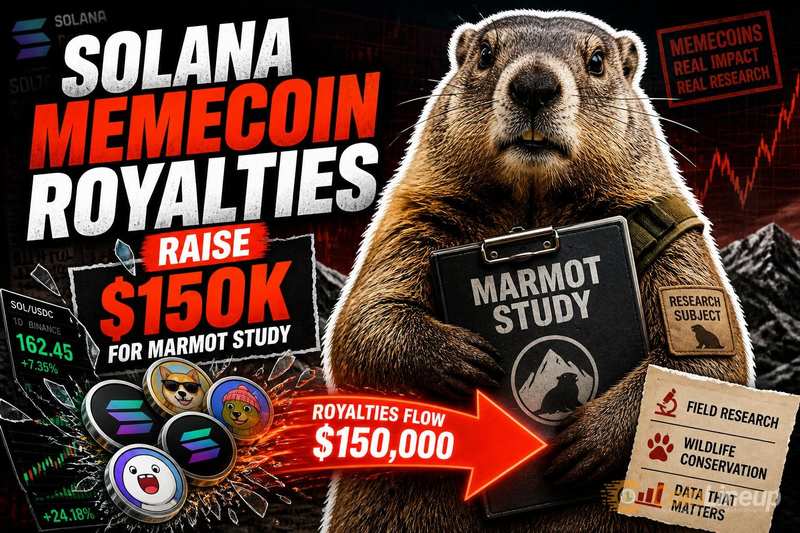
A Solana memecoin has generated more than $150,000 in creator royalties to support a 64-year marmot research study, giving the long-running science project a lifeline after its federal funding stopped.
How Solana memecoin royalties became a funding lifeline for the marmot study
The project turned trading activity around a Solana-based memecoin into cash for scientists. The proceeds passed more than $150,000, according to reporting on the effort.
The money supports a marmot study that has run for 64 years, making it one of the longest-running wildlife field programs of its kind, per the project's own site. Marmots are large, ground-dwelling squirrels found across North America, Europe and Asia, known for sharp alarm whistles and long hibernation seasons. Monitoring a single population for more than six decades builds the kind of continuous dataset short-term projects cannot match, letting researchers separate genuine long-term trends from ordinary year-to-year swings. A season of records lost to a funding gap also cannot be reconstructed later.
The crypto proceeds arrived after federal support for the study ended. That cutoff did not happen in isolation: 2025 brought a broad squeeze on U.S. federal research funding, with grant terminations and spending cuts reported across science agencies. Losing that funding left a gap that the memecoin community stepped in to fill, according to the researchers behind the OnlyMarms project.
Why creator royalties on Solana are central to this story
Creator royalties are a cut of trading activity paid back to a token's creator or a chosen beneficiary. Instead of a single donation, they can pay out again and again as people keep trading.
That matters here because the beneficiary is a research program, not an individual. Every trade in the memecoin can route a small fee toward the study, turning ongoing market interest into recurring income.
Creator fees also became a built-in feature of Solana's memecoin economy as one-click token launch platforms spread across the network, so routing a slice of trading activity to an outside wallet is mechanically straightforward.
Solana is relevant because the token launched on that network, where low fees make many small memecoin trades practical. This is different from a one-time fundraiser: the royalty model ties recurring revenue to continued trading, not a fixed goal.
What this says about crypto's role in funding real-world causes
A memecoin funding academic field research is unusual. Meme-token communities have backed offline causes before — Dogecoin supporters famously paid to send the Jamaican bobsled team to the 2014 Winter Olympics and funded water-well projects in Kenya — but those were one-off donation drives rather than a standing revenue stream.
Most memecoins exist for speculation, so directing that activity toward a decades-old science project is a rare real-world use case.
It is also worth staying measured about whether this repeats. The funding depended on a burst of trading interest, which can fade, so it stands as an example rather than a dependable replacement for lost federal grants.
For crypto readers, the takeaway is practical. Solana's memecoin economy usually draws attention for trading volumes and past experiments, from a rumored game-linked token to broader adoption moves like major brokerages adding Solana trading. This case shows the same rails can channel money into offline institutions, even if only briefly.
For anyone holding a little crypto and wondering what memecoins are good for, this is a concrete answer: a royalty stream kept a wildlife study alive when traditional funding disappeared.
Disclaimer: This article is for informational purposes only and does not constitute financial or investment advice. Cryptocurrency and digital asset markets carry significant risk. Always do your own research before making decisions.
