Solana Launches AI-Powered Playground for Blockchain Developers
Key Takeaways
- •Solana Playground now includes a conversational AI agent that explains code, proposes modifications, and assists with troubleshooting directly inside the browser-based coding environment.
- •The full development workflow runs in a browser, reducing the practical requirements for trying Solana development to little more than an internet connection.
- •The platform currently provides 3 guided learning paths and a library of 10 existing Solana programs that demonstrate how smart contracts interact with blockchain accounts.
- •The new AI integration extends rather than replaces the original open-source SolPg tools, which already allowed in-browser compilation of Rust code, wallet setup, and smart contract deployment.
- •Solana reports that more than 120 teams are building AI products in its ecosystem, supported by resources such as solana.ai, the Confidential Compute toolkit, and the Solana Builder Program.
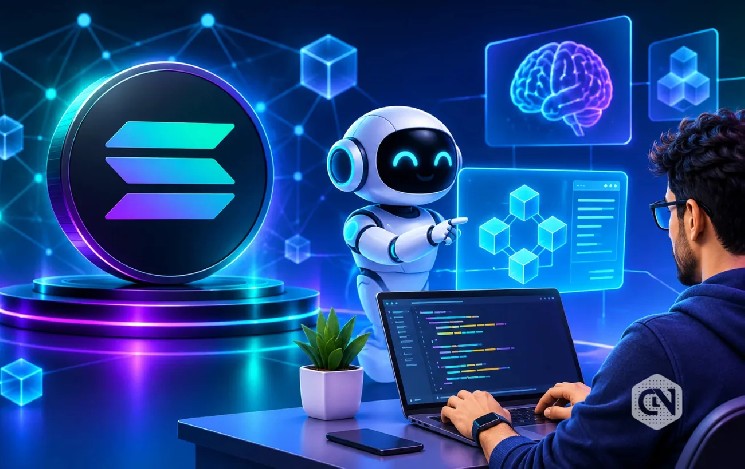
Solana has launched an AI-powered version of Solana Playground, a browser-based platform that allows programmers to create, edit, and deploy blockchain projects directly from a web browser. The updated environment features a conversational AI agent that explains code, suggests modifications, and guides developers as they build applications.
With the upgrade, developers can discuss their code with the AI and receive immediate assistance rather than relying solely on manual coding or searching through separate tutorials. New projects can be started, step-by-step tutorials followed, and existing Solana programs browsed within a single platform, while the integrated AI assistant answers questions about the code, offers suggestions, and helps troubleshoot issues as work progresses. Because the entire workflow runs in a browser, the practical requirements for trying Solana development are reduced to little more than an internet connection — a notable contrast with toolchains that demand local installation and configuration before a first program can be deployed.
AI Assistant Brings Coding Support Into the Playground
The standout feature is a conversational AI agent embedded directly in the coding environment. Instead of switching between different tools to understand how code works or to plan adjustments to a project, developers can simply state what they need.
The AI can explain sections of code, help modify them on request, and support users throughout the project — from starting a fresh project to following tutorials and exploring ready-made programs. The assistant offers a hands-on approach to difficult programming problems: newcomers can use it to grasp challenging concepts, while experienced developers can streamline code changes without leaving the workspace. Conversational assistants built directly into coding environments have become an increasingly common feature of software tooling in general, and Solana's Playground applies that same model to the specifics of on-chain programs.
Development begins with a choice between Anchor and native Solana development. Anchor is a framework that provides libraries and tools for building Solana smart contracts, along with features that handle program-account interactions and verify transaction information. Native Solana development offers more direct control without those additional layers, and is aimed at developers who want to work closer to the fundamentals.
Tutorials and Existing Programs Offer Different Learning Paths
Solana Playground includes resources designed to help developers become comfortable with Solana's programming style before building applications on their own.
The platform currently offers 3 guided learning paths. "Hello Anchor" introduces the Anchor framework, while "Lumberjack" is a mid-level project covering more advanced programming concepts. Described as the current offering, these counts are snapshots rather than stated limits — a detail worth watching as the platform evolves.
Alongside the tutorials, a library of 10 existing Solana programs is available to explore. These examples allow developers to see how blockchain applications are assembled and how different components function together. That matters because coding on Solana involves more than writing a script: programs, also known as smart contracts, execute commands and interact with separate blockchain accounts that hold application data.
Building applications such as decentralized exchanges or lending platforms requires working out how programs access and update those accounts. Understanding these interactions is crucial for creating applications that function properly on the network.
AI Integration Builds on Existing Browser Tools
Although the AI features are new, Solana developers have had access to browser-based development tools for years through the original open-source Solana Playground, commonly referred to as SolPg. That earlier platform enabled developers to compile Rust code, set up wallets, and deploy smart contracts without manually installing software locally.
According to Anchor's documentation, users could also create a browser wallet and obtain SOL tokens from a faucet on Solana's developer network, with these test tokens making experimentation risk-free. After coding, developers could compile, deploy, and run tests directly in the browser.
The new AI integration adds conversational support to this existing setup. Rather than replacing the current programming tools, it provides a new way to interact with them and to better understand applications during the building process.
Solana Expands Resources for AI-Based Development
The Playground launch is one element of Solana's broader effort to support developers building AI-driven applications. The updated developer portal now includes guides tailored for AI coding agents alongside regular documentation.
These resources cover practical programming scenarios, such as issuing tokenized assets with compliance controls, adding USDC payments to online checkouts, and creating automated payment services using the x402 protocol.
Solana has also introduced solana.ai, a platform that consolidates infrastructure for use cases including automated trading, wallet management, and stablecoin payments. According to statistics from the Solana Foundation presented at Breakpoint 2026, more than 120 teams are building AI products within the Solana ecosystem. With that figure already above 120, the evolution of the count is a concrete indicator to watch as the Playground, solana.ai, and the Builder Program operate alongside one another.
Another milestone is Confidential Compute, an open-source toolkit launched earlier with Nito. It enables teams to build AI applications that handle sensitive data inside secure hardware while recording verification on Solana.
The Solana Foundation has shared 11 startup ideas across topics including AI inference, stablecoin payments, tokenized collectibles, and housing futures. Interested developers can join the Solana Builder Program to access grants, guidance, marketing, hiring support, and infrastructure credits. Viewed together, these resources trace a path from a developer's first browser-based tutorial to a funded team building AI applications in production.

