Solana Holds Near $100 as Exchange Balances Fall, ETF Inflows Extend Streak, and Validators Approve Double Disinflation
Key Takeaways
- •Solana fell about 8.3% from roughly $110.50 to near $100.40, with major support near $103 and resistance zones at approximately $123 and $132.
- •U.S. spot Solana ETFs recorded seven straight weeks of net inflows, with the latest week exceeding $153 million, the strongest total of 2026.
- •Roughly 2.6 million SOL moved off exchanges over seven days, and wallets holding at least 10,000 SOL increased by 52.
- •Validators approved the SGP-0002 Double Disinflation proposal with 67% support, raising the disinflation rate from 15% to 30% and cutting projected issuance by about 18.9 million SOL over six years.
- •The reduced issuance schedule takes effect only after SIMD-0550 is developed and activated through a future mainnet update.
Solana (SOL) is trading near the $100 level after retreating from its latest high above $110, even as a range of market and network indicators continue to show strength behind the asset.
SOL declined roughly 8.3%, from approximately $110.50 on Aug. 26 to around $100.40 in the latest dataset cited by analyst Ali Martinez. Over the same period, exchange balances fell, network-address creation stayed elevated, and U.S. spot Solana ETFs posted their strongest weekly inflows since launch.
Martinez has identified $150 as a potential upside scenario should Solana enter another expansion phase. That target, however, is conditional on SOL defending nearby support and clearing several large cost-basis resistance zones first.
Pullback Meets Falling Exchange Supply
The recent slide has brought SOL back toward the $100 area after buyers failed to hold the move above $110. That level now stands near the first major resistance zone for any renewed recovery attempt. A sustained break above $110.50 would restore the recent breakout structure and potentially open room toward higher resistance. Until then, Solana remains in a consolidation phase following its latest advance.
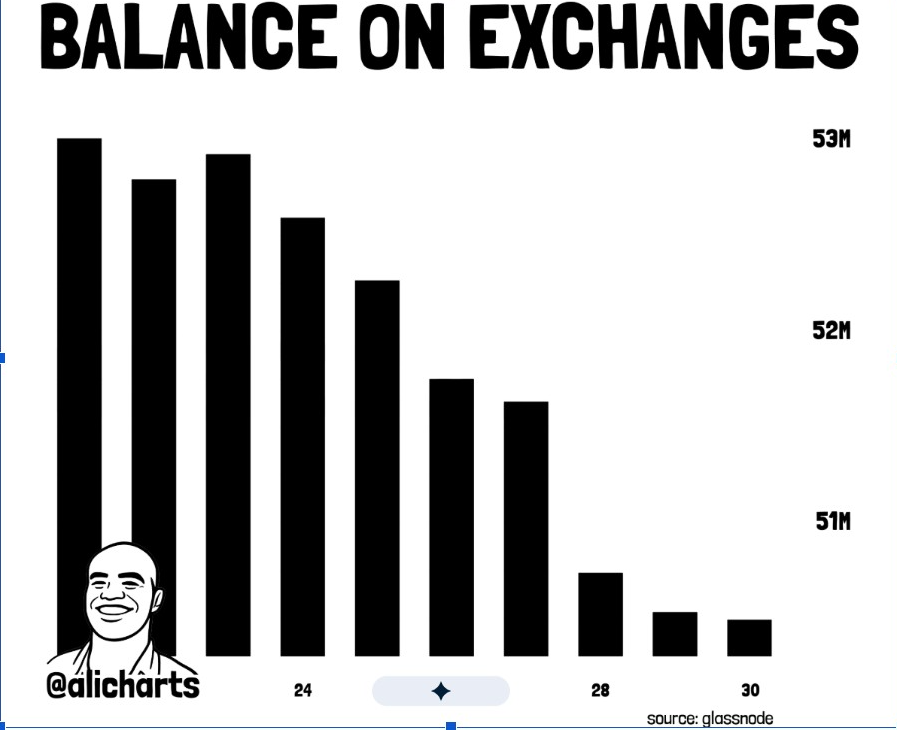
Exchange data adds another dimension to the picture: available trading supply has declined. Roughly 2.6 million SOL moved off exchanges over the past seven days, with balances down 4.91% for the week. Lower exchange balances can reduce immediately available sell-side supply when tokens shift into self-custody or other uses, though withdrawals alone do not establish whether those tokens will remain off exchanges.
On-Chain Data Shows Network and Whale Growth
Network activity has stayed elevated despite the price correction. Solana averaged about 9.5 million new addresses per day over the past week.
The number of wallets holding at least 10,000 SOL also rose 1.58% in the same period, with data cited by Martinez showing 52 additional wallets entering that large-holder category.
ETF demand has remained active as well. U.S. spot Solana products have recorded seven consecutive weeks of net inflows, and according to SolanaFloor, weekly net inflows exceeded $153 million — the strongest weekly total of 2026. The inflow streak matters for market structure as well: ETF vehicles absorb supply through regulated wrappers and give traditional investors exposure without self-custody, a demand channel that did not exist for Solana before these products launched.
Separately, Solana has ranked first among blockchains for real-world asset net inflows over the past 30 days, adding a source of network activity beyond conventional crypto trading.
Double Disinflation Vote Reduces Future SOL Issuance
Solana validators have approved SGP-0002, known as the Double Disinflation proposal, by a narrow margin. Support reached 67%, just above the required 66.667% threshold.
The proposal raises Solana's annual disinflation rate from 15% to 30% while keeping the long-term inflation target at 1.5%. Under the revised path, the network would reach that target in approximately 2.8 years, versus about 5.7 years under the previous schedule. The new trajectory moves that point toward early 2029 instead of 2032.
Projected SOL issuance would decline by approximately 18.9 million tokens over the next six years under the approved framework. Because new SOL is issued as staking rewards, a lower issuance path directly affects the rate at which validator and delegator yields are paid out — a trade-off the community weighed in the vote between slower supply growth and staking economics.
The vote, however, does not trigger an immediate protocol change. Technical implementation remains tied to SIMD-0550, which still requires development and activation through a future network update, meaning the reduced issuance schedule takes effect only once that code ships on mainnet. Validator participation reached 60.7% among 1,326 eligible operators.
Price Holds Near $100 After the Pullback
SOL has slipped back toward $100.40 after touching $110.50 earlier in the week. The decline has slowed near a key psychological level, and traders are watching whether buyers defend it. The short-term trend remains mixed, as the token has yet to recover its recent high. A move back above $110 would improve momentum and reopen the path toward higher resistance.
According to crypto analyst Ali Charts, Solana has formed a major support zone near $103, where roughly 39 million SOL were previously acquired. Holding that level could help preserve the current recovery structure.
On the upside, the main resistance zones sit near $123 and $132, where approximately 20 million SOL were acquired at each level. A break above both zones could reduce overhead supply and open a path toward $150.
On the downside, a move below $100 could expose support near $95. Deeper weakness could shift attention toward the $90 area, where buyers previously showed interest. Beyond price levels, the implementation status of SIMD-0550 and whether ETF inflow streaks persist are the key developments to monitor in coming weeks.
This article is for informational purposes only and does not constitute financial advice. Cryptocurrency markets can experience sharp price movements.
