Solana Proposals Seek to Cut SOL Supply Growth
Key Takeaways
- •SIMD-550 seeks to raise Solana’s disinflation rate from -15% to -30% and bring the network to its 1.5% inflation floor sooner.
- •SIMD-553 would introduce a burn fee on requested compute units, potentially lifting daily SOL burns from about 600–800 to 7,500–9,000 SOL.
- •If approved, SIMD-550 would reduce the average staking rate from 5.25% to 2.25% by the end of the third year.
- •Voting on the three proposals began on Sunday and is scheduled to close on Thursday at 15:30 UTC, but none has yet reached quorum.
- •SOL has risen nearly 20% over the past seven days and has recently stabilized around $96 after briefly trading above $100.
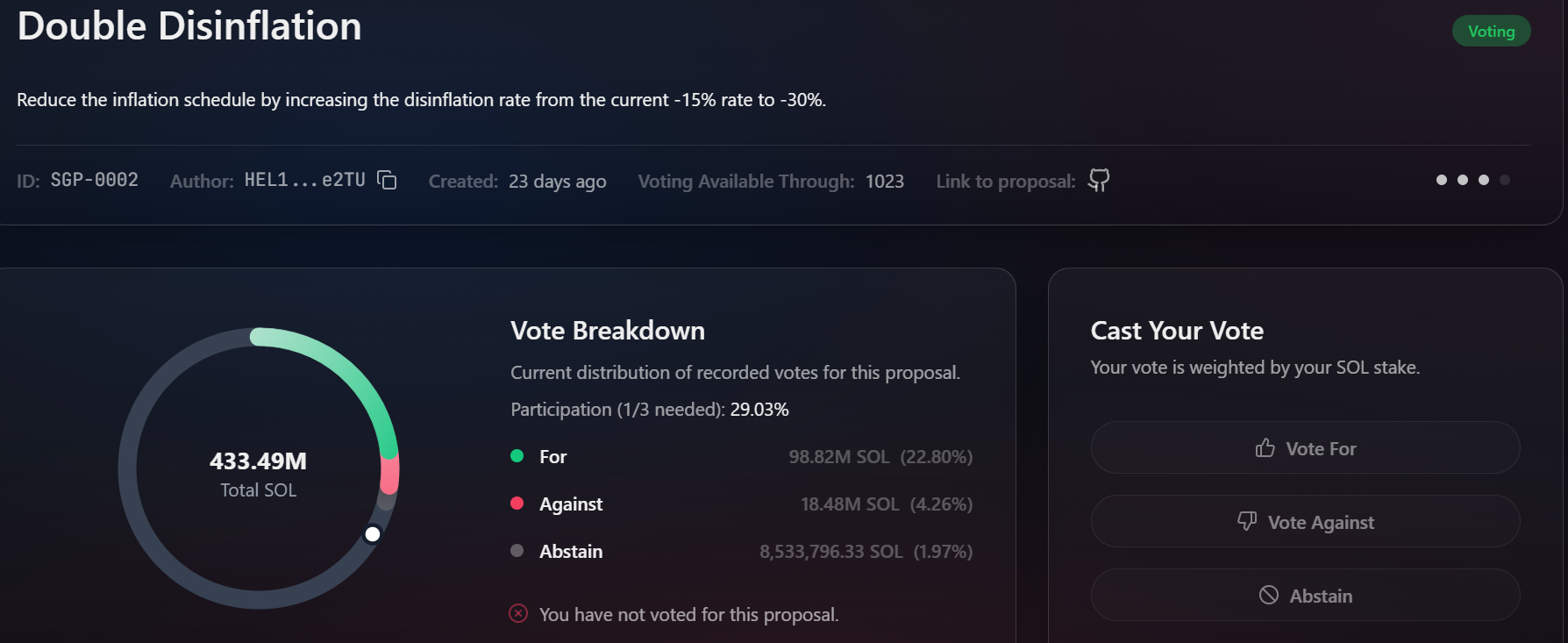
Solana is weighing two governance proposals that could materially change the network’s token economics, with SIMD-550 aimed at accelerating the decline in new SOL issuance and SIMD-553 designed to increase token burns through a resource-based fee. Both measures are Solana Improvement and Design (SIMD) documents, the format used for Solana protocol changes, and are being decided through on-chain votes in which validators cast ballots weighted by the stake delegated to them.
According to crypto asset manager 21Shares, the two proposals would reduce net supply growth from both sides. Lower issuance would bring fewer new tokens into circulation, while higher transaction-related burns would permanently remove more SOL from supply.
Solana inflation proposal targets faster disinflation
The 21Shares report said the proposals work together to reduce SOL issuance by addressing different parts of the network. SIMD-550, put forward by Helius, a Solana infrastructure firm, seeks to increase the network’s disinflation rate from -15% to -30%. Under Solana’s existing schedule, inflation started at 8% annually when the network launched and is designed to fall by 15% per year until reaching a 1.5% floor, the level both proposals treat as their long-term reference point.
With Solana inflation currently at 3.78%, the proposal would shorten the timeline for the network to reach a 1.5% inflation rate from 5.7 years to 2.8 years. It would put Solana on track to reach the 1.5% level by the first half of 2029, rather than the first half of 2032.
If approved, the proposal would also affect the Solana staking rate, reducing it from the current average of 5.25% to 2.25% by the end of the third year. That is the proposal’s largest projected impact. Staking rewards on Solana are paid out of newly issued SOL, which is why staking yield would fall in step with issuance.
Meanwhile, SIMD-553 would introduce a burn fee on requested compute units from financial activity. Under that framework, daily SOL burns, which currently range from about 600 to 800 SOL, could rise to 7,500–9,000 SOL.
Taken together, the two proposals could reduce SOL inflation by about $1.5 billion over six years. A third proposal would introduce Solana Governance Proposal 0001, which is intended to govern the voting process.
SOL stabilizes around $96 as voting continues
The prospect of a sharp reduction in SOL inflation has come as the token rebounds. Over the past seven days, SOL has gained nearly 20%.
Although it briefly moved above $100, it has stabilized around $96 over the past two days. The token is now up 28% over the past 30 days, even though it remains down 22% year to date.
If approved, the lower inflation rate could support a stronger SOL valuation. Supporters remain the majority so far, but none of the three proposals has reached quorum. Turnout has blocked Solana issuance reform before: SIMD-228, an earlier proposal to move the network to a market-based issuance mechanism, failed to reach quorum in March 2025 after low validator participation.
Voting began on Sunday and is scheduled to close on Thursday at 15:30 UTC, leaving roughly one day for the proposals to reach quorum and secure a majority.
There is also opposition, mainly because of the potential effect on staking rewards. If SIMD-550 passes, staking yield could fall by half in just two years, raising concerns that some validators could become unprofitable over time.
Supporters argue that the proposals could also redirect capital within the Solana ecosystem. Solana’s staking ratio is currently nearly 68%, compared with 34% on Ethereum. A lower staking yield could encourage investors to focus more on DeFi activity.
This article is for informational purposes only and does not constitute financial advice. Cryptocurrency markets can experience sharp price movements.
