Solana Price Analysis: ETF Inflows and Surging DEX Activity Could Support Move Toward $120
Key Takeaways
- •Solana was trading near $77 with daily volume of $1.61 billion, consolidating within a range of $75 to $97 and requiring a close above $97.89 to confirm a bullish structural shift.
- •The Bitwise Solana Staking ETF led Solana ETF inflows with approximately 75,714 SOL valued at $5.83 million on July 21, though outflows of 16,400 SOL followed the next day.
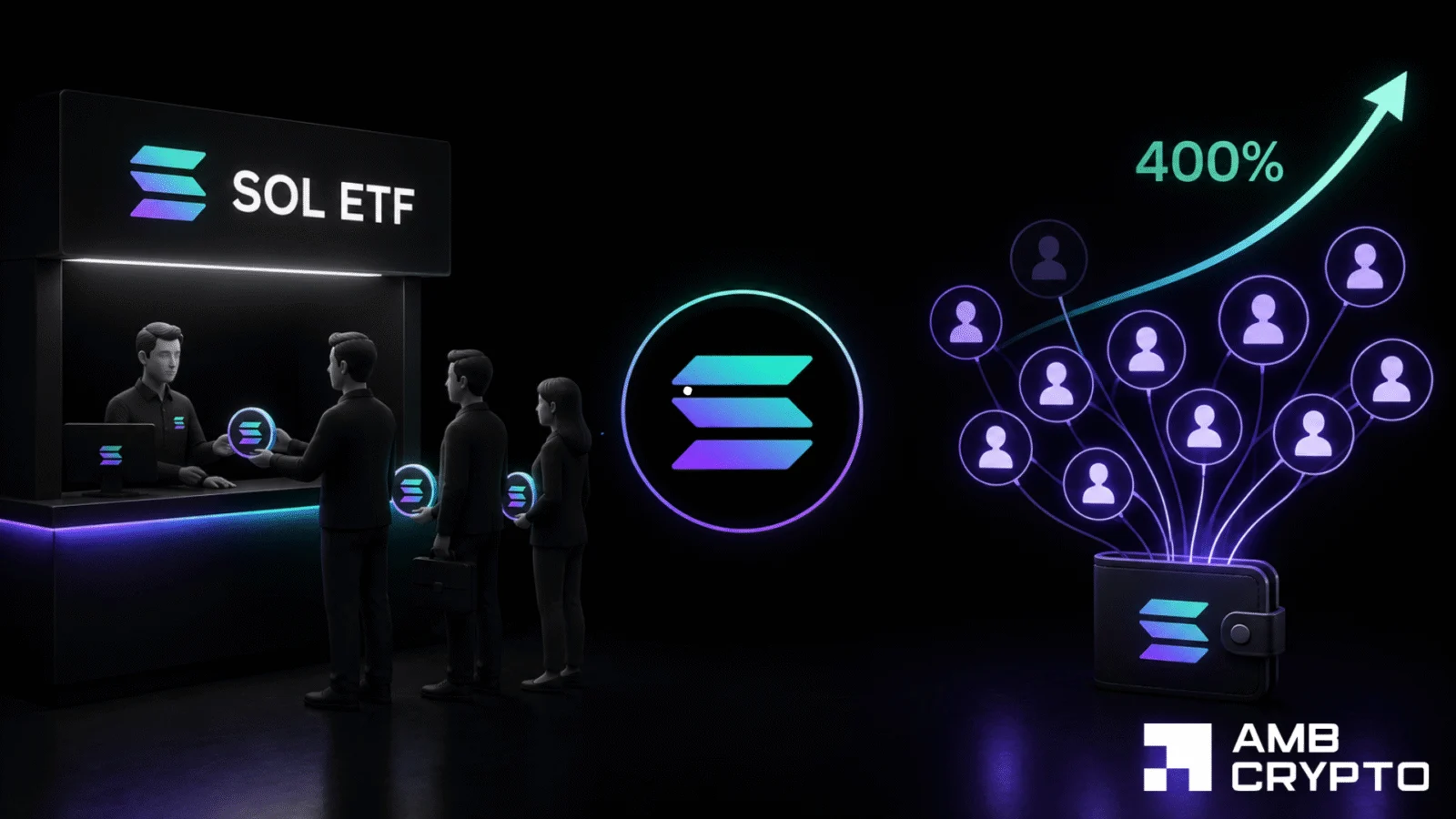
- •Dormant wallets re-engaging with Solana-based decentralized exchanges jumped to 62,000 last week, representing a 400% week-over-week increase and the highest count of returning users in over a year.
- •Total assets under management across Solana ETFs are approaching $1 billion, with daily traded volume of $54.47 million.
- •Technical indicators including a Moving Average crossover and an RSI above the neutral threshold suggest a potential breakout toward $120-$130, contingent on sustained demand-side pressure.
Solana [SOL] is gradually building a bullish structure on its price charts, though the altcoin remains capped below its most recent lower high at $97. At the time of writing, SOL was trading near $77, with daily volume climbing to $1.61 billion.
A crypto analyst noted that capital inflows and renewed on-chain activity were beginning to underpin a potential advance toward the $120 level. Source
Solana ETFs Record Two-Week High Inflows
Capital inflows were driven by Solana ETFs, which posted their strongest daily inflows in two weeks. The Bitwise Solana Staking ETF [BSOL] led the way with approximately 75,714 SOL, valued at $5.83 million. It was the sole ETF to register any activity on July 21.
The positive momentum, however, was short-lived. The following day, Solana ETFs recorded outflows of 16,400 SOL worth $1.27 million — less than a quarter of the more than 75,000 SOL acquired through BSOL the day prior.
Daily traded volume across Solana ETFs stood at $54.47 million, with total assets under management approaching the $1 billion mark. Solana and Hyperliquid ETFs together represent nearly 80% of all non-BTC/ETH ETF trading volume. The emergence of Solana-specific ETFs marks a shift in institutional crypto access, extending regulated investment vehicles beyond Bitcoin and Ethereum to a Layer 1 blockchain whose throughput and low transaction costs have positioned it as a hub for DeFi and memecoin trading activity.
Dormant Wallets Return to Solana DEXs
Separately, dormant wallets re-engaging with Solana-based decentralized exchanges (DEXs) jumped to 62,000 last week, up from fewer than 20,000 the prior week — a 400% week-over-week increase and the highest count of returning users in over a year.
The combination of a two-week ETF inflow high and the surge in reactivated wallets points to a notable shift in user engagement on the Solana network. Solana-based DEXs such as Raydium and Orca have consistently ranked among the highest-volume decentralized trading venues, and the return of previously inactive wallets suggests that users who had shifted activity elsewhere are once again finding executable opportunities on-chain.
Price Structure: Can SOL Reach the $120–$130 Range?
On the price charts, Solana established a base at $75 after sweeping liquidity beneath that level. The token has since returned to a consolidation range between $75 and $97, with the upper boundary serving as a key resistance zone.
Technical indicators suggest a potential breakout toward $120–$130 may be forming. A Moving Average (MA) crossover has occurred, with the faster MA crossing above the slower MA — a pattern typically associated with upward momentum. These price objectives, however, are contingent on a confirmed bullish breakout in the coming weeks.
Solana would need to close above $97.89 to confirm a structural shift to bullish. At press time, the Relative Strength Index (RSI) supported this scenario, trading above the neutral threshold and signaling buying pressure.
Without such a breakout, SOL remains in a bearish posture despite having reclaimed the critical $75 support level. Market participants are likely to monitor whether sustained ETF inflows and DEX participation can provide the demand-side pressure needed to test the $97 resistance, or whether the current consolidation will give way to another pullback toward the $75 base.