Solana’s 2027 Roadmap Targets Double Compute Capacity as SOL Tests $76.80 Resistance
Key Takeaways
- •Anza's 2027 roadmap targets doubling Solana's network compute capacity and cutting the compute units needed for token-account transactions by 80%.
- •The plan's Expressivity pillar would raise the maximum accounts per transaction from 64 to 96, while the Market Structure pillar extends Alpenglow through faster block distribution and the Constellation proposal aimed at greater transaction-ordering transparency.
- •SOL traded between $72.83 and $75.31 on Nov. 19 after a weekly low of $67.55, leaving the token down roughly 21% month-to-date and nearly 28% over 30 days.
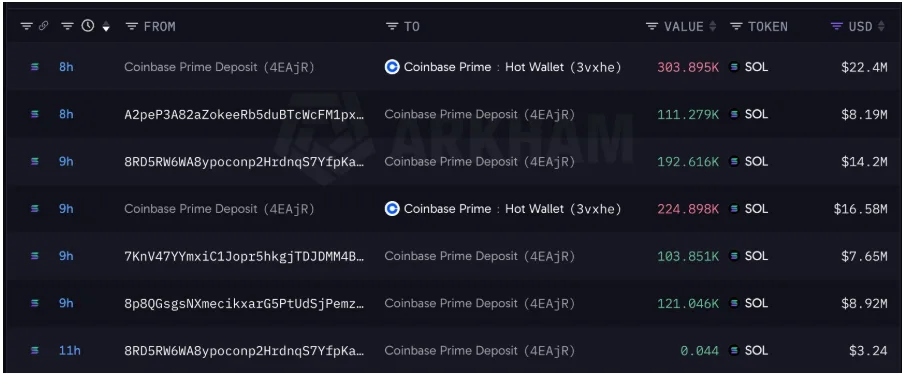
- •Two large holders unstaked 2.31 million SOL, worth approximately $169.4 million, and deposited the tokens into Coinbase Prime, though the owners' intentions were not confirmed.
- •SOL's near-term technical outlook hinges on the $76.80 resistance level, with support around $65 and a break below $67 potentially leading to further losses.
Solana’s development team Anza has outlined a four-pillar roadmap for 2027 that targets doubling the network’s compute capacity and reducing compute-unit consumption for token-account transactions by 80%. The plans were announced as SOL recovered toward $74 on Nov. 19 after falling to $67.55 during November’s broader cryptocurrency sell-off.
At the same time, two large holders unstaked 2.31 million SOL, worth approximately $169.4 million, and deposited the tokens into Coinbase Prime. The transfers drew attention as traders monitored whether SOL could reclaim resistance near $76.80. Anza’s roadmap describes future development targets rather than upgrades that have already been completed.
SOL Price Trend and Whale Activity
At press time, SOL was trading between $72.83 and $75.31, showing a modest daily recovery. The token had declined from around $81.66 over the previous week before reaching a weekly low of $67.55 on Monday. The move followed broader selling pressure across the cryptocurrency market, including BTC’s decline below $63,000.
SOL has since recovered into the low-to-mid-$70 range but remains below its November opening price of $95.35. The token is down roughly 21% month-to-date and nearly 28% over the past 30 days, indicating that it has not recovered from its recent rally.
Whale activity also became a focus after reports said that two large holders withdrew 2.31 million SOL from staking and deposited the tokens into Coinbase Prime, the exchange’s platform for institutional clients. Such transfers can increase the potential supply available for selling on an exchange, although a deposit alone does not establish that the holders sold or intend to sell.
Lookonchain reported that two wallets moved approximately $169.4 million in SOL. The transfers followed withdrawals from staking positions, but the owners’ intentions were not confirmed.
Anza’s Four-Pillar Solana Roadmap
Following the Alpenglow upgrade, Anza’s 2027 roadmap identifies four development priorities. The first pillar, Performance, aims to double Solana’s network compute capacity and reduce by 80% the number of compute units required for token-account transactions. Compute units are the processing budget the network assigns to each transaction, so per-transaction requirements and total network capacity are closely linked. Lower compute requirements could allow applications to process token-based transactions using fewer network resources.
Anza also plans to introduce vector processing, which would enable models to run entirely on-chain. These efforts form part of the team’s broader objective of increasing Solana’s transaction capacity.
The second pillar, Expressivity, is intended to increase the maximum number of accounts per transaction from 64 to 96. Because Solana transactions must list every account they interact with, this cap shapes how much on-chain state a single transaction can touch. Developers also want programs to read data directly instead of copying it, which would reduce the amount of data that must be moved during execution.
Market Structure is the third pillar. It would extend Alpenglow through faster block distribution and Constellation. The latter is intended to introduce rules that provide greater transparency regarding which transactions are ordered while increasing competition among validators.
The fourth pillar, Resilience, focuses on making the protocol easier to use and removing special-case requirements that could complicate future protocol upgrades. The roadmap builds on continuing network improvements, including Alpenglow.
$76.80 Resistance Remains a Key SOL Level
SOL remains in a broader downtrend, with lower highs and lower lows since the end of October. However, its rebound from the $67 support region indicates that buying activity emerged at lower prices.
Immediate resistance is positioned at $76.80, while support is located around $65 at the intersection of horizontal resistance and a descending trendline. A four-hour candle close above $76.80 could open a path toward $80 and then $84. A stronger move could put $86 in focus.
On the downside, $72 and $70 are nearby levels to monitor during a potential sell-off. A break below $67 could lead to further losses, while continued consolidation could delay the formation of a clearer trend.
The near-term technical outlook depends on whether SOL can move above and hold $76.80. Anza’s technical plans do not by themselves confirm a market recovery. A close above resistance would improve the chart structure, while a close below $67 would weaken the recovery pattern.
This article provides market information and analysis, not investment advice. Cryptocurrency prices remain volatile, and technical forecasts do not guarantee future performance.
Source: The Market Periodical

