‘Trump Is Our Bully’: Why Some Americans Remain Loyal to the President
Key Takeaways
- •With midterm elections less than two weeks away, analysts forecast potential losses of the House and possibly the Senate for Trump and MAGA Republicans, and his approval rating has fallen to a record-low 31%.
- •Kentucky's 5th Congressional District, the country's second-poorest and whitest, backed Trump among voters by an 80% to 20% margin despite having once supported New Deal Democrats.
- •Hochschild argues Trump's grip rests on "emotional capture": offering recognition promoting a "stolen pride" narrative that blames immigrants, the press, and government workers, and staging rituals in which he appears as a victim of shaming.
- •Conditions in Appalachia have deteriorated under Trump's second term, with coal jobs unrecovered, the opioid crisis unaddressed, and cuts to food stamps linked to hunger in communities that voted for him.
- •Hochschild advises Democrats against shaming these voters, who are showing "depressive withdrawal" rather than switching allegiance, and recommends offering better ideas and rebuilding cross-political alliances instead.
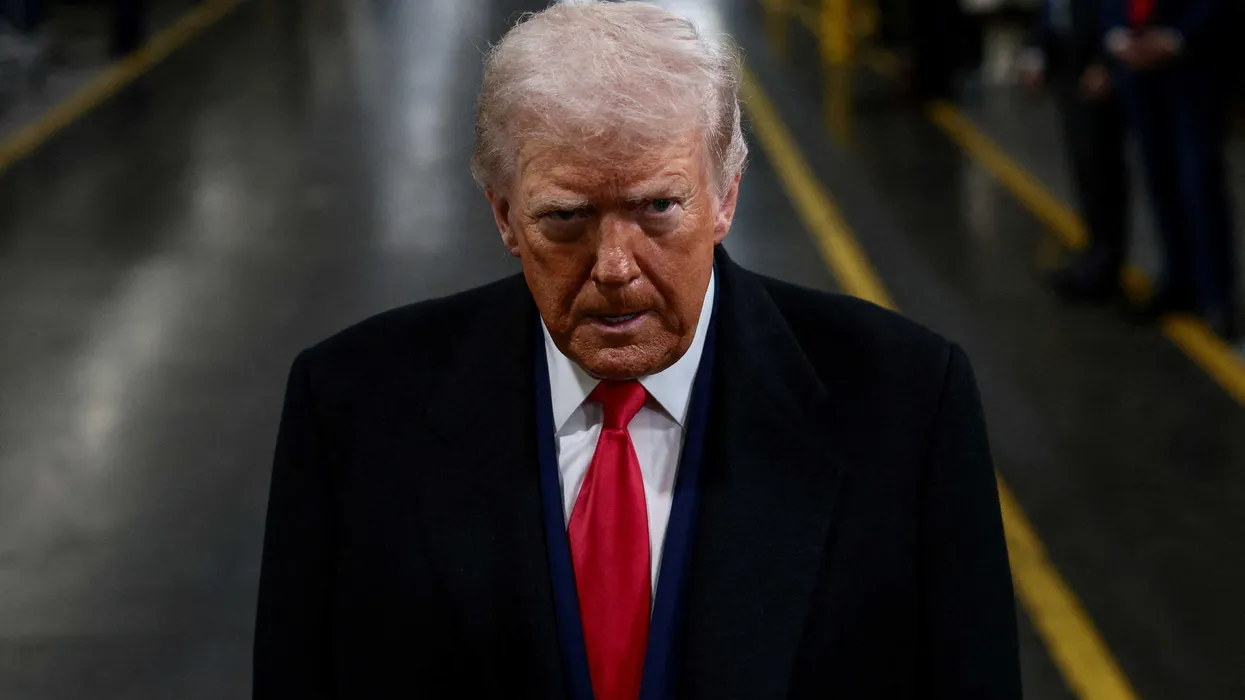
With the U.S. midterm elections less than two weeks away, Americans are preparing to vote in what political analysts describe as one of the most consequential midterm elections in the country’s history. Leading analysts and pollsters predict that Donald Trump and his MAGA Republicans could face major losses, including the likely loss of control of the House and possibly the Senate.
The expected setback is being driven in part by declining support among the voters who helped return Trump to the White House in the 2024 election. A new Reuters/Ipsos poll puts Trump’s approval rating at a record-low 31%. That number, set against the loyalty that persists in the communities examined in the conversation below, frames the tension this interview sets out to explain.
But Trump has not lost his entire base. His administration and MAGA Republicans have imposed significant economic and material hardship on white working-class and poor people in Appalachia and other rural parts of red-state America. Many of those voters nevertheless continue to support him.
Why?
Arlie Hochschild, professor emerita of sociology at the University of California, Berkeley, has spent years examining that question. She is the author of several books, including Strangers in Their Own Land and, most recently, Stolen Pride: Loss, Shame, and the Rise of the Right.
In this conversation, Hochschild argues that Trump has “emotionally captured” many poor and working-class voters by addressing their economic insecurity, resentment, wounded dignity and sense of lost honor. Drawing on her recent experiences in eastern Kentucky, she discusses the forces behind Trump’s continuing appeal and what liberals and Democrats could do to challenge his hold over the region. Whether the “depressive withdrawal” she describes — rather than a switch in allegiance — registers at the ballot box is among the questions the imminent vote may help clarify.
This conversation has been edited for clarity and length.
Question: NBC News recently reported on a rural West Virginia community that overwhelmingly voted for Trump but is now experiencing widespread hunger. Residents are reportedly going without food because of cuts to the social safety net by his administration and the MAGA Republicans’ “Big Beautiful Bill.” How can people continue supporting a president whose policies are actively hurting them?
Arlie Hochschild: For the last five years, I have spent time in Kentucky’s 5th Congressional District. It is the second-poorest and whitest congressional district in the country, and it once supported New Deal Democrats. In the last three elections, it moved sharply to the right. Among those who voted, the split was 80% for Trump and 20% for Harris.
This is a region of loss. Coal jobs were difficult and dangerous. They caused black lung, and workers died young, but they were well-paid jobs in a one-industry region. Those jobs have disappeared, and everyone knows they are not really coming back. Opiates have arrived in a major way. Jobs out, opiates in.
The rise of the right across the country has to do with a response to loss, and people in this region have lost a great deal.
Then Donald Trump arrived. I describe what he did as emotional capture.
The first element is that someone comes from outside the region, a kind of magic man, and makes an appeal for recognition. How did a billionaire from New York City make unemployed Appalachian coal miners feel recognized? He spoke to their loss. He talked about how terrible things were. He told them, in effect, how far down they had fallen. They had once been proud, and now they were ashamed. They had once had something and made a contribution to the country, and now they were nothing.
The second element is a persuasive narrative. I call it the narrative of stolen pride. Where did that pride go? It did not simply disappear. Someone stole it. Trump signals that he understands it was stolen and says he will recover it through retribution. Perhaps immigrants are responsible. Perhaps the press or government workers are to blame.
The third element is an anti-shaming ritual. Trump says something outrageous, such as claiming that Haitian immigrants are eating people’s pet cats and dogs. Pundits shame him, while comedians and left-wing commentators attack him. Trump then becomes the victim of the people shaming him.
His message is: “Look how they’re shaming me. Don’t you, my supporters, know what that feels like? You used to be something. They are doing to me what they want to do to you.”
There is also what I would call Trump’s hidden Jesus moment: “I will take the shame off you. I will take it onto myself.” Welding yourself to him can feel good. He is larger and heavier; he carries the burden that once belonged to you.
Question: When the cameras are off and the microphones are not recording, do these people really believe in Donald Trump?
Hochschild: No. Before the second term, I spoke with people who would say, “I know he’s a liar and a bully, but he’s good for us. Nobody else is here for us. Trump is our bully.” I heard that often.
They are not fooled. They are allergic to anything they perceive as left-wing, and they hate that more than they hate a lying, depriving Republican president.
My sense now is that they do not think Trump is wonderful. I hear people who are depressed. The shine has come off the magic man. But people in this part of Appalachia are stoics. They are accustomed to being punished by life, and they are entering an “Okay, I can bear it” mode.
They are not switching political gears. Instead, there is a retreat, a kind of depressive withdrawal. They are prepared to be shamed for having voted for the person who is making them miserable.
But Democrats should not respond by shaming them. They should say that they have better ideas. There are real problems in the region, and Democrats are committed to addressing them. The party must examine itself and build every alliance it can. Democrats have been marginalized in this culture, and that marginalization could become even worse.
Question: During Trump’s second term, are conditions improving or deteriorating for working-class and poor people in rural Appalachia and similar communities?
Hochschild: They are terrible. The promises have not been fulfilled. Donald Trump has not brought coal back. He has not restored well-paying jobs in other industries, and he has not substantively addressed the opioid crisis.
The cuts made by the “Big Beautiful Bill” — the same legislation the first question of this conversation linked to hunger in a rural West Virginia community that voted overwhelmingly for Trump — have been especially damaging to people in Appalachia and other rural parts of America. Food stamps have been cut in a region that already faces food insecurity. People are in a hole.
Question: You have studied how individuals and communities cope with adversity and stress. What are you seeing in churches, community centers and other places where people gather and socialize in Appalachia?
Hochschild: I think Donald Trump has found fertile ground in the social deserts created by loss downward mobility. Rotary Club meetings and small shops have been weakened by Amazon and Home Depot. There are many dollar stores and gas stations, but not many places for people to gather socially. Those spaces need to be addressed and rebuilt.
Eight or nine months ago, I returned to Pike County for what the people in Stolen Pride called a “hollerlogue.” Some participants supported Trump, while others strongly opposed him. I thought it was brilliant. People on the left—liberals living in cities and highly educated people—have much to learn from these residents about how to talk across political divisions.
A man who strongly opposed Trump began by saying, “I think every child, whether they come from a poor family or a rich family, ought to be able to eat three meals a day.”
The Trump supporters agreed. The anti-Trump participant then said, “Donald Trump is cutting food stamps, and we’re the second-poorest area in the country, so I’m against Donald Trump.”
A Trump supporter replied, “I thought he wasn’t cutting food. If you’re able-bodied, you should be able to work 35 hours for that food. And I believe in work.”
The anti-Trump participant answered: “Look, I believe in work too, but many people are caring for relatives who are ill, and some are mothers of small children who cannot work. The jobs here pay only eight or nine dollars an hour. We all drive clunkers and live in the mountains. Once you spend money on gas, you have lost money. How can you say people have to work for food stamps when there are no sustainable jobs?”
The discussion remained respectful. Participants took breaks to reaffirm what they had in common. I thought it offered a local model for something that should be happening nationally.
Under Trump, resentment and hatred have been directed laterally, so that the middle class fights the middle class. At the same time, money and resources are transferred from the poor to the rich. Divide-and-rule politics prevents the kinds of alliances that the liberal left needs to rebuild in the absence of unions.
Question: What would you say to liberals, progressives, Democrats and others who are losing, or have lost, much of their empathy for Trump supporters who are being harmed by the policies and the president they helped return to the White House?
Hochschild: I would introduce you to people on the other side whom you would like and find kind, and who share your concerns. It does not take long to peel back some of the hatred fostered by Trump. What it takes is recognizing these voters as human beings and remembering that they were once Clinton Democrats. They were strong supporters of the New Deal in this region.
They are the same people, from the same lineage and the same families. They have been emotionally captured by Trump.
In whose interest is divide-and-rule politics? It is in Donald Trump’s interest. It is not in the interest of progressives, liberals or Democrats to divide rural from urban communities, poor people from the middle class, or college-educated people from those with less formal education.
The more we divide and separate, the more we play into Trump’s hands. Without reaching out, we are digging our own graves.
The interview was conducted by Chauncey DeVega, a politics and opinion writer whose work addresses American democracy, inequality, political power and the continuing significance of race in the United States and around the world. He was formerly a senior politics writer at Salon. His essays and commentary have been cited by The New York Times, The Washington Post, the BBC, NPR, The Atlantic and other leading publications. He hosts The Chauncey DeVega Show and The Truth Report.
Source: Alternet

