Swiss National Bank Explores Shared DLT Ledger for Tokenized Money and Securities Settlement
Key Takeaways
- •The SNB, together with UBS, SIX, Zürcher Kantonalbank, PostFinance, Banque Cantonale Vaudoise, Basler Kantonalbank, Sygnum Bank, and Seturion, is exploring whether different forms of money and tokenized securities can be used together on a single DLT-based settlement platform.
- •The study will examine platform architecture, technical design, governance, and operating models for tokenized settlement of domestic and cross-border transactions, supported by a Strategic Board of participating institutions with the Swiss Bankers Association as an observer.
- •The central bank stated the study does not signal a decision to launch the ledger or to provide tokenized central bank money, and the initiative targets wholesale settlement rather than retail payments.
- •The project builds on Project Helvetia and the BIS-led Project Agorá, which tests tokenized central bank reserves and commercial bank deposits for atomic settlement across multiple currencies and jurisdictions.
- •Switzerland's federal DLT Act, in force since February 2021, established a legal framework for ledger-based securities, and the new study underscores tokenization moving deeper into regulated finance rather than permissionless crypto networks.
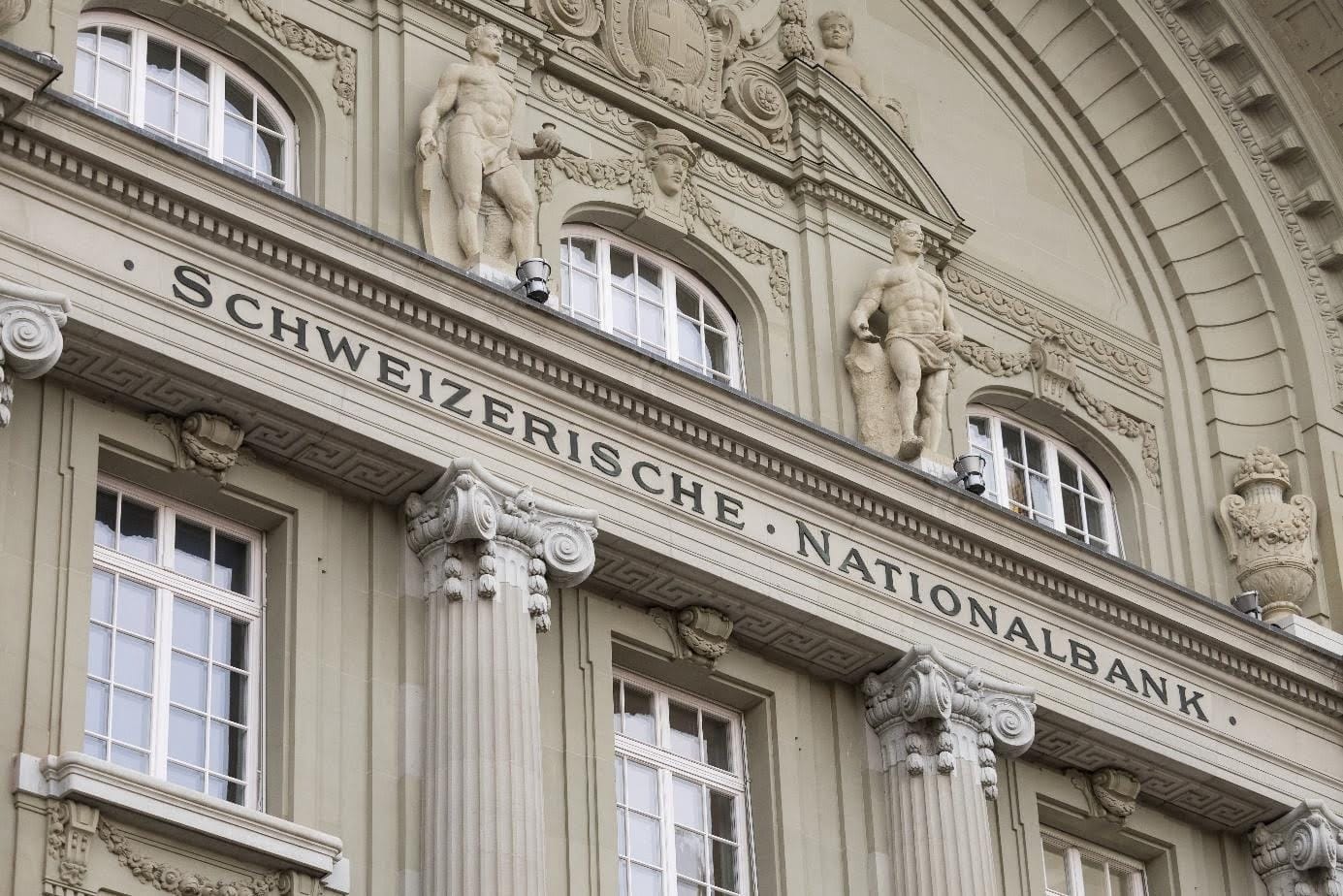
The Swiss National Bank (SNB) has launched an exploratory study to determine whether central bank money can coexist and work together with commercial bank money and tokenized securities on a common distributed ledger, according to a press release issued by the central bank on November 24, 2026.
The initiative, known as the Swiss Financial Ledger, aims to connect key Swiss financial actors and experiment with the technical, governance, and operational parameters of a tokenized settlement platform for both domestic and cross-border transactions. Distributed ledger technology (DLT), the foundation of such platforms, is a synchronized database shared and maintained across participating institutions rather than by a single intermediary — the same type of architecture underlying blockchain systems. Placing money and securities on one common ledger is what would allow payment and asset-transfer activity to operate within a single settlement environment.
Major Swiss Banks Join the Study
The SNB announced the project alongside UBS, SIX, Zürcher Kantonalbank, PostFinance, Banque Cantonale Vaudoise, Basler Kantonalbank, Sygnum Bank, and settlement platform Seturion. Participants will examine whether different forms of money and tokenized securities — securities recorded as digital tokens on a ledger rather than in traditional registries — are compatible and can be used together on the same DLT-based infrastructure.
The study covers a number of areas, including platform architecture, technical design, governance, and operating models. The SNB has also established a Strategic Board with participation by the institutions involved, while the Swiss Bankers Association holds an observer role. Through the project, the participating institutions are set to gain practical insight into each of these areas.
Tokenized Central Bank Money Not Yet Confirmed
The central bank has been careful to define the boundaries of expectations for the project, framing it as research rather than a policy commitment. The study is not an indication that Switzerland has decided to launch the ledger, nor does it signal the SNB's intention to provide financial institutions with central bank money in the form of tokens. Because the tokenized central bank money in question would be reserved for financial institutions, the initiative sits in the wholesale domain of settlement rather than in retail payments. According to the announcement, the work is instead a continuation of the studies the central bank has conducted on the evolution of the current financial infrastructure through tokenization.
The scope of the initiative is significant for the cryptocurrency industry: the project focuses on regulated financial settlement infrastructure, not public cryptocurrencies or permissionless blockchain networks.
Project Builds on Helvetia and Agorá
The Swiss Financial Ledger project is a component of Project Helvetia, which has been researching ways to settle tokenized asset transactions with central bank money. It also leverages Project Agorá, a public-private initiative launched by the Bank for International Settlements (BIS) and the Institute of International Finance. Agorá explores the potential of tokenizing central bank reserves and commercial bank deposits and connecting them to a programmable settlement layer.
The BIS has highlighted the advantages of its prototype design, which uses commercial bank deposits and central bank reserves in tokenized form to enable atomic settlement between multiple currencies and jurisdictions — a process in which both sides of a transaction are completed simultaneously rather than in separate, sequential steps.
Tokenization Moves Deeper Into Regulated Finance
The Swiss project comes amid a growing movement among central banks and financial institutions to investigate blockchain-type infrastructure for financial assets. Switzerland has been among the earliest movers on the legal side as well: its federal DLT Act, in force since February 2021, established a framework for ledger-based securities. The model to be tested does not place crypto networks at the heart of settlement; instead, the central bank and regulated commercial banks remain responsible for managing it. The development underscores how tokenization is moving deeper into regulated finance rather than toward permissionless networks.
More broadly, the announcement is another indication that tokenization technology is progressing toward mainstream incorporation into financial infrastructure for securities settlement and wholesale payments. The next phase will be to determine whether such a common platform is efficient, secure, and offers sufficient real-world utility to warrant exiting the exploratory stage.
Source: CryptoNinjas

