SmartSea’s Vedat says shipping should manage fleets as intelligent operational networks
Key Takeaways
- •Vedat says shipping likely operationalises less than 20% of its available vessel data, much of which remains in separate systems or is used only for retrospective reporting.
- •He argues that the next stage of digitalisation should focus on data quality, integration and delivery rather than adding more sensors or chasing fully autonomous vessels.
- •Vedat expects “autonomous decision ecosystems” to link vessels, shore teams and maritime infrastructure over the next five years, with AI depending on harmonised real-time operational data.
- •He says shipping will only scale digital solutions by adopting common architectures, standard interfaces and repeatable deployment models across fleets.
- •Vedat says digital investment should be tied to measurable outcomes such as efficiency, safety, availability and emissions, and that data literacy will become a core seafaring skill by 2035.
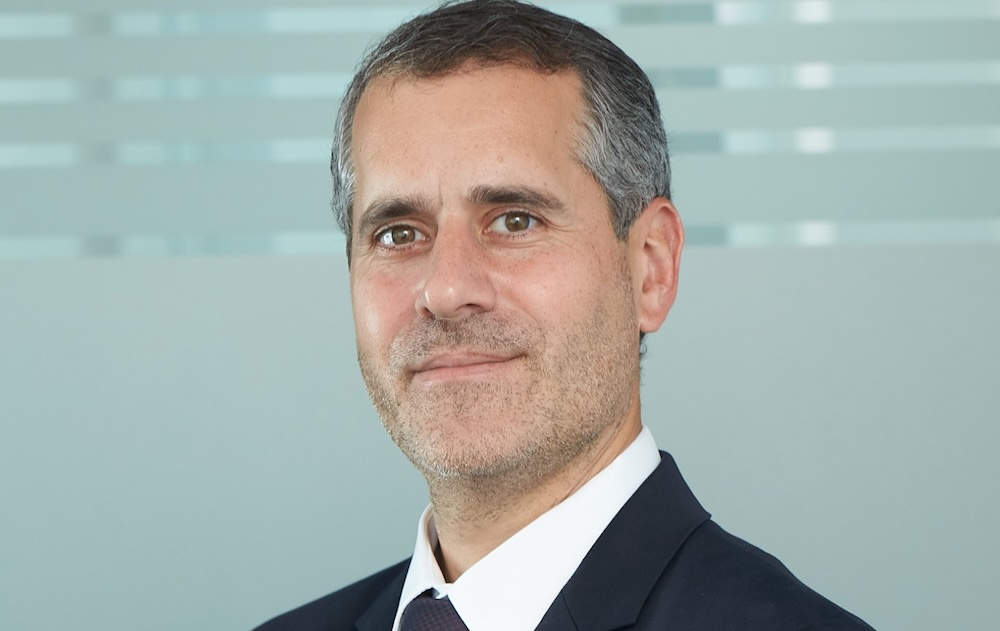
SmartSea CEO Kris Vedat says shipping’s digital future depends less on adding more sensors than on breaking down data silos and managing fleets as connected operational networks.
Vedat argues that the idea of treating every ship as an isolated operating environment is becoming obsolete. As vessels become more closely connected to shore teams, ports, suppliers and performance centres, he says the industry should stop thinking ship by ship and instead manage fleets as integrated operational networks.
“The future fleet should be treated as one intelligent operational network, allowing expertise, information and lessons learned to be distributed consistently while preserving the authority and judgement of those onboard,” he tells Maritime CEO.
Vedat says this shift lies at the heart of what digitalisation in shipping should ultimately achieve. While ships increasingly function as nodes within a wider network, he says the industry is still failing to extract the full value from the data those vessels generate.
The industry must avoid replacing fragmentation with dependency
Vedat estimates that shipping probably operationalises less than 20% of its available vessel data.
“Much of that information remains trapped in separate systems or is used retrospectively for reporting rather than real-time decisions,” he says.
In his view, the next digital frontier is not another wave of sensors, but better data quality, integration and delivery so that existing information becomes a continuous operational advantage.
Vedat also believes shipping is overestimating the near-term impact of fully autonomous vessels while underestimating the infrastructure needed to make different technologies work together.
He says the less visible layers of maritime technology — data orchestration, interoperability and secure ship-to-shore information exchange — could prove far more important than the headline-grabbing applications built on top of them.
“The long-term winners may not have the most sophisticated algorithms, but the strongest ability to make maritime data accessible, interoperable and operationally useful,” he says.
Over the next five years, Vedat expects what he calls “autonomous decision ecosystems” to emerge, linking vessels, shore teams and maritime infrastructure. He says AI will play a central role, but only if it is fed by harmonised, real-time operational data.
“The real advance,” he maintains, “will not be automating individual tasks, but enabling fleets to make faster, better and increasingly coordinated decisions as a connected operational network.”
According to Vedat, the biggest obstacle to scaling maritime technology is structural fragmentation rather than technology or cost. Vessel IT, operational technology and connectivity have evolved separately, often across multiple generations of equipment and suppliers, leaving too many digital projects as bespoke integration exercises.
“Digital solutions will only scale when the industry adopts common architectures, standard interfaces and repeatable deployment models across entire fleets,” he says.
If he could impose one standard across shipping, Vedat says it would be a universal maritime data and interoperability framework. He stresses that such a framework should not mandate a single technology supplier. Instead, it should allow competing systems to communicate through open interfaces, reducing integration costs and limiting proprietary lock-in.
He argues that this could help create a genuine maritime platform economy, where new applications can be plugged into existing infrastructure rather than forcing owners to rebuild their technology stack each time.
The risk, he says, is that consolidation among technology vendors could simply replace one problem with another.
“Consolidation should be welcomed where it improves interoperability, but resisted where it restricts data portability or customer choice,” Vedat says. “The industry must avoid replacing fragmentation with dependency.”
Vedat also says shipping needs to rethink how digital projects are funded. Capital exists, he argues, but confidence remains weaker where outcomes are hard to measure and responsibility is spread between owners, operators and vendors. He says shared-risk and outcome-based commercial models could help unlock investment.
“Customers need to buy defined results rather than carry all the risk of implementation,” he says.
That means linking digital investment to measurable improvements in efficiency, availability, safety or emissions, rather than simply purchasing another system. In a sector where fleets often operate across different routes, ship types and supplier environments, Vedat’s focus is on making digital spending more repeatable and easier to scale from one vessel or business unit to the next.
Vedat makes a similar point when discussing return on investment. Fuel savings remain an obvious metric, but he says digital ROI should also include resilience, crew effectiveness, safety, compliance, maintenance, asset longevity and organisational agility.
“Better information can prevent failures, reduce downtime and make scarce expertise available across a fleet,” he points out.
For emissions reduction specifically, Vedat sees some of the strongest near-term returns from decision-optimisation platforms covering routing, speed, trim, machinery configuration and arrival planning. He says new fuels and hardware will eventually be essential, but operational intelligence can deliver savings across ships already trading today.
The growing digital environment will also change the skills required at sea. By 2035, Vedat expects data literacy to sit alongside traditional maritime competence as a core seafaring skill. Crew will need to interpret digital recommendations, understand automated outputs and know when human judgement should override the machine.
“The objective is not to turn seafarers into data scientists,” he says, “but to help them operate confidently where maritime experience and machine intelligence meet.”
That balance between technology and maritime understanding also shapes Vedat’s view of vendor risk. As digital platforms become more deeply embedded in daily operations, he says owners must assess not only technical performance but also maritime expertise, interoperability, data portability and exit provisions.
“The greatest risk lies in relying on data and connectivity platforms controlled by vendors that lack a deep understanding of maritime operations,” he concludes.

