SK hynix's Potential Solidigm US IPO Divides Investors Over Shareholder Value
Key Takeaways
- •Solidigm has held meetings with multiple investment banks regarding underwriting a potential US listing, with market estimates valuing the unit at up to $150 billion and the offering potentially raising as much as $15 billion.
- •Solidigm, established in 2021 after SK hynix acquired Intel's NAND flash and SSD business for $9 billion, returned to profitability with first-half 2026 revenue of 12.25 trillion won, up 265 percent year-on-year, and a net profit of 5.84 trillion won after combined net losses exceeding 7 trillion won in 2022 and 2023.
- •Proponents argue a could prompt investors to reassess SK hynix's valuation by spotlighting its NAND business, while critics contend it could shift future growth value away from shareholders who financed the acquisition.
- •Solidigm accounted for roughly 9.3 percent of SK hynix's consolidated revenue and 5.9 percent of its operating profit in the first half of 2026, suggesting a 20 percent listing would directly affect only about 1.2 percent of the parent's operating profit.
- •Overseas listings are not subject to the Korea Exchange's prior review process, though regulatory penalties could still apply, drawing attention to the limits of South Korea's shareholder-protection rules.
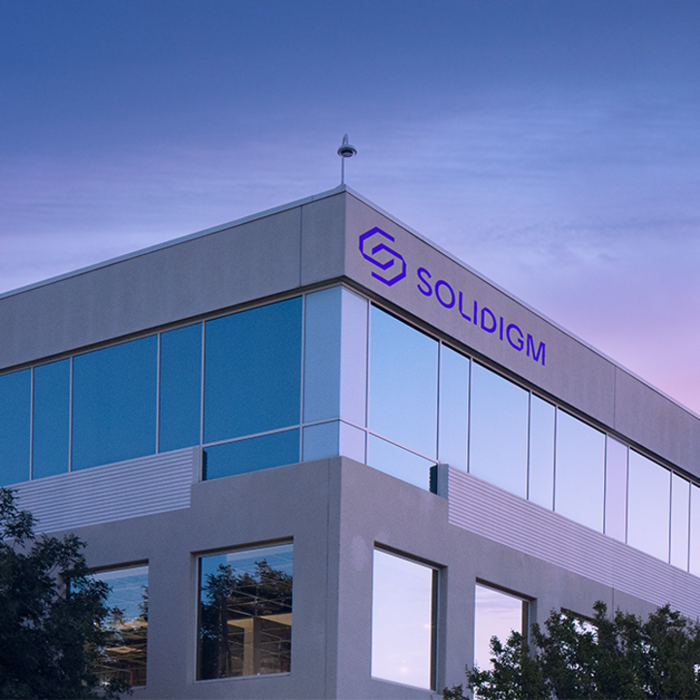
SK hynix's potential US listing of Solidigm, its NAND flash subsidiary, is dividing investors over whether the move would unlock hidden value in the South Korean chipmaker or dilute existing shareholders' stake in future growth.
According to investment banking sources on Sunday, Solidigm has held meetings with several investment banks to discuss underwriting arrangements for a potential US listing. Market watchers estimate the subsidiary could be valued at up to $150 billion, with the offering raising as much as $15 billion.
Solidigm was established in December 2021 as SK hynix's US subsidiary after SK hynix acquired Intel's NAND flash and solid-state drive business for $9 billion. NAND flash is the storage memory that retains data in solid-state drives, smartphones, and data center infrastructure, making it the foundation of Solidigm's product line. The transaction was completed in two stages, in late 2021 and March 2025.
After posting combined net losses of more than 7 trillion won in 2022 and 2023, Solidigm returned to profitability, reporting first-half 2026 revenue of 12.25 trillion won ($9.1 billion), up 265 percent year-on-year, along with a net profit of 5.84 trillion won.
SK hynix said it is exploring ways to strengthen Solidigm's competitiveness but has made no final decision.
IPO divides market over shareholder value
Supporters of a potential IPO argue that a separate listing could prompt investors to reassess SK hynix's valuation by drawing attention to its NAND business, which has been overshadowed by its high-bandwidth memoryHBM), a DRAM format used in AI computing, and its broader DRAM operations.
If Solidigm were valued at 200 trillion won and SK hynix retained a 90 percent stake, the holding would be worth 180 trillion won.
"SK hynix shareholders have mainly focused on DRAM market conditions and shareholder returns, rather than NAND," an analyst at a semiconductor research firm said. A successful listing could bring Solidigm's value into focus and prompt a broader reassessment of SK hynix, the analyst added.
Proponents also argue the case differs from LG Chem's spin-off and listing of LG Energy Solution, which drew criticism that the move eroded the parent company's value. They contend that SK hynix investors have focused primarily on HBM and DRAM growth rather than Solidigm's NAND business.
Solidigm accounted for about 9.3 percent of SK hynix's consolidated revenue and 5.9 percent of its consolidated operating profit in the first half of 2026, according to an analyst. A 20 percent listing would represent roughly 1.2 percent of the parent's operating profit on a simple proportional basis, the analyst said, suggesting a limited direct impact on earnings.
Critics counter that SK hynix shareholders helped finance Solidigm through the $9 billion acquisition and additional support during the NAND downturn, and that a listing could shift some of the subsidiary's future growth value away from the parent company's shareholders.
"Solidigm's current contribution to SK hynix's operating profit does not mean it will remain at that level," said Lee Young-gon, head of research at Toss Securities, stressing the importance of ensuring that existing shareholders benefit from future growth.
Overseas listing could test shareholder-protection rules
The potential US listing is also drawing attention to the limits of South Korea's shareholder-protection framework, particularly when a domestically listed company seeks to take a subsidiary public overseas.
In July, the Korea Exchange approved rule changes requiring parent-company boards to fulfill five shareholder-protection obligations when pursuing domestic listings of subsidiaries.
Ko Young-ho, director of the Financial Services Commission's capital markets division, said domestic listings require board approval and compliance with the five obligations. Overseas listings are not subject to the Korea Exchange's prior review process, but regulatory penalties could still be imposed if applicable obligations were breached.
Cho Dae-hyun, an expert adviser at ACT's Corporate Governance Research Institute, said shareholder communication was as important as dilution. He urged SK hynix to clearly explain its rationale and seek to persuade shareholders, noting that the company's two disclosures since August had offered little detail, stating only that it was "reviewing various options."
Until SK hynix clarifies its position, readers can watch for two markers: whether the company's next disclosures add substance beyond its August statements, and whether Solidigm's talks with investment banks progress toward formal underwriting mandates.

