SK hynix announces 40 trillion won share buyback and cancellation, lifts shareholder return target above 50% of free cash flow
Key Takeaways
- •SK hynix will repurchase and cancel 40 trillion won ($28 billion) of its own shares, the largest treasury share cancellation ever undertaken by a listed South Korean company, with purchases starting Thursday and running for about three months.
- •At Tuesday's closing price of 1,662,000 won, the program would cover approximately 24.07 million shares, equal to roughly 3.3 percent of the company's 730.49 million issued shares.
- •The company raised its 2025-2027 shareholder return target to more than 50 percent of cumulative free cash flow, exceeding its earlier commitment to return up to 50 percent through buybacks, cancellations, and dividends.
- •Surging demand for high-bandwidth memory, a key component paired with AI accelerators, has driven record results and left the company with about 69 trillion won in net cash at the end of the second quarter.
- •SK hynix plans to unveil additional shareholder return measures around its third-quarter earnings release and is weighing larger fixed dividends as well as special dividends.
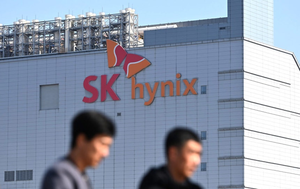
SK hynix said Wednesday it will buy back and cancel 40 trillion won ($28 billion) of its own shares, sharply stepping up a shareholder return policy that had struggled to keep pace with the chipmaker's surging earnings and cash generation.
The company also raised its shareholder return target for 2025-2027 to more than 50 percent of cumulative free cash flow, up from a previous plan to return within 50 percent, and signaled that further measures could follow later this year.
SK hynix said the buyback would be the largest cancellation of treasury shares by a listed South Korean company. Purchases are to begin Thursday and run for about three months, with all acquired shares to be canceled.
Based on Tuesday's closing price of 1,662,000 won, the program would cover about 24.07 million shares, or roughly 3.3 percent of the company's 730.49 million issued shares.
The move marks a more aggressive turn in capital returns after SK hynix faced growing calls to share more of the windfall from the artificial intelligence memory boom, especially as investors have watched the benefits of high-bandwidth memory demand flow into the company’s earnings and cash holdings. High-bandwidth memory, a critical component used alongside AI accelerators, has lifted the company's results to record levels, and SK hynix said its net cash stood at about 69 trillion won at the end of the second quarter.
"The decision reflects our assessment that the company's intrinsic value -- underpinned by its business competitiveness, strong cash-generation capability and mid- to long-term growth potential -- is not fully reflected in the current share price," SK hynix said.
Amid the growing calls for stronger shareholder returns, SK hynix said it had been considering additional measures for some time but waited to announce them until disclosure restrictions tied to its American depositary receipt listing in the US expired. A 25-day prospectus delivery period following the July 10 listing prevented the company from releasing new material information around its second-quarter earnings, the company said. The restriction ended in early August, clearing the way for Wednesday's decision.
Kim Yong-jin, a professor of business administration at Sogang University, said the size of the program indicated a clear shift in that stance.
"Given that there had been considerable criticism from the market, this can be seen as SK hynix beginning to pursue shareholder returns in earnest," Kim said.
The latest decision also accelerates a three-year shareholder return framework announced in November 2024. Under the previous policy, SK hynix had pledged to return up to 50 percent of cumulative free cash flow generated between 2025 and 2027, while leaving open the possibility of earlier payouts if cash flow improved significantly. It will now return more than half of cumulative free cash flow over the period through a combination of share repurchases and cancellations and cash dividends. The company is also considering larger fixed dividends and special dividends.
The scale of the program reflects how the AI-driven memory boom is reshaping SK hynix's capital allocation. Memory chipmakers have traditionally kept large cash buffers to withstand sharp industry downturns and fund costly capacity expansions. But surging HBM demand has given SK hynix more flexibility to increase payouts while continuing heavy investment in advanced memory production.
Kim said the company's cash position leaves room for both dividends and buybacks, while canceling shares could offer more direct support to per-share value by permanently reducing the number of shares outstanding.
The size of the buyback has also fueled market speculation over SK Group Chair Chey Tae-won, whose personal finances have drawn attention because of his long-running divorce case. In the remanded proceedings, a court ordered Chey to pay 944 billion won in property division to his former wife, though he has sought further judicial review. A rise in the value of his corporate holdings could strengthen his financial position.
SK hynix said the 40 trillion won buyback would not be the final step. It plans to announce additional shareholder return measures around its third-quarter earnings release, taking into account cash flow, market conditions and distributable profits.

