Six Malaysians Jailed Over S$4.9 Million Crypto and Poker Heist in Singapore
Key Takeaways
- •Six Malaysian men were convicted and sentenced in Singapore's High Court on September 14 for a 2024 armed robbery in Bukit Timah valued at approximately S$4.9 million.
- •The two ringleaders were each sentenced to 12 years and 11 months in prison and ordered to receive 24 strokes of the cane.
- •The robbers targeted a residence hosting high-stakes poker games and forced victims to transfer cryptocurrency into wallets controlled by the group before stealing cash and luxury items.
- •Police have recovered cryptocurrency worth about S$1.69 million, while roughly S$3.2 million of the stolen assets remains unaccounted for.
- •The case is one of Singapore's largest crypto-related robbery prosecutions and highlights how digital assets can be stolen through physical coercion as well as online attacks.
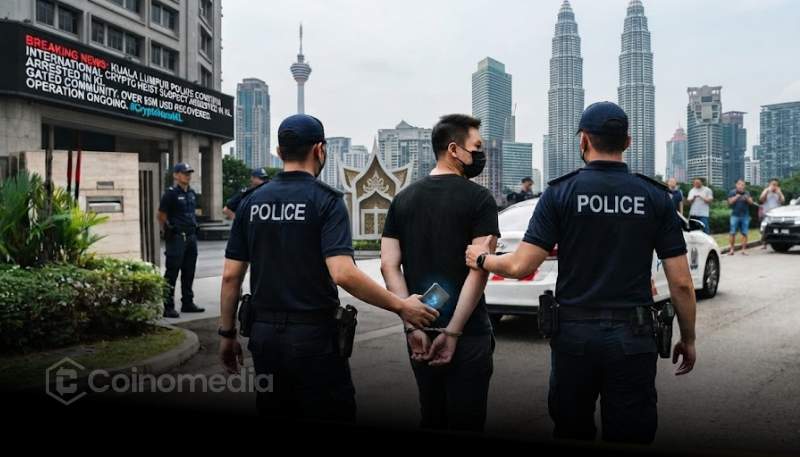
The High Court of Singapore has sentenced six Malaysian men for their involvement in a S$4.9 million armed robbery that targeted cryptocurrency, cash, and luxury items during a high-stakes poker gathering in the city-state. The prosecution stands as one of Singapore's largest crypto-related robbery cases to date.
The two ringleaders each received 12 years and 11 months in prison and were each ordered to receive 24 strokes of the cane, while the remaining defendants were also convicted and sentenced for their roles in the crime. Caning is a court-imposed form of corporal punishment under Singaporean law.
According to court documents cited by Lianhe Zaobao, Singapore's Chinese-language daily, the robbery took place in the Bukit Timah residential district in 2024.
Victims Forced to Transfer Crypto
Investigators said the group targeted a luxury residence after learning that high-stakes poker games were regularly held there and that players frequently settled their bets using cryptocurrency.
Armed with weapons, the robbers allegedly forced the victims to transfer digital assets into wallets under the group's control before stealing cash and luxury goods from the property. The total value of the stolen assets was estimated at approximately S$4.906 million.
The case illustrates how digital assets can be targeted through physical coercion as well as through online attacks, since cryptocurrency holdings can be moved quickly and, once transferred on-chain, cannot be reversed by a bank or payment provider.
Police have since recovered cryptocurrency worth around S$1.69 million, leaving roughly S$3.2 million of the stolen assets still unaccounted for. Cryptocurrency transfers are recorded on public blockchains, leaving a permanent trail of wallet activity that investigators can analyze when tracing stolen funds.
Sentencing Announced September 14
According to Lianhe Zaobao, the six Malaysian men were convicted and sentenced in the High Court of Singapore on September 14 for their roles in the armed robbery, which occurred in Bukit Timah in 2024.
Six Malaysians Sentenced in Singapore Over S$4.9M Crypto & Poker Heist According to Lianhe Zaobao, six Malaysian men were convicted and sentenced in the High Court of Singapore on September 14 for their roles in an armed robbery that occurred in Bukit Timah in 2024, with the two… pic.twitter.com/ZqjOV8F5TT — Wu Blockchain (@WuBlockchain) September 16, 2026
Source: Wu Blockchain on X
Crypto Crime Remains a Law Enforcement Focus
The latest Singapore crypto heist case highlights the growing risks associated with criminals targeting digital assets. As cryptocurrency adoption expands in the city-state — one of Asia's leading financial centers with a regulated digital asset sector — law enforcement agencies in Singapore and beyond continue to strengthen investigations into crypto-related crimes, including theft, fraud, and money laundering.
The case also serves as a reminder of the importance of security measures when handling large digital asset transactions, particularly where substantial sums change hands in cryptocurrency.

