Singapore Proposes Stablecoin Licensing Rules Requiring Full Reserves
Key Takeaways
- •Singapore's proposal would require stablecoin issuers to obtain a license and hold assets equal to the full value of tokens in circulation.
- •The plan builds on earlier Monetary Authority of Singapore regulatory measures for stablecoins and digital payment token services.
- •The full-reserve requirement reflects global regulatory concern following the 2022 TerraUSD collapse, which erased tens of billions of dollars in value.
- •Singapore's framework parallels international stablecoin rules such as the European Union's MiCA regulation, which also imposes reserve and redemption requirements.
- •A stablecoin issued under a full-reserve license would in principle carry stronger guarantees that it can be redeemed at its stated value.
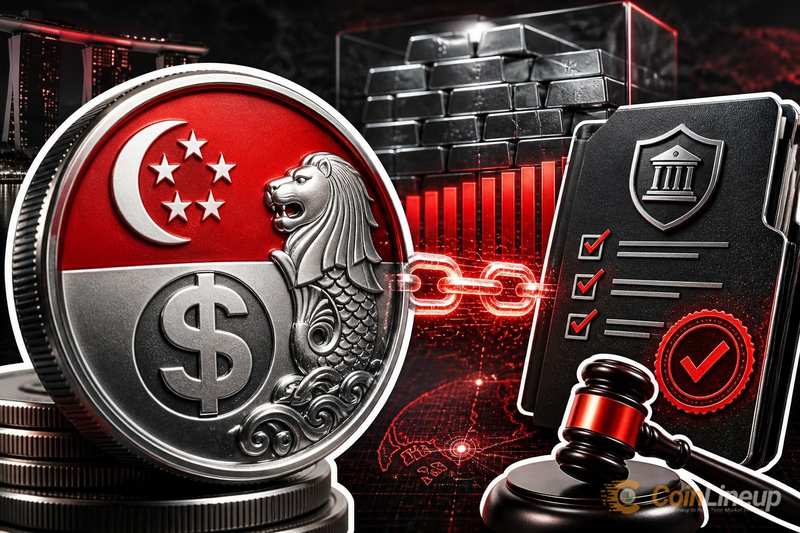
Singapore has moved to regulate stablecoins through proposed licensing rules that would require issuers to hold full reserves backing their tokens. The plan signals a stricter, clearer framework for these digital payment tokens in one of the world's major financial hubs.
What Singapore Is Proposing for Stablecoin Licensing
Stablecoins are digital tokens designed to hold a steady value, usually pegged to a currency such as the US dollar. Singapore's proposal would place them under a formal licensing regime rather than leaving them unregulated.
The measure is a proposal, not a finished law. It builds on earlier work by the Monetary Authority of Singapore (MAS), which first set out regulatory measures for stablecoins as part of a wider review of digital payment token services.
The focus is on licensing. In plain terms, a company that wants to issue a stablecoin in Singapore would need approval and would have to meet defined standards to continue operating.
Why the Full Reserve Requirement Stands Out
The headline condition is the full reserve requirement. That means an issuer must hold assets equal to the full value of the stablecoins it has put into circulation.
A simple analogy is a coat check: for every token a company issues, it must hold something real in reserve that a holder can claim back. This reflects the central promise behind a stablecoin — that it can be redeemed for its stated value at any time.
Reserve backing has become a central concern for regulators worldwide after the collapse of the TerraUSD stablecoin in 2022, which lost its peg and wiped out tens of billions of dollars in value. Singapore's full-reserve requirement fits into that broader shift toward proving, rather than merely promising, that reserves exist.
Reserve backing also sits at the heart of Singapore's approach. When the central bank later finalised its stablecoin regulatory framework, reserve rules remained a defining feature of how these tokens would be treated. Based on available information, the proposal does not spell out every custody detail; the key requirement is simply that full backing is mandated.
What the Proposal Could Mean for the Crypto Sector
For stablecoin issuers, a licensing regime with full reserves would raise the bar. It sets a stricter compliance threshold than an unregulated model, where backing is not verified by a regulator.
Singapore is a closely watched market for digital assets, and its rules often draw attention across the region. Its framework also lands amid a global push for stablecoin rules, including the European Union's Markets in Crypto-Assets (MiCA) regulation, which imposes its own reserve and redemption requirements for stablecoin issuers. The city-state continues to attract industry interest, with events such as the Fintech Revolution Summit held in Singapore and major platforms expanding services for Singapore users — for example, Gemini enabling XRP transfers for Singapore accounts.
For a regular crypto holder, the practical point concerns trust. A stablecoin issued under a full-reserve license would, in principle, carry stronger guarantees that the token can be redeemed for its stated value.
Compliance teams and market observers may view the framework as a template. Clear reserve rules could make regulated stablecoins easier to use in payments, though the exact impact would depend on the final rules.
The bottom line: holders and prospective buyers of stablecoins should look at whether a token is issued under a recognized license and fully backed. That is the standard Singapore is pushing toward.
Disclaimer: This article is for informational purposes only and does not constitute financial or investment advice. Cryptocurrency and digital asset markets carry significant risk. Always do your own research before making decisions.
