Singapore Awards Eight New LNG Bunker Licences Starting September 1
Key Takeaways
- •Singapore's Maritime and Port Authority awarded eight new five-year LNG bunker licences to companies including Aramco Trading, ExxonMobil, Shell, Sinopec, and Vitol, valid from September 1 through August 31, 2031.
- •Licensees must provide end-to-end bunkering services and were evaluated on their ability to control methane slip and supply lower-emission fuels such as liquefied biomethane and e-methane.
- •Singapore will replace its existing LNG bunkering technical reference with a full national standard beginning in August, covering safety protocols, custody transfer procedures, and crew competency requirements.
- •In 2025, Singapore's port achieved record total marine fuel sales of 56.77 million tonnes, with alternative fuel sales growing 44% to 1.95 million tonnes.
- •Several newly licensed suppliers are expanding delivery capacity, including Equatorial Marine Fuel with a vessel under construction and Shell chartering two newbuildings scheduled for 2028 delivery.
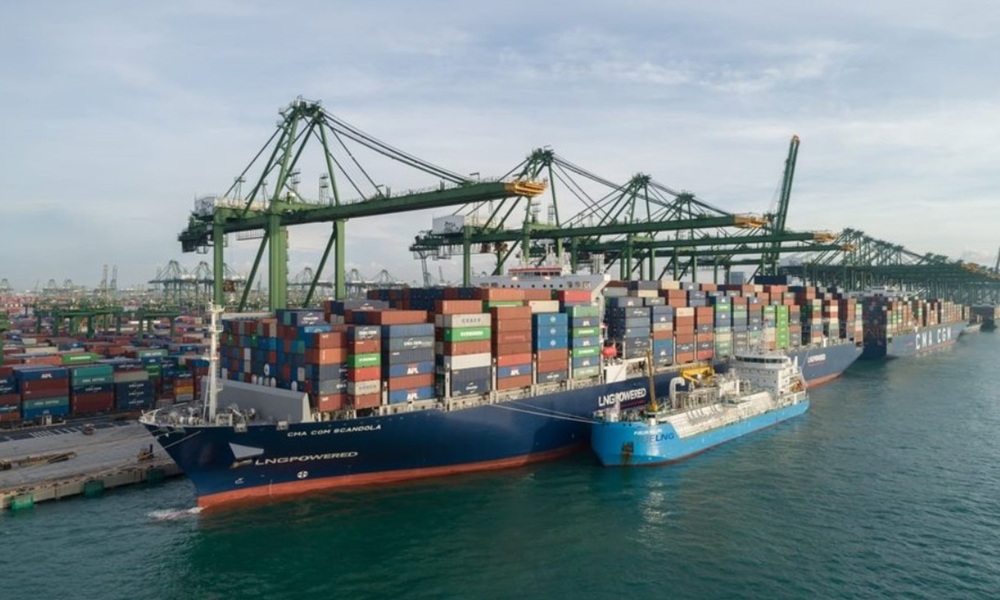
Singapore is expanding its liquefied natural gas (LNG) bunker supplier pool, awarding eight new five-year licences that take effect on September 1, reinforcing its position as the world's largest bunkering port by volume as global shipping accelerates its transition toward lower-carbon fuels.
The Maritime and Port Authority of Singapore (MPA) selected the following companies: Aramco Trading Singapore, Equatorial Marine Fuel Management Services, ExxonMobil Asia Pacific, PetroChina International Singapore, Shell Eastern Trading, Sinopec Fuel Oil Singapore, Vitol Bunkers, and a joint venture between TotalEnergies Gas & Power Asia and Sembcorp Fuels.
The new licences will remain valid until August 31, 2031. Existing LNG bunker licences will continue to be valid through the end of this year, ensuring continuity of supply during the transition period.
Under the licensing terms, successful applicants are required to deliver end-to-end bunkering services, encompassing supply, storage, cargo transfer, and delivery to vessels in Singapore's port waters. MPA's assessment also evaluated each bidder's capacity to control methane slip — the unintended release of unburned methane during bunkering operations — and to supply lower-emission methane-based fuels, including liquefied biomethane and e-methane.
In a parallel regulatory development, Singapore will replace its existing technical reference for LNG bunkering with a full national standard beginning in August. The updated framework will cover safety protocols, custody transfer procedures, operating guidelines, and crew competency requirements.
The licence expansion follows a record year for Singapore's marine fuel market. In 2025, total marine fuel sales at the port reached 56.77 million tonnes, an all-time high. Alternative fuel sales grew 44% to 1.95 million tonnes, as Singapore continues developing separate supply frameworks for LNG, methanol, and eventually ammonia. The expansion also comes as the International Maritime Organization pursues its revised greenhouse gas reduction strategy, which targets net-zero emissions from international shipping by or around 2050, driving demand for alternative marine fuels across major bunkering hubs including Rotterdam and Fujairah.
Several of the newly licensed suppliers have already moved to bolster their delivery capacity. Equatorial Marine Fuel Management Services has a 20,000 cubic metre LNG bunker vessel under construction at CIMC Sinopacific Offshore & Engineering. Shell Eastern Trading has chartered two 18,900 cubic metre Purus Marine newbuildings, scheduled for delivery in 2028, for deployment across bunkering hubs including Singapore.

