Roadside SIM Registration Scams Could Land Nigerians in Jail for Crimes They Didn't Commit
Key Takeaways
- •The Delta State Police Command, through spokesperson SP Bright Edafe, warned that the identity-theft scheme was uncovered during ongoing criminal investigations.
- •Roadside agents collect applicants' NIN, full names, and bio-data under the pretext of SIM registration, then secretly register a different SIM card and dismiss the customer by citing network failure.
- •Fraudulently registered SIM cards are sold on the black market to criminals involved in kidnapping, extortion, fraud, and hacking, who use them to make ransom demands.
- •Because Nigerian regulations require every phone line to be tied to a NIN, investigators tracing criminal calls and transactions are led back to the registered owner, who frequently becomes a primary suspect.
- •Police advised Nigerians to buy or register SIM cards only at official telecom customer service centres, audit their NINs for unrecognized numbers, and promptly report strange lines.
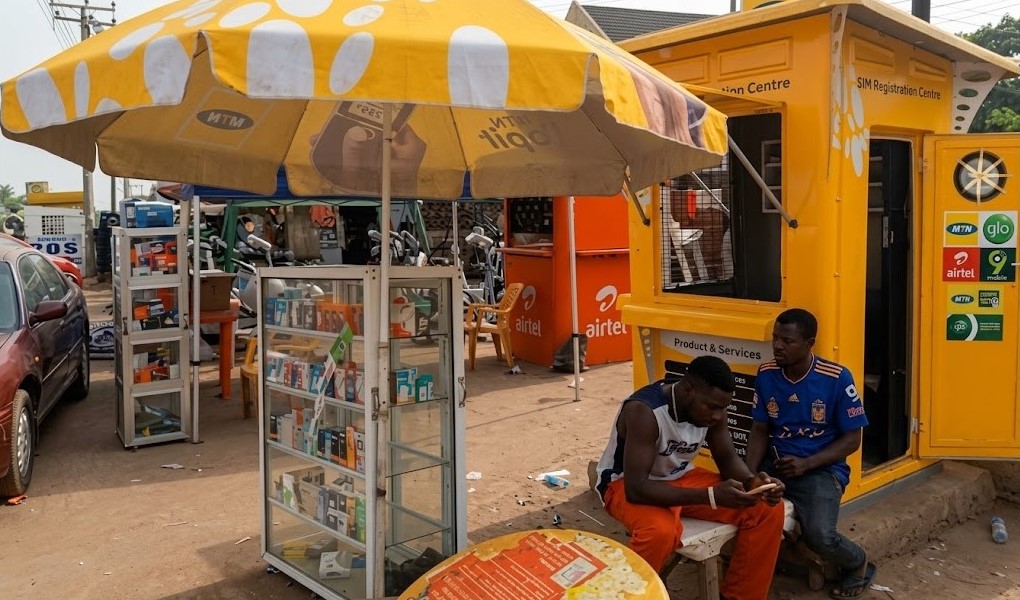
SIM swaps have become a leading funnel fraudsters use for identity theft, allowing them to seize control of victims' phone numbers. Now, police in Nigeria are warning that buying or registering SIM cards from informal agents and roadside kiosks could implicate ordinary citizens in serious crimes — potentially landing them in jail for offences they did not commit.
Where a typical SIM swap aims to wire money out of a victim's account, this scheme has a different objective: registering a person's name on a SIM card and selling it to criminal syndicates. The main target is the National Identification Number (NIN), the credential that links an individual's identity to a particular phone line. Under Nigeria's SIM registration rules, every line must be tied to a NIN — which is precisely what allows investigators to trace a phone used in a crime back to a named individual. With it, roadside SIM registration scams turn ordinary citizens into criminal suspects.
The stakes are considerable. Identity theft accounts for 63% of all digital financial crime in Africa, at an estimated cost of $4 billion annually — a scale that puts in context why police are now warning about something as routine as buying a SIM card.
In a video advisory, SP Bright Edafe, Public Relations Officer of the Delta State Police Command, warned about the identity-theft scheme, which he said was uncovered during ongoing criminal investigations.
According to Edafe, roadside SIM registration agents at informal outlets collect sensitive personal details — including the NIN, full names, and personal background information — under the cover of registering a line. But the goal is identity theft. Instead of completing the customer's request, the agent registers an entirely different SIM card using the information already supplied, then dismisses the victim under the guise of a poor network connection.
The secretly registered SIM card is subsequently sold on the black market to bad actors involved in cybercrimes, kidnappings, extortion schemes, and hacking, who use it to make ransom demands. For criminals, a line registered in someone else's name offers a shield: when law enforcement agencies trace criminal calls and financial transactions, they lead back to the registered owner of the phone line — who had no idea their identity was attached to it. Victims frequently find themselves identified as primary suspects in major investigations.
"If they use your number to defraud somebody or demand ransom money in a kidnapping case, it will be very difficult to claim ignorance," the police officer said, noting that ignorance of the law offers no legal protection.
How the scam works
- A customer approaches an informal outlet or kiosk to buy or register a SIM card.
- The agent collects bio-data and personal details such as the NIN, name, and mother's maiden name.
- The agent registers a different SIM card using the customer's identity.
- The agent claims a network failure and turns the customer away without a functional SIM.
- The secretly registered SIM is sold to criminal syndicates, including kidnappers, fraudsters, and extortionists.
Legal consequences for victims
Explaining the legal implications, the Delta State Police spokesperson highlighted that when a kidnapping call, ransom request, or financial fraud occurs, digital forensics trace the SIM card directly to the identity registered against it. Once the victim is apprehended, proving innocence after the fact is extremely difficult, and a line flagged in an ongoing criminal investigation becomes dangerous for its registered owner.
"Whatever offence they commit with that SIM card, bearing your NIN, your name, and your details, it becomes your responsibility to clear yourself, and it will be difficult to prove that you didn't commit the crime," he warned.
How to protect yourself
To safeguard against identity theft and potential prosecution, the Delta State Police Command advised Nigerians to take immediate action:
- Avoid informal roadside kiosks. Buy, register, or upgrade a SIM only at the official customer service centres of major telecom providers MTN, Airtel, Globacom, and T2mobile (9mobile).
- Audit your NIN by visiting official telecom operators' branches and requesting a full list of mobile numbers registered under it. A number you do not recognise may already be attached to your identity.
- Report any strange number immediately and request the formal disconnection and delisting of unrecognised lines.

